332 books match the query 'Health & Fitness' and 6 start with v

cover of Valuing Deaf Worlds in Urban India

Valuing Deaf Worlds in Urban India

Michele Friedner

Rutgers University Press, 2015

Although it is commonly believed that deafness and disability limits a person in a variety of ways, Valuing Deaf Worlds in Urban India describes the two as a source of value in postcolonial India. Michele Friedner argues that the experiences of deaf people offer an important portrayal of contemporary self-making and sociality under new regimes of labor and economy in India. 
 
Friedner contends that deafness actually becomes a source of value for deaf Indians as they interact with nongovernmental organizations, with employers in the global information technology sector, and with the state. In contrast to previous political economic moments, deaf Indians increasingly depend less on the state for education and employment, and instead turn to novel and sometimes surprising spaces such as NGOs, multinational corporations, multilevel marketing businesses, and churches that attract deaf congregants. They also gravitate towards each other. Their social practices may be invisible to outsiders because neither the state nor their families have recognized Indian Sign Language as legitimate, but deaf Indians collectively learn sign language, which they use among themselves, and they also learn the importance of working within the structures of their communities to maximize their opportunities.  
 
Valuing Deaf Worlds in Urban India analyzes how diverse deaf people become oriented toward each other and disoriented from their families and other kinship networks. More broadly, this book explores how deafness, deaf sociality, and sign language relate to contemporary society. 
 
 
[more]
cover of Vegetarianism: Movement Or Moment: Promoting A Lifestyle For Cult Change

Vegetarianism

Movement Or Moment: Promoting A Lifestyle For Cult Change

Donna Maurer

Temple University Press, 2002

Vegetarianism seems to be increasing in popularity and acceptance in the United States and Canada, yet, quite surprisingly, the percentage of the population practicing vegetarian diets has not changed dramatically over the past 30 years. People typically view vegetarianism as a personal habit or food choice, even though organizations in North America have been promoting vegetarianism as a movement since the 1850s. This book examines the organizational aspects of vegetarianism and tries to explain why the predominant movement strategies have not successfully attracted more people to adopt a vegetarian identity.Vegetarianism: Movement or Moment? is the first book to consider the movement on a broad scale from a social science perspective. While this book takes into account the unique history of North American vegetarianism and the various reasons why people adopt vegetarian diets, it focuses on how movement leaders' beliefs regarding the dynamics of social change contributes to the selection of particular strategies for attracting people to vegetarianism. In the context of this focus, this book highlights several controversies about vegetarianism that have emerged in nutrition and popular media over the past 30 years.
[more]
cover of Victory Deferred: How AIDS Changed Gay Life in America

Victory Deferred

How AIDS Changed Gay Life in America

John-Manuel Andriote

University of Chicago Press, 1999

There is no question that AIDS has been, and continues to be, one of the most destructive diseases of the century, taking thousands of lives, devastating communities, and exposing prejudice and bigotry. But AIDS has also been a disease of transformation—it has fueled the national gay civil rights movement, altered medical research and federal drug testing, shaken up both federal and local politics, and inspired a vast cultural outpouring. Victory Deferred, the most comprehensive account of the epidemic in more than ten years, is the history of both the destruction and transformation wrought by AIDS.

John-Manuel Andriote chronicles the impact of the disease from the coming-out revelry of the 1970s to the post-AIDS gay community of the 1990s, showing how it has changed both individual lives and national organizations. He tells the truly remarkable story of how a health crisis pushed a disjointed jumble of local activists to become a nationally visible and politically powerful civil rights movement, a full-fledged minority group challenging the authority of some of the nation's most powerful institutions. Based on hundreds of interviews with those at the forefront of the medical, political, and cultural
responses to the disease, Victory Deferred artfully blends personal narratives with institutional histories and organizational politics to show how AIDS forced gay men from their closets and ghettos into the hallways of power to lobby and into the streets to protest.

Andriote, who has been at the center of national advocacy and AIDS politics in Washington, is judicious without being uncritical, and his account of the political maturation of the gay community is one of the most stirring civil rights stories of our time.

Victory Deferred draws on hundreds of original interviews, including first-hand accounts from: Virginia Apuzzo, Reverend Carl Bean, Marcus Conant, M.D., John D'Emilio, Anthony Fauci, M.D, Fenton Johnson, Larry Kramer, Lawrence D. Mass, M.D., Armistead Maupin, Walt Odets, Torie Osborn, Eric Rofes, Urvashi Vaid, Timothy Westmoreland, and Reggie Williams.

"[Victory Deferred] is a richly textured account of the rise of the AIDS sector, that though detailed and comprehensive, reads quickly. The thematic organization of the book works especially well. The clear chronology of the events reveals how competing models of service delivery, treatment activism and private-public cooperation were subsumed into a national AIDS movement. The book should prove excellent for teaching or recreational reading."—Jose Gabilondo, Washington Post

"[A] fine history of the epidemic. . . . Andriote shines with chapters on less-covered but no less important subjects, including the multibillion-dollar 'AIDS industry' and private fund-raising groups. He brings together in one place many facts and figures heretofore unsynthesized."—Joe R. Neel, Boston Globe

"While many books have explored aspects of the impact of AIDS, Victory Deferred is among the most comprehensive. Andriote's adroit integration of the personal and the historical results is an illustrative, analytical account of the disease and its impact on the gay civil-rights movement. His depiction of the poignant struggles, heroic responses and resultant social and political gains emanating from AIDS is a perceptive document for our time—relevant to all readers, regardless of their sexual orientation."—John R. Killacky, Minneapolis Star Tribune

"[A] well-researched and nuanced portrait of the many lives on which this grave disease has wrought both destruction and transformation."—Publishers Weekly

"Andriote combines broad strokes and telling details in this engaging history of the complicated war against both disease and bigotry."—Library Journal
[more]
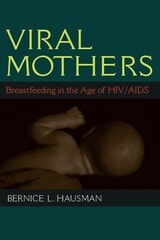
cover of Viral Mothers: Breastfeeding in the Age of HIV/AIDS

Viral Mothers

Breastfeeding in the Age of HIV/AIDS

Bernice L. Hausman

University of Michigan Press, 2010
Viral Mothers: Breastfeeding in the Age of HIV/AIDS addresses modern fears of dangerous motherhood, focusing on preoccupations with mothers' bodies as vectors for infection and contamination. The book examines how the maternal body is perceived as a conduit for disease, drugs, or contaminants that end up in the body of an innocent---and pure---infant. Paying special attention to HIV transmission through breastfeeding, Viral Mothers examines ideologies of maternal embodiment that influence public health protocols and mothers' behaviors worldwide. The medical community has known since the late 1980s that HIV is passed through breast milk from infected mothers to their babies. In highly industrialized countries, HIV-positive mothers are advised not to breastfeed their babies, but in poor countries breastfeeding has continued to be a predominant and medically recommended practice as a partial solution to problems of infant health and welfare in resource-poor contexts. Now, in areas of high rates of HIV infection and high infant mortality, decisions concerning infant feeding are, literally, about life and death. Public health debates concerning breastfeeding and HIV transmission must consider both the mortality associated with not breastfeeding and the possibility of HIV infection from mother to child. The transmission of HIV through breastfeeding is a medical and public health issue that touches on and augments contemporary concerns about bodies, germs, and the environment. These concerns affect all people around the globe as we struggle with the meanings of health, risk, and embodiment in modernity. Viral Mothers addresses and explores the dense cultural meanings evoked by mothers' postnatal transmission of HIV. In so doing, the book pays special attention to fears of contamination and contagion that emerge as consequences of a medicalizing modernity. The main themes of the book---risk, purity, denial, and choice---define the terms through which the viral mother is constituted in discourse and enacted publicly as a set of identifiable, culturally legible, concerns.
[more]
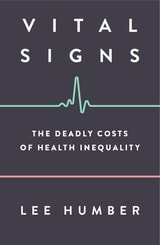
cover of Vital Signs: The Deadly Costs of Health Inequality

Vital Signs

The Deadly Costs of Health Inequality

Lee Humber

Pluto Press, 2019

Nature is no longer the leading cause of death; society is. This makes health care one of the most important political issues today. This book looks at the reasons behind the declining condition of our bodies, as governments across the world choose to neglect the health of the majority of their citizens. Using hard data taken from service users, Lee Humber constructs a sharp analysis that gets to the heart of inequality in health care today, showing that 'wealthy means healthy'. Life expectancy for many in the UK and US is worse than it was 100 years ago, and more and more communities across the world can expect shorter and less healthy lives than their parents. Humber also suggests radical strategies for tackling this degenerative situation, providing a compelling vision for how we can shape our health and that of future generations.
[more]
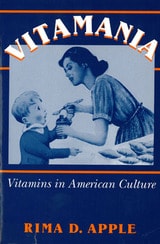
cover of Vitamania: Vitamins in American Culture

Vitamania

Vitamins in American Culture

Rima Apple

Rutgers University Press, 1996

"Have you taken your vitamins today?" That question echoes daily through American households. Thanks to intensive research in nutrition and medicine, the importance of vitamins to health is undisputed. But millions of Americans believe that the vitamins they get in their food are not enough. Vitamin supplements have become a multibillion-dollar industry. At the same time, many scientists, consumer advocacy groups, and the federal Food and Drug Administration doubt that most people need to take vitamin pills.

Vitamania tells how and why vitamins have become so important to so many Americans. Rima Apple examines the claims and counterclaims of scientists, manufacturers, retailers, politicians, and consumers from the discovery of vitamins in the early twentieth century to the present. She reveals the complicated interests--scientific, professional, financial--that have propelled the vitamin industry and its would-be regulators. From early advertisements linking motherhood and vitamin D, to Linus Pauling's claims for vitamin C, to recent congressional debates about restricting vitamin products, Apple's insightful history shows the ambivalence of Americans toward the authority of science. She also documents how consumers have insisted on their right to make their own decisions about their health and their vitamins.

Vitamania makes fascinating reading for anyone who takes--or refuses to take--vitamins. It will be of special interest to students, scholars, and professionals in public health, the biomedical sciences, history of medicine and science, twentieth-century history, nutrition, marketing, and consumer studies.

[more]