Results by title
668 books match the query 'History & Surveys' and 2 start with v
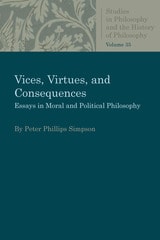
Vices, Virtues, and Consequences
Essays in Moral and Political PhilosophyPeter Simpson
Catholic University of America Press, 2019
Vices, Virtues, and Consequences offers a broad study of the basic and universal issues in ethics and politics, the issues of what the human good is and how to attain it and avoid its opposite. These questions have long been debated and are no less debated today. However, according to author Peter Phillips Simpson, within the mainstream of Anglo-American modern philosophy they have been debated too narrowly. This narrowness is one of our modern vices, and it does much to encourage other vices, in particular that of despair of universal and objective reason. The essays in this collection not only attack these vices, but also attempt to replace them with the contrary virtues.
[more]
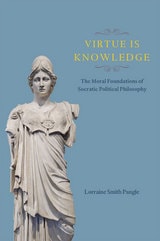
Virtue Is Knowledge
The Moral Foundations of Socratic Political PhilosophyLorraine Smith Pangle
University of Chicago Press, 2014
The relation between virtue and knowledge is at the heart of the Socratic view of human excellence, but it also points to a central puzzle of the Platonic dialogues: Can Socrates be serious in his claims that human excellence is constituted by one virtue, that vice is merely the result of ignorance, and that the correct response to crime is therefore not punishment but education? Or are these assertions mere rhetorical ploys by a notoriously complex thinker?
Lorraine Smith Pangle traces the argument for the primacy of virtue and the power of knowledge throughout the five dialogues that feature them most prominently—the Apology, Gorgias, Protagoras, Meno, and Laws—and reveals the truth at the core of these seemingly strange claims. She argues that Socrates was more aware of the complex causes of human action and of the power of irrational passions than a cursory reading might suggest. Pangle’s perceptive analyses reveal that many of Socrates’s teachings in fact explore the factors that make it difficult for humans to be the rational creatures that he at first seems to claim. Also critical to Pangle’s reading is her emphasis on the political dimensions of the dialogues. Underlying many of the paradoxes, she shows, is a distinction between philosophic and civic virtue that is critical to understanding them.
Ultimately, Pangle offers a radically unconventional way of reading Socrates’s views of human excellence: Virtue is not knowledge in any ordinary sense, but true virtue is nothing other than wisdom.
[more]