Results by title
69 books match the query 'Homosexuality and literature' and 2 start with v
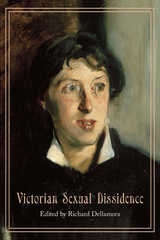
Victorian Sexual Dissidence
Edited by Richard Dellamora
University of Chicago Press, 1999
Recent critical and historical work on the late-Victorian period has furnished a vocabulary for discussing gender and sexuality. These popular terms include categories such as homo/hetero, patriarchal/feminist, and masculine/effeminate. This collection exploits this framework—while refining and resisting it in places—to show how certain Victorians imagined difference in ways that continue to challenge us today.
One essay, for example, traces the remarkable feminist appropriation of male-identified fields of study, such as Classical philology. Others address the validation of male bodies as objects of desire in writing, painting, and emergent modernist choreography. The writings shed light on the diverse interests served by a range of cultural practitioners and on the complex ways in which the late Victorians invented themselves as modern subjects.
This volume will be essential reading for students of British literary and cultural history as well as for those interested in feminist, gay, and lesbian studies.
Contributors are: Oliver Buckton, Richard Dellamora, Dennis Denisoff, Regenia Gagnier, Eric Haralson, Andrew Hewitt, Christopher Lane, Thaïs Morgan, Yopie Prins, Kathy Alexis Psomiades, Julia Saville, Robert Sulcer, Jr., Martha Vicinus.
[more]
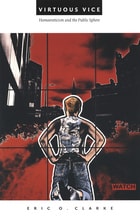
Virtuous Vice
Homoeroticism and the Public SphereEric O. Clarke
Duke University Press, 2000
In this daring study of queer life and the public sphere, Eric O. Clarke examines the effects of inclusion within public culture. Departing from studies that emphasize homophobia and its mechanisms of exclusion, Virtuous Vice details how mainstream efforts to represent queers affirmatively continually fall short of full democratic enfranchisement. Clarke draws on contemporary writings along with late-eighteenth- and nineteenth-century English and European cultural history to investigate how concepts of value, representation, and homoeroticism have interacted and circulated in the West since the Enlightenment.
Examining the role of eroticism in citizenship and why only normalizing
constructions of homosexuality enable inclusion, Clarke reconsiders the work of Habermas and Foucault in relation to contemporary visibility politics, Kant’s moral and political theory, Marx’s analysis of value, and the sexualized dynamics of the Victorian cultural public sphere. The juxtaposition of Habermas with Foucault reveals the surprising value of reading the former in the context of queer politics and the usefulness of the theory of the public sphere for understanding contemporary identity politics and the visibility politics of the 1990s. Examining how a host of nonsexual factors impinge historically upon the constitution of sexual identities and practices, Clarke negotiates the relation between questions of publicity and categories of value. Discussions of television sitcoms (such as Ellen), marketing techniques, authenticity, and literary culture add to this daring analysis of visibility politics.
As a critique of the claim that equal representation of gays and lesbians necessarily constitutes progress, this significant intervention into social theory will find enthusiastic readers in the fields of Victorian, cultural, literary, and gay and lesbian studies, as well as other fields engaged with categories of identity.
[more]