Results by title
944 books match the query 'Indians of North America' and 4 start with v
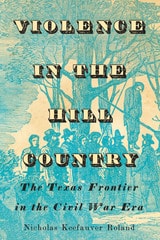
Violence in the Hill Country
The Texas Frontier in the Civil War EraBy Nicholas Keefauver Roland
University of Texas Press, 2021
2022 Ramirez Family Award for Most Significant Scholarly Book, Texas Institute of Letters
An in-depth history of the Civil War in the Texas Hill Country, this book examines patterns of violence on the Texas frontier to illuminate white Americans’ cultural and political priorities in the nineteenth century.
In the nineteenth century, Texas’s advancing western frontier was the site of one of America’s longest conflicts between white settlers and native peoples. The Texas Hill Country functioned as a kind of borderland within the larger borderland of Texas itself, a vast and fluid area where, during the Civil War, the slaveholding South and the nominally free-labor West collided. As in many borderlands, Nicholas Roland argues, the Hill Country was marked by violence, as one set of peoples, states, and systems eventually displaced others.
In this painstakingly researched book, Roland analyzes patterns of violence in the Texas Hill Country to examine the cultural and political priorities of white settlers and their interaction with the century-defining process of national integration and state-building in the Civil War era. He traces the role of violence in the region from the eve of the Civil War, through secession and the Indian wars, and into Reconstruction. Revealing a bitter history of warfare, criminality, divided communities, political violence, vengeance killings, and economic struggle, Roland positions the Texas Hill Country as emblematic of the Southwest of its time.
Visualities
Perspectives on Contemporary American Indian Film and ArtDenise K. Cummings
Michigan State University Press, 2011
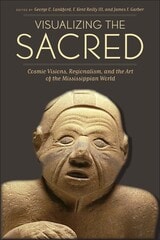
Visualizing the Sacred
Cosmic Visions, Regionalism, and the Art of the Mississippian WorldEdited by George E. Lankford, F. Kent Reilly III, and James F. Garber
University of Texas Press, 2011
The prehistoric native peoples of the Mississippi River Valley and other areas of the Eastern Woodlands of the United States shared a complex set of symbols and motifs that constituted one of the greatest artistic traditions of the pre-Columbian Americas. Traditionally known as the Southeastern Ceremonial Complex, these artifacts of copper, shell, stone, clay, and wood were the subject of the groundbreaking 2007 book Ancient Objects and Sacred Realms: Interpretations of Mississippian Iconography, which presented a major reconstruction of the rituals, cosmology, ideology, and political structures of the Mississippian peoples.
Visualizing the Sacred advances the study of Mississippian iconography by delving into the regional variations within what is now known as the Mississippian Iconographic Interaction Sphere (MIIS). Bringing archaeological, ethnographic, ethnohistoric, and iconographic perspectives to the analysis of Mississippian art, contributors from several disciplines discuss variations in symbols and motifs among major sites and regions across a wide span of time and also consider what visual symbols reveal about elite status in diverse political environments. These findings represent the first formal identification of style regions within the Mississippian Iconographic Interaction Sphere and call for a new understanding of the MIIS as a network of localized, yet interrelated religious systems that experienced both continuity and change over time.
Vortex of Indian Fevers
Adrian C. Louis
Northwestern University Press, 1995