Results by title
264 books match the query 'Introduction' and 3 start with v
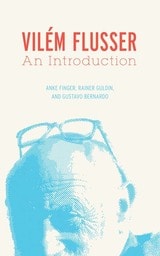
Vilém Flusser
An IntroductionAnke Finger
University of Minnesota Press, 2010
An accessible and thorough introduction to Flusser’s thought, this book reveals his engagement with a wide array of disciplines, from communication studies, posthuman philosophy, media studies, and history to art and art history, migrant studies, anthropology, and film studies. The first to connect Flusser’s entire oeuvre, this volume shows how his works on media theory are just one part of a greater mosaic of writings that bring to the fore cultural and cognitive changes concerning all of us in the twenty-first century.
A theorist deeply influenced by his experiences as a privileged citizen of Prague, a Jew pursued by the Nazis, a European emigrant, a Brazilian immigrant, and a survivor keenly interested and invested in history and memory, Vilém Flusser was an outsider in a staunchly hierarchical and disciplined academic world.
Voice and Phenomenon
Introduction to the Problem of the Sign in Husserl's PhenomenologyJacques Derrida, Translated from the French by Leonard Lawlor
Northwestern University Press, 2011
Only in relation to phenomenology is it possible to measure the importance of deconstruction. Only in relation to Husserl’s philosophy is it possible to understand the novelty of Derrida’s thinking. Voice and Phenomenon therefore may be the best introduction to Derrida’s thought in general. To adapt Derrida’s comment on Husserl’s Logical Investigations, it contains “the germinal structure” of Derrida’s entire thought. Lawlor’s fresh translation of Voice and Phenomenon brings new life to Derrida’s most seminal work.
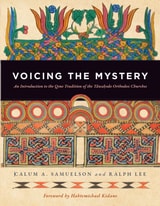
Voicing the Mystery
An Introduction to the Q?ne Tradition of the Täwa??do Orthodox ChurchesCalum A. Samuelson and Ralph Lee
Bridwell Press, 2026
This volume presents a new study of Qǝne, the extemporaneous sacred oral poetry of the Ethiopian and Eritrean Täwaḥǝdo churches. It discusses the technique of “Wax and Gold” used to compose Qǝne through which poets construct multilayered meaning using complex grammatical structures, polysemous vocabulary, and oblique allusions to texts and customs. The Introduction outlines the history of the Qǝne tradition, its liturgical function, and the challenges involved in understanding its multiple layers of meaning, and it provides a detailed account of the translation method developed for this study.
Aimed at both scholars of the Täwaḥǝdo tradition and a wider audience, this book exposes readers to an ancient poetic practice previously inaccessible without a comprehensive knowledge of Gǝʿǝz. The book introduces the new approach of Integrative Translation: each poem is presented through paired Plain and Poetic translations, enabling readers to perceive the branching meanings of the original Gǝʿǝz text and the diverse connections they evoke. A selection of fifteen qǝne poems is included, drawn from published collections compiled by notable traditional scholars of the churches, each featuring the Gǝʿǝz text and paired translations on facing pages.
Extensive annotations guide readers through the interpretive world in which Qǝne is composed, tracing the scriptural, liturgical, exegetical, hagiographical, and cultural sources that shape the tradition and illuminate the multiple meanings embedded in each poem. A Glossary also explains key terms and concepts. This is the first volume to make the Qǝne tradition accessible in English while preserving the distinctive multilayered character of the poetry.