Results by title
3258 books match the query 'Performing Arts' and 40 start with v
Vampire Lectures
Laurence A. Rickels
University of Minnesota Press, 1999
A wild and wide-ranging “psycho-history” of the vampire.
A wild and wide-ranging “psycho-history” of the vampire.
Bela Lugosi may-as the eighties gothic rock band Bauhaus sang-be dead, but the vampire lives on. A nightmarish figure dwelling somewhere between genuine terror and high camp, a morbid repository for the psychic projections of diverse cultures, an endlessly recyclable mass-media icon, the vampire is an enduring object of fascination, fear, ridicule, and reverence. In The Vampire Lectures, Laurence A. Rickels sifts through the rich mythology of vampirism, from medieval folklore to Marilyn Manson, to explore the profound and unconscious appeal of the undead.Based on the course Rickels has taught at the University of California, Santa Barbara, for several years (a course that is itself a cult phenomenon on campus), The Vampire Lectures reflects Rickels’s unique lecture style and provides a lively history of vampirism in legend, literature, and film. Rickels unearths a trove that includes eyewitness accounts of vampire attacks; burial rituals and sexual taboos devised to keep vampirism at bay; Hungarian countess Elisabeth Bathory’s use of girls’ blood in her sadistic beauty regimen; Bram Stoker’s Dracula, with its turn-of-the-century media technologies; F. W. Murnau’s haunting Nosferatu; and crude, though intense, straight-to-video horror films such as Subspecies. He makes intuitive, often unexpected connections among these sometimes wildly disparate sources.More than a compilation of vampire lore, however, The Vampire Lectures makes an original and intellectually rigorous contribution to literary and psychoanalytic theory, identifying the subconscious meanings, complex symbolism, and philosophical arguments-particularly those of Marx, Freud, and Nietzsche-embedded in vampirism and gothic literature.ISBN 0-8166-3391-6 Cloth £34.50 $49.95xxISBN 0-8166-3392-4 Paper £14.00 $19.95376 Pages 5 7/8 x 9 SeptemberTranslation inquiries: University of Minnesota Press
Vanguard Performance Beyond Left and Right
Kimberly Jannarone, Editor
University of Michigan Press, 2015
Vanishing Women
Magic, Film, and FeminismKaren Beckman
Duke University Press, 2003
Drawing on cinema studies and psychoanalysis as well as the histories of magic, spiritualism, and photography, Beckman looks at particular instances of female vanishing at specific historical moments—in Victorian magic’s obsessive manipulation of female and colonized bodies, spiritualist photography’s search to capture traces of ghosts, the comings and goings of bodies in early cinema, and Bette Davis’s multiple roles as a fading female star. As Beckman places the vanishing woman in the context of feminism’s discussion of spectacle and subjectivity, she explores not only the problems, but also the political utility of this obstinate figure who hovers endlessly between visible and invisible worlds. Through her readings, Beckman argues that the visibly vanishing woman repeatedly signals the lurking presence of less immediately perceptible psychic and physical erasures, and she contends that this enigmatic figure, so ubiquitous in late-nineteenth- and twentieth-century culture, provides a new space through which to consider the relationships between visibility, gender, and agency.
Vasari on Theatre
Thomas A. Pallen
Southern Illinois University Press, 1999
In the process of creating the massive work that eventually became Lives of the Most Eminent Painters, Sculptors, and Architects, painter and scholar Giorgio Vasari (1511–1574) spent much of the mid-sixteenth century traveling throughout Italy, meeting Renaissance artists and writing about their lives and works.
From this imposing source, Thomas A. Pallen has created a compendium of theatrical references augmented by related modern Italian scholarship. Vasari's Lives—daunting because of its sheer magnitude—has remained relatively obscure to English-speaking theatre historians. To introduce the numerous scenographic references of this great work to the English-speaking audience, Pallen provides new translations of all relevant passages, as well as a table of cross-references to the principal editions of Vasari in both English and Italian. And because Vasari often omitted important information, Pallen annotates the text, providing important names, places, and historical background.
Essentially, Pallen divides Vasari's work into four categories: triumphs and pageantry, ingegni for mystery plays and festivals, theatrical scenery, and miscellanea and lacunae. Although triumphs and pageantry were not directly theatrical, they were executed by many of the same artists who worked on theatrical productions and either used or introduced many Renaissance Italian theatrical techniques. The works described here range from tableaux vivants and other forms of street decoration to fireworks displays.
While Vasari did not personally know the work of either Filippo Brunelleschi or Francesco d'Angelo (called Cecca), he discusses their inventions for staging mystery plays and street festivals; indeed, Pallen shows how the work of these two artists paved the way for all later Renaissance scenography.
Pallen then deals with Vasari's references to and descriptions of the theatrical scenery and lighting effects of his time and the artists who created them. In accordance with the schema developed by Elena Povoledo, Pallen leads the reader through the evolution of scenographic thought and practice from the elementary work of Girolamo Genga to the advanced settings created by Vasari himself.
Vaudeville Humor
The Collected Jokes, Routines, and Skits of Ed LowryEdited with an Introduction by Paul M. Levitt
Southern Illinois University Press, 2006
Vaudeville Humor: The Collected Jokes, Routines, and Skits of Ed Lowry contains vaudeville jokes, skits, and routines from the first three decades of the twentieth century originally compiled by comedian Ed Lowry (1896–1983). Although occasionally found in bits and pieces in anthologies and in some period dramatic comedies, vaudeville humor has never before been available in one collection—performers rarely if ever kept a record of their jokes and routines. Fortunately, Ed Lowry was an inveterate collector. He kept copious notebooks of jokes and routines that he not only commissioned but also stole from other comics, clipped from newspapers, and copied from now defunct popular magazines of the day.
Editor Paul M. Levitt has reorganized the material into categories that preserve some of the flavor of Lowry’s scrapbooks yet provide for finer distinctions. Part one, “Jokes,” is organized by subject matter and cataloged by genre, dialects, and wordplay. From “Accidents” to “Work,” this exhaustive catalog of humor features over one thousand jokes with topics that range from city slickers and country hicks through midgets and old maids to Swedes and tattoos. Part two, “MC Material: Biz, Jokes, Routines, and Skits” is germane to the job of master of ceremonies, routines, and skits. It features topics from fractured fairy tales to stuttering. Part three, an appendix, “Ed Lowry Laffter,”reproduces a privately published collection that is now a rare collector’s item.
“Although some of the jokes can undoubtedly be found in other places,” explains Levitt in his introduction, “I know of no source as rich as this one for the twenties and thirties, a period so abundant in humor that for years afterward it fueled radio, cinema, and television.”
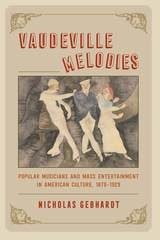
Vaudeville Melodies
Popular Musicians and Mass Entertainment in American Culture, 1870-1929Nicholas Gebhardt
University of Chicago Press, 2017
In Vaudeville Melodies, Nicholas Gebhardt introduces us to the performers, managers, and audiences who turned disjointed variety show acts into a phenomenally successful business. First introduced in the late nineteenth century, by 1915 vaudeville was being performed across the globe, incorporating thousands of performers from every branch of show business. Its astronomical success relied on a huge network of theatres, each part of a circuit and administered from centralized booking offices. Gebhardt shows us how vaudeville transformed relationships among performers, managers, and audiences, and argues that these changes affected popular music culture in ways we are still seeing today. Drawing on firsthand accounts, Gebhardt explores the practices by which vaudeville performers came to understand what it meant to entertain an audience, the conditions in which they worked, the institutions they relied upon, and the values they imagined were essential to their success.
Veni, Vidi, Video
The Hollywood Empire and the VCRBy Frederick Wasser
University of Texas Press, 2002
A funny thing happened on the way to the movies. Instead of heading downtown to a first-run movie palace, or even to a suburban multiplex with the latest high-tech projection capabilities, many people's first stop is now the neighborhood video store. Indeed, video rentals and sales today generate more income than either theatrical releases or television reruns of movies.
This pathfinding book chronicles the rise of home video as a mass medium and the sweeping changes it has caused throughout the film industry since the mid-1970s. Frederick Wasser discusses Hollywood's initial hostility to home video, which studio heads feared would lead to piracy and declining revenues, and shows how, paradoxically, video revitalized the film industry with huge infusions of cash that financed blockbuster movies and massive marketing campaigns to promote them. He also tracks the fallout from the video revolution in everything from changes in film production values to accommodate the small screen to the rise of media conglomerates and the loss of the diversity once provided by smaller studios and independent distributors.
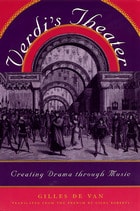
Verdi's Theater
Creating Drama through MusicGilles de Van
University of Chicago Press, 1998
Although melodrama tends to dominate Verdi's early work and musical drama his later, both aesthetics are woven into all his operas: musical drama is already present in Ernani (1844), and melodrama is still present in Otello (1887). Indeed, much of the interest and originality of Verdi's operas lies in his adherence to both these contradictory systems, allowing the composer/dramatist to be simultaneously classical and modern, traditionalist and innovator.

Verdi’s Aida
The History of an Opera in Letters and DocumentsTranslated by Hans Busch
University of Minnesota Press, 1978
Verdi's Aida was first published in 1978. Minnesota Archive Editions uses digital technology to make long-unavailable books once again accessible, and are published unaltered from the original University of Minnesota Press editions.

Versions of Hollywood Crime Cinema
Studies in Ford, Wilder, Coppola, Scorsese, and OthersCarl Freedman
Intellect Books, 2013
Film, argues Carl Freedman, is an especially fruitful medium for considering questions like these. With Versions of Hollywood Crime Cinema, he offers a series of critical readings spanning several genres. From among the mob movies, Freedman focuses on Francis Ford Coppola’s Godfather trilogy—arguably the foremost work of crime cinema—crafting a convincing argument that the plot’s action is principally driven by the shift from Sicily to America, which marks the shift to a capitalist society. Turning his attention to other genres, Freedman also looks at film noir and Westerns, in addition to films for which crime is significant but not central, from horror movies like Stanley Kubrick’s The Shining to science fiction and social realist films like The Grapes of Wrath. In recent years, television has welcomed innovative works like Boardwalk Empire, The Wire, and The Sopranos, and Freedman discusses how television’s increasingly congenial creative environment has allowed it to turn out productions whose ability to engage with these larger social questions rivals that of films from the height of cinema’s Golden Age.
Very Special Episodes
Televising Industrial and Social ChangeJonathan Cohn
Rutgers University Press, 2021
Victorian Vogue
British Novels on ScreenDianne F. Sadoff
University of Minnesota Press, 2009
Ranging from cinematic images of Jane Austen's estates to Oscar Wilde's drawing rooms, Dianne F. Sadoff looks at popular heritage films, often featuring Hollywood stars, that have been adapted from nineteenth-century novels.
Victorian Vogue argues that heritage films perform different cultural functions at key historical moments in the twentieth century. According to Sadoff, they are characterized by a double historical consciousness-one that is as attentive to the concerns of the time of production as to those of the Victorian period. If James Whale's Frankenstein and Tod Browning's Dracula exploited post-Depression fear in the 1930s, the horror films of the 1950s used the genre to explore homosexual panic, 1970s movies elaborated the sexuality only hinted at in the thirties, and films of the 1990s indulged the pleasures of consumption.
Taking a broad view of the relationships among film, literature, and current events, Sadoff contrasts films not merely with their nineteenth-century source novels but with crucial historical moments in the twentieth century, showing their cultural use in interpreting the present, not just the past.

Video for Change
A Guide For Advocacy and ActivismEdited by Sam Gregory, Gillian Caldwell, Ronit Avni, and Thomas Harding
Pluto Press, 2005
Written by leading video activists, and staff of the world-renowned human rights organization WITNESS, this practical handbook will appeal to experienced campaigners as well as aspiring video activists. It combines a comprehensive analysis of what's going on in this growing global field with a how-to primer to doing it yourself.
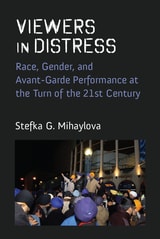
Viewers in Distress
Race, Gender, Religion, and Avant-Garde Performance at the Turn of the Twenty-First CenturyStefka G. Mihaylova
University of Michigan Press, 2023
Honorable Mention: American Society for Theatre Research Barnard Hewitt Award | November 8, 2024
Conventional notions of avant-garde art suggest innovative artists rebelling against artistic convention and social propriety, shocking unwilling audiences into new ways of seeing and living. Viewers in Distress tells a different story. Beginning in the tumultuous 1990s, after the fall of the Berlin Wall and in the wake of the Los Angeles riots, rebellious spectators in American and British theaters broke with theater decorum and voiced their radical interpretations of shows that were not meant to be radical. In doing so, audiences tried to understand the complex racial, gender, and religious politics of their times, while insisting that liberal societies fulfill their promise of dignity for all. Stefka Mihaylova argues that such non-conforming viewing amounts to an avant-garde of its own: a bold reimagining of how we live together and tell stories of our lives together, aimed to achieve liberalism’s promise. In telling this story, she analyzes the production and reception politics of works by Susan-Lori Parks, Sarah Kane, Forced Entertainment, Gurpreet Kaur Bhatti, and Young Jean Lee, as well as non-theatrical controversies such as the conflict over Halloween costumes at Yale in 2015. At the core of spectators’ discontent, this book suggests, is an effort to figure out how to get along with people different from ourselves in the diverse U.S. and British societies in which we live.
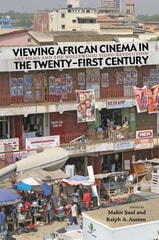
Viewing African Cinema in the Twenty-First Century
Art Films and the Nollywood Video RevolutionMahir Saul
Ohio University Press, 2010
African cinema in the 1960s originated mainly from Francophone countries. It resembled the art cinema of contemporary Europe and relied on support from the French film industry and the French state. Beginning in 1969 the biennial Festival panafricain du cinéma et de la télévision de Ouagadougou (FESPACO), held in Burkina Faso, became the major showcase for these films. But since the early 1990s, a new phenomenon has come to dominate the African cinema world: mass-marketed films shot on less expensive video cameras. These “Nollywood” films, so named because many originate in southern Nigeria, are a thriving industry dominating the world of African cinema.
Viewing African Cinema in the Twenty-first Century is the first book to bring together a set of essays offering a comparison of these two main African cinema modes.
Contributors: Ralph A. Austen and Mahir Şaul, Jonathan Haynes, Onookome Okome, Birgit Meyer, Abdalla Uba Adamu, Matthias Krings, Vincent Bouchard, Laura Fair, Jane Bryce, Peter Rist, Stefan Sereda, Lindsey Green-Simms, and Cornelius Moore
Viewing Positions
Ways of Seeing FilmWilliams, Linda
Rutgers University Press, 1994
Viewing Positions
Ways of Seeing FilmWilliams, Linda
Rutgers University Press, 1994
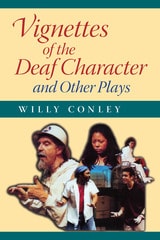
Vignettes of the Deaf Character and Other Plays
Willy Conley
Gallaudet University Press, 2009
After spending three years in The National Theatre of the Deaf performing plays by hearing authors featuring hearing characters, Willy Conley realized that he wanted to write plays with deaf, hard-of- hearing, and hearing characters created from the Deaf perspective. Vignettes of the Deaf Character and Other Plays presents the result of his desire in twelve masterful plays.
“I write for the eye, always searching for live, mobile, provocative images that would fill and illuminate the entire stage space with the complexities, the pathos, and the humor involved when deaf and hearing cultures merge or collide,” writes Conley in his introduction. His plays depict a wide range of Deaf characters, including two brothers locked in a tragic rivalry familiar to families of all backgrounds; the broadly comedic Deaf Guide and hearing Techie interspersing laughs with cultural lessons in their Museum of Signs for People with Communication Disorders; Everyone searching for her Good Deeds as she faces imminent Death in an updating of the classic morality play, plus many others. These works explore a broad palette of circumstances with and without hearing characters, allowing Deaf characters to interact minus the direct influence that the dominant culture might exert. Vignettes of the Deaf Character and Other Plays presents the drama and passion of a master playwright who, through his perceptions, reveals facets of the Deaf character in all of us.
Violence and Grace
Exceptional Life between Shakespeare and ModernityNichole E. Miller
Northwestern University Press, 2014
In Violence and Grace, Nichole Miller establishes a conceptual link between early modern English drama and twentieth-century political theology, both of which emerge from the experience of political crisis. Miller’s analyses accordingly undertake to retrieve for political theology the relations between gender, sexuality, and the political aesthetics of violence on the early modern stage, addressing the plays of Marlowe, Middleton, and especially Shakespeare. In doing so, she expands our understanding of drama’s continuing theoretical impact.
Viral Performance
Contagious Theaters from Modernism to the Digital AgeMiriam Felton-Dansky
Northwestern University Press, 2018
Viral performance practices testify to the age-old—and ever renewed—instinct that when people gather, something spreads. Performance, an art form requiring and relying on live contact, renders such spreading visible, raises its stakes, and encodes it in theatrical form. The artists explored here rarely disseminate their ideas or gestures as directly as a viral marketer or a political movement would; rather, they undermine simplified forms of contagion while holding dialogue with the philosophical and popular discourses, old and new, that have surrounded viral culture.
Viral Performance argues that the concept of the viral is historically deeper than immediate associations with the contemporary digital landscape might suggest, and far more intimately linked to live performance
Virtual Hallyu
Korean Cinema of the Global EraKyung Hyun Kim
Duke University Press, 2011
In the late 1990s, South Korean film and other cultural products, broadly known as hallyu (Korean wave), gained unprecedented international popularity. Korean films earned an all-time high of $60.3 million in Japan in 2005, and they outperformed their Hollywood competitors at Korean box offices. In Virtual Hallyu, Kyung Hyun Kim reflects on the precariousness of Korean cinema’s success over the past decade. Arguing that state film policies and socioeconomic factors cannot fully explain cinema’s true potentiality, Kim draws on Deleuze’s concept of the virtual—according to which past and present and truth and falsehood coexist—to analyze the temporal anxieties and cinematic ironies embedded in screen figures such as a made-in-the-USA aquatic monster (The Host), a postmodern Chosun-era wizard (Jeon Woo-chi), a schizo man-child (Oasis), a weepy North Korean terrorist (Typhoon), a salary man turned vengeful fighting machine (Oldboy), and a sick nationalist (the repatriated colonial-era film Spring of Korean Peninsula). Kim maintains that the full significance of hallyu can only be understood by exposing the implicit and explicit ideologies of protonationalism and capitalism that, along with Korea’s ambiguous post-democratization and neoliberalism, are etched against the celluloid surfaces.
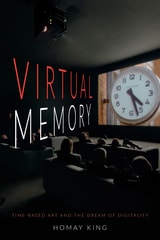
Virtual Memory
Time-Based Art and the Dream of DigitalityHomay King
Duke University Press, 2015
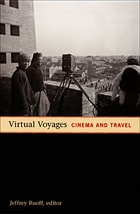
Virtual Voyages
Cinema and TravelJeffrey Ruoff, ed.
Duke University Press, 2006
Some contributors take a broad view of travelogues by examining the colonial and imperial perspectives embodied in early travel films, the sensation of movement that those films evoked, and the role of live presentations such as lectures in our understanding of travelogues. Other essays are focused on specific films, figures, and technologies, including early travelogues encouraging Americans to move to the West; the making and reception of the documentary Grass (1925), shot on location in Turkey, Syria, Iraq, and Iran; the role of travel imagery in 1930s Hollywood cinema; the late-twentieth-century 16mm illustrated-lecture industry; and the panoramic possibilities presented by IMAX technologies. Together the essays provide a nuanced appreciation of how, through their representations of travel, filmmakers actively produce the worlds they depict.
Contributors. Rick Altman, Paula Amad, Dana Benelli, Peter J. Bloom, Alison Griffiths, Tom Gunning, Hamid Naficy, Jennifer Lynn Peterson, Lauren Rabinovitz, Jeffrey Ruoff, Alexandra Schneider, Amy J. Staples

Viscous Performances
The Persistence of Creative Resistances in Neoliberal ChileMaría José Contreras Lorenzini
Duke University Press, 2026
Visible Borders, Invisible Economies
Living Death in Latinx NarrativesKristy L. Ulibarri
University of Texas Press, 2022
2023 Outstanding Book Award, National Association for Ethnic Studies
A thorough examination of the political and economic exploitation of Latinx subjects, migrants, and workers through the lens of Latinx literature, photography, and film.
Globalization in the United States can seem paradoxical: free trade coincides with fortification of the southern border, while immigration is reimagined as a national-security threat. US politics turn aggressively against Latinx migrants and subjects even as post-NAFTA markets become thoroughly reliant on migrant and racialized workers. But in fact, there is no incongruity here. Rather, anti-immigrant politics reflect a strategy whereby capital uses specialized forms of violence to create a reserve army of the living, laboring dead.
Visible Borders, Invisible Economies turns to Latinx literature, photography, and films that render this unseen scheme shockingly vivid. Works such as Valeria Luiselli’s Tell Me How It Ends and Alex Rivera’s Sleep Dealer crystallize the experience of Latinx subjects and migrants subjugated to social death, their political existence erased by disenfranchisement and racist violence while their bodies still toil in behalf of corporate profits. In Kristy L. Ulibarri’s telling, art clarifies what power obscures: the national-security state performs anti-immigrant and xenophobic politics that substitute cathartic nationalism for protections from the free market while ensuring maximal corporate profits through the manufacture of disposable migrant labor.
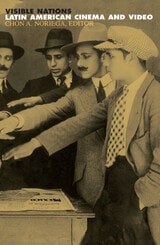
Visible Nations
Latin American Cinema and VideoChon A. Noriega
University of Minnesota Press, 2000
Rewrites Latin American film from the perspective of nationhood.
In the current "global" moment, the study of Latin American cinema has become insistently national—a phenomenon fully explored in this collection of essays by some of the most interesting and innovative scholars of media and Latin American culture working today.
The contributors to Visible Nations consider different national film and video histories in Latin America since the silent period. From the perspectives of feminism, psychoanalysis, new historicism, and reception theory, among others, they consider the styles through which—and the ends toward which—the nation has been represented, desired, and contested in films, film industries, and alternative video work in Mexico, Chile, Venezuela, Brazil, Colombia, and Cuba. The result is nothing less than a rewriting of Latin American film history. Contributors: Patricia Aufderheide, American U; Charles Ramírez Berg, U of Texas at Austin; Gilberto Moises Blasini; Julianne Burton-Carvajal, U of California, Santa Cruz; Seth Fein, Georgia State U; Claire F. Fox, Stanford U; Brian Goldfarb, U of Rochester; Ilene S. Goldman; Monica Hulsbus; Ana M. López, Tulane U; Kathleen Newman, U of Iowa; Laura Podalsky, Bowling Green State U; Harmony H. Wu.
Vision and Stagecraft in Sophocles
David Seale
University of Chicago Press, 1982
Visions and Victims
Art Melodrama in the Films of Carl Th. DreyerAmanda Doxtater
University of Wisconsin Press, 2024
Amanda Doxtater offers a necessary corrective to this narrative of his bifurcated career. Close readings of Dreyer’s Nordisk films alongside his mature work reveal a stylistic throughline Doxtater terms “art melodrama,” a form combining the ambiguity, stylization, and consciousness of art cinema with the heightened emotional expressivity and dramatic embodiments characteristic of melodrama. She argues that Dreyer’s major artistic concerns known from his later work—pathos, authenticity, the embodiment of psychological duress, and so on—find their first expression in his Nordisk melodramas, complicating our understanding not only of his later films but also of his early works, and even our understanding of the melodramatic mode in general. Indeed, extending well beyond the career of a singular director, this book challenges assumptions about the relationship between “low-brow” melodrama and “high-brow” art cinema.
Visions of Paradise
Images of Eden in the CinemaDixon, Wheeler Winston
Rutgers University Press, 2006
Depictions of sex, violence, and crime abound in many of today's movies, sometimes making it seem that the idyllic life has vanished-even from our imaginations. But as shown in this unique book, paradise has not always been lost. For many years, depictions of heaven, earthly paradises, and utopias were common in popular films.
Illustrated throughout with intriguing, rare stills and organized to provide historical context, Visions of Paradise surveys a huge array of films that have offered us glimpses of life free from strife, devoid of pain and privation, and full of harmony. In films such as Moana, White Shadows in the South Seas, The Green Pastures, Heaven Can Wait, The Enchanted Forest, The Bishop's Wife, Carousel, Bikini Beach, and Elvira Madigan, characters and the audience partake in a vision of personal freedom and safety-a zone of privilege and protection that transcends the demands of daily existence.
Many of the films discussed are from the 1960s-perhaps the most edenic decade in contemporary cinema, when everything seemed possible and radical change was taken for granted. As Dixon makes clear, however, these films have not disappeared with the dreams of a generation; they continue to resonate today, offering a tonic to the darker visions that have replaced them.
Visions of the East
Orientalism in FilmBernstein, Matthew
Rutgers University Press, 1997
The Sheik. Pépé le Moko. Casablanca. Aladdin. Some of the most popular and frequently discussed titles in movie history are imbued with orientalism, the politically-charged way in which western artists have represented gender, race, and ethnicity in the cultures of North Africa and Asia. This is the first anthology to address and highlight orientalism in film from pre-cinema fascinations with Egyptian culture through the "Whole New World" of Aladdin. Eleven illuminating and well-illustrated essays utilize the insights of interdisciplinary cultural studies, psychoanalysis, feminism, and genre criticism. Other films discussed includeThe Letter, Caesar and Cleopatra, Lawrence of Arabia, Indochine, and several films of France's cinéma colonial.
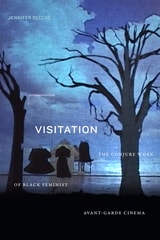
Visitation
The Conjure Work of Black Feminist Avant-Garde CinemaJennifer DeClue
Duke University Press, 2022
Duke University Press Scholars of Color First Book Award recipient
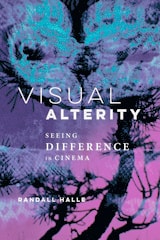
Visual Alterity
Seeing Difference in CinemaRandall Halle
University of Illinois Press, 2021
Using cinema to explore the visual aspects of alterity, Randall Halle analyzes how we become cognizant of each other and how we perceive and judge another person in a visual field. Halle draws on insights from philosophy and recent developments in cognitive and neuroscience to argue that there is no pure "natural" sight. We always see in a particular way, from a particular vantage point, and through a specific apparatus, and Halle shows how human beings have used cinema to experiment with the apparatus of seeing for over a century. Visual alterity goes beyond seeing difference to being conscious of how one sees difference. Investigating the process allows us to move from mere perception to apperception, or conscious perception.
Innovative and insightful, Visual Alterity merges film theory with philosophy and cutting-edge science to propose new ways of perceiving and knowing.
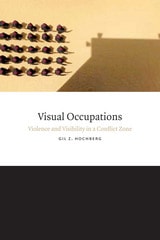
Visual Occupations
Violence and Visibility in a Conflict ZoneGil Z. Hochberg
Duke University Press, 2015
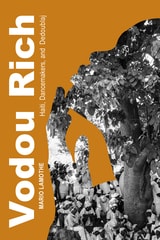
Vodou Rich
Haiti, Dancemakers, and DedoublajMario LaMothe
University of Illinois Press, 2026
LaMothe weaves Vodou teaching practices with humanist and social science theory to shed light on how choreographers move among ideas of Haitian bodies as vessels, producers, and traffickers of Vodou economies. As he shows, the dancemakers’ work maneuvers through national uncertainties and international caricatures of Haiti’s challenges. At the same time, it pivots between these phenomena via dedoublaj—the act of doubling, self-doubling, transformation, and soulful travel. LaMothe’s analysis of dedoublaj reveals how dancemakers reimagine Haitian bodies as self-possessed human beings remedying unjust practices, envisioning chances for solidarity and being, and setting a course for queerly paced futures.
Powerful and multidisciplinary, Vodou Rich explores Haitian dancemaking at home and its reception around the world.
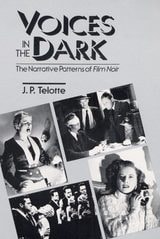
Voices in the Dark
THE NARRATIVE PATTERNS OF *FILM NOIR*J. P. Telotte
University of Illinois Press, 1989
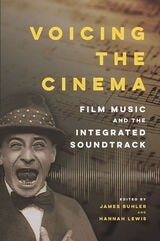
Voicing the Cinema
Film Music and the Integrated SoundtrackEdited by James Buhler and Hannah Lewis
University of Illinois Press, 2020
The collection is divided into four sections. The first explores historical approaches to technology in the silent film, French cinema during the transition era, the films of the so-called New Hollywood, and the post-production sound business. The second investigates the practice of the singing voice in diverse repertories such as Bergman's films, Eighties teen films, and girls' voices in Brave and Frozen. The third considers the auteuristic voice of the soundtrack in works by Kurosawa, Weir, and others. A last section on narrative and vococentrism moves from The Martian and horror film to the importance of background music and the state of the soundtrack at the end of vococentrism.
Contributors: Julie Brown, James Buhler, Marcia Citron, Eric Dienstfrey, Erik Heine, Julie Hubbert, Hannah Lewis, Brooke McCorkle, Cari McDonnell, David Neumeyer, Nathan Platte, Katie Quanz, Jeff Smith, Janet Staiger, and Robynn Stilwell
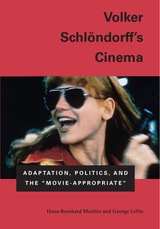
Volker Schlondorff's Cinema
Adaptation, Politics, and the "Movie-Appropriate"Hans-Bernhard Moeller and George Lellis
Southern Illinois University Press, 2002
Volker Schlöndorff’s Cinema: Adaptation, Politics and the “Movie-Appropriate”examines the work of major postwar Germandirector Volker Schlöndorff in historical, economic, and artistic contexts. Incorporating a film-by-film, twenty-eight chapter study, Hans-Bernhard Moeller & George Lellis reveal a complexity and formalambitiousness of Schlöndorff that is comparable to that found in Wenders, Herzog, andFassbinder. In spite of Schlöndorff’s successes with films like The Lost Honor ofKatharina Blum and The Tin Drum, as well as his acclaimed work in the U.S. with Death of a Salesman, Gathering of Old Men and The Handmaid’s Tale, this is the first in-depthcritical study of the filmmaker’s career.
In the context of film and television history, this book relates Schlöndorff’s oeuvre to the New German Cinema, to his formative years as a student and production assistant in France, and to his roots in the Weimar cinema’s tradition. It reveals how Schlöndorff entered into the German film production system in the 1960s, how he came to rely on German public television in the 1970s, and then moved to the international and American financing in the 1980s, attempting to redevelop the Babelsberg studios in a 1990s post-Wall Germany while continuing to make his own films into the 21st century. The book captures how Schlöndorff’s nearly half century of ongoing creativity and productivity ties together.
The authors analyze the artistry of each Schlöndorff movie arguing that his output as a whole embodies a provocative and sometimes contradictory set of balances. Schlöndorff combines commercial interest with significant artistic ambition, blends the kinesthetic pleasures of moving images with the seriousness of fine literature, links the intensity of individualized personal experience to an awareness of broader political issues, and represents a specifically German sensibility even as he reaches out to the international audiences.
The authors demonstrate the cyclical recurrence in his cinema of certain themes (individual and collective rebellion, fascist suppression, masochistic love), narrative patterns (the Western, the thriller, the subjective mood piece), and stylistic approaches (Brechtian Verfremdung, the creation of careful leitmotif structures, the use of the grotesque). In over thirty years of filmmaking, Schlöndorff has produced a remarkable unified body of work that deserves the attention of a book-length study. Authors Hans-Bernhard Moeller and George Lellis offer the first such study of its kind.
Volker Schlöndorff’s Cinema: Adaptation, Politics, and the “Movie-Appropriate” features forty-one illustrations.
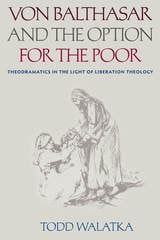
Von Balthasar & the Option for the Poor
Theodramatics in the Light of Liberation TheologyTodd Walatka
Catholic University of America Press, 2017
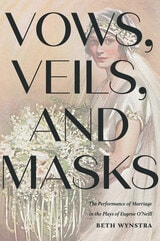
Vows, Veils, and Masks
The Performance of Marriage in the Plays of Eugene O'NeillBeth Wynstra
University of Iowa Press, 2023
Weaving in artifacts like advice columns, advertisements, theatrical reviews, and even the lived experiences of the actors who brought O’Neill’s wife characters to life, Beth Wynstra points to new ways of seeing and empathizing with those who are betrothed and new possibilities for reading marriage in literary and dramatic works. She suggests that the various ways women were, and still are, expected to divert from their true ambitions, desires, and selves in the service of appropriate wifely behavior is a detrimental performance and one at the crux of O’Neill’s marital tragedies. This book invites more inclusive and nuanced ways of thinking about the choices married characters must make and the roles they play, both on and off the stage.
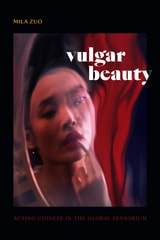
Vulgar Beauty
Acting Chinese in the Global SensoriumMila Zuo
Duke University Press, 2022