Results by title
283 books match the query 'Phenomenology' and 3 start with v

Violence and Splendor
Alphonso Lingis
Northwestern University Press, 2011
“The Sacred” studies the ways death—the death of others and our own death—fascinates and energizes us. It exhibits the glory in violence and sacrilege. The book culminates in “Splendor,” a study of collective performances that create splendor. Concerning itself most immediately with philosophy, psychology, aesthetics, anthropology, and the theory of religion, Violence and Splendor bridges the discourses of continental philosophy and cross-cultural studies. Further drawing insights from both Western and non-Western traditions, it brings such diverse fields as psychology, art and aesthetics, botany, politics, history, zoology, and religious theory into a new and significant dialogue about the nature of humanity.
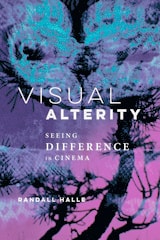
Visual Alterity
Seeing Difference in CinemaRandall Halle
University of Illinois Press, 2021
Using cinema to explore the visual aspects of alterity, Randall Halle analyzes how we become cognizant of each other and how we perceive and judge another person in a visual field. Halle draws on insights from philosophy and recent developments in cognitive and neuroscience to argue that there is no pure "natural" sight. We always see in a particular way, from a particular vantage point, and through a specific apparatus, and Halle shows how human beings have used cinema to experiment with the apparatus of seeing for over a century. Visual alterity goes beyond seeing difference to being conscious of how one sees difference. Investigating the process allows us to move from mere perception to apperception, or conscious perception.
Innovative and insightful, Visual Alterity merges film theory with philosophy and cutting-edge science to propose new ways of perceiving and knowing.
Voice and Phenomenon
Introduction to the Problem of the Sign in Husserl's PhenomenologyJacques Derrida, Translated from the French by Leonard Lawlor
Northwestern University Press, 2011
Only in relation to phenomenology is it possible to measure the importance of deconstruction. Only in relation to Husserl’s philosophy is it possible to understand the novelty of Derrida’s thinking. Voice and Phenomenon therefore may be the best introduction to Derrida’s thought in general. To adapt Derrida’s comment on Husserl’s Logical Investigations, it contains “the germinal structure” of Derrida’s entire thought. Lawlor’s fresh translation of Voice and Phenomenon brings new life to Derrida’s most seminal work.