Results by title
572 books match the query 'Photography' and 5 start with v

Venus Inferred
Laura Letinsky
University of Chicago Press, 2000
Accompanying the photographs is an essay by critic Lauren Berlant, which presents an aesthetic and cultural analysis of the contemporary images of romance and intimacy. Berlant contemplates the burden of clarity that sexuality bears, implicit both in conventional romantic ideals and in the "counterpolitics of the flesh" that desires to escape them. Thus arises the sublime ordinariness of Letinsky's couples, Berlant argues: "As 'normal' pleasures themselves become deemed modes of domination, the already destabilizing aspects of sexuality can feel even more unsettling." An interview between Letinsky and Berlant unfolds the artist's intellectual formation while exploring the unsettling and pleasurable power of her images as they circulate through the domains of romance, sexuality, and contemporary culture.

Vesna Pavlovic
StagecraftVesna Pavlovic
Vanderbilt University Press, 2021
The book includes critical essays that contextualize and expound on Pavlović's unique treatment of the photographic medium, in which a photographic moment is expanded to include the conditions of image making, production, documentation, and representation.
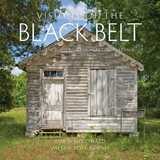
Visions of the Black Belt
A Cultural Survey of the Heart of AlabamaRobin McDonald and Valerie Pope Burnes
University of Alabama Press, 2015
Capturing the soul of the South’s Black Belt.
In Visions of the Black Belt, Robin McDonald and Valerie Pope Burnes offer a richly illustrated tour of the Black Belt, the fertile arc that represents the cultural efflorescence of Alabama’s heartland. Like knowledgeable friends, McDonald and Burnes guide readers through the Black Belt’s towns and architecture and introduce the region’s great panoply of citizens, farmers, craftspeople, cooks, writers, and musicians.
A constellation of Black Belt towns arose during Alabama’s territorial decades, communities like Selma, Camden, Eutaw, Tuskegee, Greenville, and many more. Visions of the Black Belt recounts their stories and others, such as Demopolis’s founding by exiles from Napoleon’s France. As an escarpment of clouds scuds across an indigo sky, the ruins of Alabama’s lost capital of Cahaba reveal the secrets of its lost squares. Also on this picturesque tour are the Black Belt’s homes, from artless cabins wreathed in fern to ozymandian manses wrapped by stately columns, such as Kirkwood and Reverie.
Among the emblematic houses of worship lovingly photographed in Visions of the Black Belt is Prairieville’s St. Andrew’s Episcopal Church, noted for its “carpenter gothic” style. Also reflecting the region’s history of faith are poignant graveyards such as Greenville’s Pioneer Cemetery with its homespun memorials of seashell-and-concrete and the elegant marbles clad in ebon lichen of Selma's Live Oak Cemetery.
In photos and text, McDonald and Burnes bring to life the layers of history that shaped the Black Belt’s tastes, sounds, and colors. Their gastronomic discoveries include the picant crawfish of the Faunsdale Bar & Grill and GainesRidge Dining Club’s famed Black Bottom pie. They bring the sounds of the Black Belt to life by presenting a wide range of musicians and musical events, from bona fide blues and soul masters to Eutaw’s Black Belt Roots Festival.
Including two maps and more than 370 full-color photographs, Visions of the Black Belt offers a timeless message of faith, determination, and the rich simplicity of living in harmony with the rhythms of the land and nature.
Published in Cooperation with the Black Belt Treasures Cultural Arts Center, Camden, Alabama.

Vivian Maier
A Photographer’s Life and AfterlifePamela Bannos
University of Chicago Press, 2017
But, as Pamela Bannos reveals in this meticulous and passionate biography, this story of the nanny savant has blinded us to Maier’s true achievements, as well as her intentions. Most important, Bannos argues, Maier was not a nanny who moonlighted as a photographer; she was a photographer who supported herself as a nanny. In Vivian Maier: A Photographer’s Life and Afterlife, Bannos contrasts Maier’s life with the mythology that strangers—mostly the men who have profited from her work—have created around her absence. Bannos shows that Maier was extremely conscientious about how her work was developed, printed, and cropped, even though she also made a clear choice never to display it. She places Maier’s fierce passion for privacy alongside the recent spread of her work around the world, and she explains Maier’s careful adjustments of photographic technique, while explaining how the photographs have been misconstrued or misidentified. As well, Bannos uncovers new information about Maier’s immediate family, including her difficult brother, Karl—relatives that once had been thought not to exist.
This authoritative and engrossing biography shows that the real story of Vivian Maier, a true visionary artist, is even more compelling than the myth.
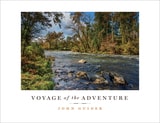
Voyage of the Adventure
Retracing the Donelson Party's Journey to the Founding of NashvilleJohn Guider
Vanderbilt University Press, 2021
This photo book contains more than 120 striking images from the course of the journey, allowing the reader to see how much has changed and how much has remained untouched in the two and a half centuries since Donelson first took to the water. Equally significant, the essays include long-ignored contemporary histories of both the Cherokee whom Donelson encountered and the slaves he brought with him, some of whom did not survive the journey.
Guider, a professional photographer, has created images of every point in the thousand-mile trip from a platform just a few feet above the waterline of three of Tennessee’s most notable rivers.