Results by title
557 books match the query 'Poems' and 5 start with v

Vega’s Fugitive
PoemsMarina Tsvetaeva, Alyssa Dinega Gillespie
Northwestern University Press, 2027
An incandescent new collected translation of virtuosic Russian poet Marina Tsvetaeva
Marina Tsvetaeva needs no introduction—a poetic genius, she is one of the most gifted and original poets in the Russian literary canon. All the verse genres Tsvetaeva employed, including lyric poems, poetic cycles, and long narrative poems, are represented here, in Vega’s Fugitive, translated by award-winning translator and Tsvetaeva scholar Alyssa Dinega Gillespie. Tsvetaeva’s poems, some never-before translated, appear in potent English versions that are both highly faithful to the originals and lyrical in their own right. As a result, Tsvetaeva’s verse—with its driving rhythms, striking sound plays, and searing insights—is reborn in a new language and new constellations of meaning. These poems dive fearlessly into themes of place, time, and distance; the female body; the poet’s fate; desire and longing; grief, loss, and immortality. Vega’s Fugitive makes Tsvetaeva’s masterful work not just accessible, but unforgettable for English-language readers around the world.
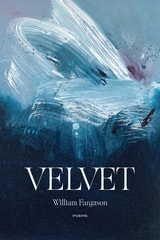
Velvet
PoemsWilliam Fargason
Northwestern University Press, 2024
Velvet, the second full-length collection from award-winning poet William Fargason, explores chronic illness, patriarchal abuse, intergenerational trauma, and racial inequality in the American South. Its speaker moves through the generations that preceded him to understand himself, and to heal from traumas both inherited and lived. As part of that heritage, the speaker confronts a family history of participation in racist ideologies and organizations to make sense of his own place within, and responsibility to, this history. In the titular lyric essay, “Velvet,” Fargason braids scientific research and YouTube videos in an attempt to forge paths for healing while contending with an inherited chronic disease. Ultimately, Velvet argues against traditional forms of toxic masculinity and suggests that vulnerability, soft and bleeding as the velvet on a deer’s antlers, offers one solution to it.
Violin Playing Herself in a Mirror
PoemsDavid Kutz-Marks
University of Massachusetts Press, 2015

Vivid Companion
PoemsIrene McKinney
West Virginia University Press, 2004
This fifth collection of poetry from West Virginia's poet laureate and author of Six O'Clock Mine Report is an extraordinary set of poems which reflects the complexity, the magnanimity, and the resilience of the human spirit. McKinney writes with candor, precision, and compassion; most importantly, though, her poems are accessible to all types of readers.

Vulnerability Index
PoemsElizabeth Robinson
Northwestern University Press, 2026
During Elizabeth Robinson’s six years working with chronically unhoused people in Boulder, Colorado, her relationships with the community’s most vulnerable deepened—even as they were filtered through a web of paperwork, systems, and strictures. The Vulnerability Index questionnaire is just one such system. Ubiquitous in shelters across America, it is representative of the endless tasks that people living on the street must complete to receive even minor assistance.
Moving between the local court, jail, shelter, and soup kitchen, Robinson’s poems capture the strange juxtapositions of the intimate, bureaucratic, and absurd that such spaces demand: a frostbite victim wants to share his state-sponsored recovery room with a friend from the street, a domestic violence survivor must change her name and even her social security number, an unhoused activist joins a vigil for another woman only to discover that she is, mistakenly, the person being mourned. Spare yet richly empathetic, Robinson’s verse works to implicate the reader’s own vulnerability on every page.