Results by title
3785 books match the query 'Poetry' and 36 start with v
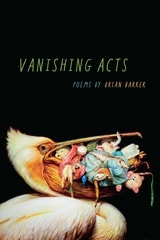
Vanishing Acts
Brian Barker
Southern Illinois University Press, 2019
A linked sequence of poems forms the book’s backbone, with an oracular voice from the future heralding the return—or hoped for return—of common animals. Part lyrical odes, part creation myths, part excerpts from a bizarre guide for naturalists, these poems mix fact and fiction, science and fable to create an unsettling vision of a dystopian world stricken by extinction, one where the world’s last catfish sleeps “in the shadow of a hydroelectric dam.” The imaginative language and bizarre stories of these poems are perfectly suited to capture a world that no longer makes sense: a man who wears a toupee to hide an injury inflicted by secret police, a group of villagers who make a bad bargain with a land agent.
The poems in Vanishing Acts straddle the comic and the tragic. They are by turns funny and haunting and ripe with scathing satire. They draw on the genres of speculative and science fiction as much as poetic traditions, and speak to the precarious state of man and the natural world in the twenty-first century.
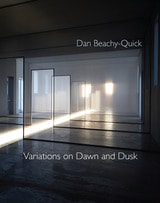
Variations on Dawn and Dusk
Dan Beachy-Quick
Omnidawn, 2019
Building from Irwin’s use of rhythm and structure, the poems in this collection are constructed with an architectural framework. Rhythmic procedures inversely link the first and last words of the first and last lines of each poem and tie the number of lines to the number of syllables in the first line. These structures form a pattern, a thoughtful consistency through which we are invited to move and meditate with each variation of light.
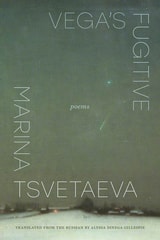
Vega’s Fugitive
PoemsMarina Tsvetaeva, Alyssa Dinega Gillespie
Northwestern University Press, 2027
An incandescent new collected translation of virtuosic Russian poet Marina Tsvetaeva
Marina Tsvetaeva needs no introduction—a poetic genius, she is one of the most gifted and original poets in the Russian literary canon. All the verse genres Tsvetaeva employed, including lyric poems, poetic cycles, and long narrative poems, are represented here, in Vega’s Fugitive, translated by award-winning translator and Tsvetaeva scholar Alyssa Dinega Gillespie. Tsvetaeva’s poems, some never-before translated, appear in potent English versions that are both highly faithful to the originals and lyrical in their own right. As a result, Tsvetaeva’s verse—with its driving rhythms, striking sound plays, and searing insights—is reborn in a new language and new constellations of meaning. These poems dive fearlessly into themes of place, time, and distance; the female body; the poet’s fate; desire and longing; grief, loss, and immortality. Vega’s Fugitive makes Tsvetaeva’s masterful work not just accessible, but unforgettable for English-language readers around the world.
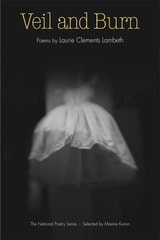
Veil and Burn
Laurie Clements Lambeth
University of Illinois Press, 2007
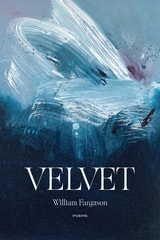
Velvet
PoemsWilliam Fargason
Northwestern University Press, 2024
Velvet, the second full-length collection from award-winning poet William Fargason, explores chronic illness, patriarchal abuse, intergenerational trauma, and racial inequality in the American South. Its speaker moves through the generations that preceded him to understand himself, and to heal from traumas both inherited and lived. As part of that heritage, the speaker confronts a family history of participation in racist ideologies and organizations to make sense of his own place within, and responsibility to, this history. In the titular lyric essay, “Velvet,” Fargason braids scientific research and YouTube videos in an attempt to forge paths for healing while contending with an inherited chronic disease. Ultimately, Velvet argues against traditional forms of toxic masculinity and suggests that vulnerability, soft and bleeding as the velvet on a deer’s antlers, offers one solution to it.
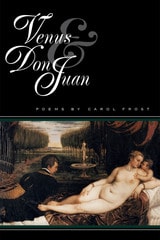
Venus and Don Juan
Carol Frost
Northwestern University Press, 1996
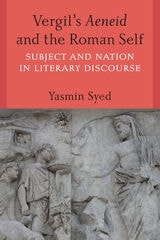
Vergil's Aeneid and the Roman Self
Subject and Nation in Literary DiscourseYasmin Syed
University of Michigan Press, 2005
Now in Paper!
As the most widely read Roman poem in antiquity, the Aeneid was indelibly burned into the memories of generations of Roman school children. In this book, author Yasmin Syed analyzes the formative influence the poem exerted on its broad audience of educated Romans. Syed analyzes Roman pedagogy and reading practices as well as ancient beliefs about the powerful influence of poetry. Her study considers these cultural components together with the aspects of identity that define the Aeneid’s characters. By doing so, Syed shows how Vergil’s ancient audiences saw themselves—their experiences, goals, and values—reflected in the poem and guided by it. In particular, Syed’s treatment of gender and ethnicity brings to light the key role of Vergil’s poem in the formation of Romanness.
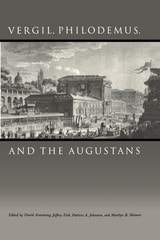
Vergil, Philodemus, and the Augustans
Edited by David Armstrong, Jeffrey Fish, Patricia A. Johnston, and Marilyn B. Skinner
University of Texas Press, 2003
The Epicurean teacher and poet Philodemus of Gadara (c. 110-c. 40/35 BC) exercised significant literary and philosophical influence on Roman writers of the Augustan Age, most notably the poets Vergil and Horace. Yet a modern appreciation for Philodemus' place in Roman intellectual history has had to wait on the decipherment of the charred remains of Philodemus' library, which was buried in Herculaneum by the eruption of Vesuvius in 79 AD. As improved texts and translations of Philodemus' writings have become available since the 1970s, scholars have taken a keen interest in his relations with leading Latin poets.
The essays in this book, derived from papers presented at the First International Symposium on Philodemus, Vergil, and the Augustans held in 2000, offer a new baseline for understanding the effect of Philodemus and Epicureanism on both the thought and poetic practices of Vergil, Horace, and other Augustan writers. Sixteen leading scholars trace his influence on Vergil's early writings, the Eclogues and the Georgics, and on the Aeneid, as well as on the writings of Horace and others. The volume editors also provide a substantial introduction to Philodemus' philosophical ideas for all classicists seeking a fuller understanding of this pivotal figure.
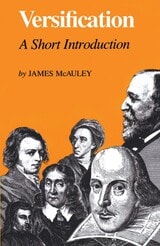
Versification
A Short IntroductionJames McAuley
Michigan State University Press, 1996
Versification: A Short Introduction is written by one of Australia's most distinguished poets. The book discusses poetic meter, and may be the only source you need. McAuley devotes a short chapter to versification based on accent, syllable count, free verse and "classical" meters, but the book as a whole focuses on metrical verse and its constant reference back to stress in normal speech—it suceeds in showing meterical verse as a natural outgrowth of what we do naturally. This dispels quickly any sense of the esoteric—poetry is of and for people in general not for a special literati. After establishing meter in the normal sphere of speech, McAuley then discusses how abstract meterical patterns are actually applied and how variety is added to avoid a sing-song effect.
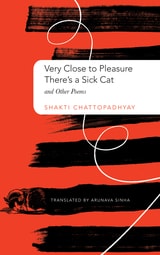
Very Close to Pleasure, There's a Sick Cat
And Other PoemsShakti Chattopadhyay
Seagull Books, 2018
This book presents more than one hundred of Chattopadhyay’s poems, introducing an international audience to one of the most prominent and important Bengali poets of the twentieth century.
Vespers
Lewty, Jane
University of Iowa Press, 2026
Often called “evening prayer,” vespers is held around sunset. Its purpose: to give thanks for the day and offer a sacrifice of praise to God. In Jane Lewty’s Vespers, she superimposes the tropes of the Christian ritual onto a very different type of sacrifice—that of making art.
Through nightly devotion, the speaker of these poems maps ritual until it degrades: the speaker as an obedient robot, a scribe-concubine, a centaur wearing skates, a poet seeking virtuosity and dexterity. Vespers asks: What if writing prompts are a bad idea? What if one could become addicted to the incremental process? Is it possible to walk away from an addiction without suffering and trauma?
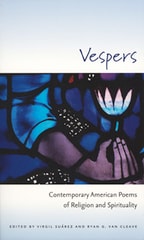
Vespers
Contemporary American Poems of Religion and SpiritualityVirgil Suarez
University of Iowa Press, 2003
At the heart of human existence lie fundamental questions that are pondered by philosophers, theologians, poets and thoughtful people from all walks of life. What is the meaning of life? Who or what is a divine being? How can a benevolent deity justify human suffering? Such questions are especially relevant to our lives in the current climate of American society. In Vespers: American Poems of Religion and Spirituality, editors Virgil Suárez and Ryan G. Van Cleave offer the reading world a timely anthology of powerful and passionate poems that cut to the heart of our contemporary theological and spiritual underpinnings.
Featuring fifty of today's most respected American poets, including Pulitzer Prize winners Stephen Dunn and Carolyn Kizer, Vespers allows us to witness and understand the challenging ideas and philosophies surrounding religion and spirituality. Through these poems, we can come to a better understanding of who, what, and why we are.
From deathbed spirituals to initiation songs, transformative ballads to transcendent sonnets, poets of myriad backgrounds—Native American, African American, Asian American, Latino, Protestant, Buddhist, Catholic, Jewish—echo the thoughts, concerns, and fears that linger in our souls. Their poems help us realize that we are not alone, that we're never truly alone, that even in the face of darkness the world is vibrant, beautiful, joyous.
More than a creative exploration of theological concerns—Vespers is a roadmap of where we've been, where we are, and where we are heading in terms of our spiritual and religious existence. It will keep you company, good company, whatever your religious or spiritual background.
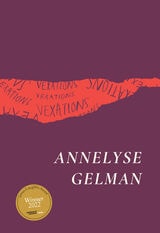
Vexations
Annelyse Gelman
University of Chicago Press, 2023
Annelyse Gelman’s book-length poem Vexations is a surreal, glitchy meditation on empathy, ecology, and precarity. Throughout the book winds a narrative about a mother and daughter as they move through a world of social and economic collapse in search of a post-capitalist safe haven. All the while, they also navigate a condition that affects the daughter’s empathic abilities, making her vulnerable to emotional contagion.
Vexations is titled and structured after Erik Satie’s composition of the same name, a piece that requires patience, endurance, and concentration from both its audience and its players. Similarly, Gelman’s Vexations employs repetition and variation to engage the reader’s attention. Hers is an ambient poetry, drawing on the aesthetic qualities of drone music and sampling voices and sounds to create a lush literary backdrop filled with pulsing psychedelic detail.
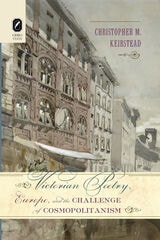
Victorian Poetry, Europe, and the Challenge of Cosmopolitanism
Christopher M. Keirstead
The Ohio State University Press, 2011
The scope and complexity of the encounter with Europe in Victorian poetry remains largely underappreciated despite recent critical attention to the genre’s global and transnational contexts. Providing much more than colorful settings or a convenient place of self-exile from England, Europe—as destination and idea—formed the basis of a dynamic, evolving form of critical cosmopolitanism much in tune with attempts to theorize the concept today. Christopher M. Keirstead’s Victorian Poetry, Europe, and the Challenge of Cosmopolitanism synthesizes the complex relationship between several notable Victorian poets, including Elizabeth Barrett Browning, Robert Browning, Matthew Arnold, and A. C. Swinburne, and their respective attitudes toward Europe as a cosmopolitan whole. Examining their international relationships and experiences, the monograph explores the ways in which these poets worked to reconcile their emotional and intellectual affinity for world citizenship with their British identity.
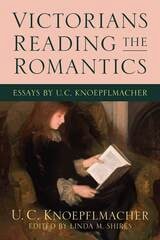
Victorians Reading the Romantics
Essays by U. C. KnoepflmacherEssays by U. C. Knoepflmacher, edited by Linda M. Shires
The Ohio State University Press, 2016
Victorians Reading the Romantics: Essays by U. C. Knoepflmacher, edited by LindaM. Shires, offers a compelling new perspective on the long and influential publishing career and thought of Knoepflmacher, a leading critic of the novel and Victorian poetry. This volume draws together essays on nineteenth-century literature written between 1963 and 2012.An introductory essay and new scaffolding emphasize the interrelations among the essays, which together form a consistent approach to literary criticism.
Knoepflmacher’s vision of texts and readersstressesthe emotional knowledge afforded by reading, writing about, and teaching literary texts.Each chapter links Romantic texts to those of later writers. Shelley and Keats try to revise Wordsworth, but they are themselves recast by Browning and Hardy. Similarly, George Eliot and Virginia Woolf’s reliance on Romantic tropes are fruitfully examined. Above all, however, these chapters stress the impact of Wordsworth on his many contemporaries and successors. Knoepflmacher probes into their texts to find, as Wordsworth did, a momentaryfusionof opposites.He posits a reader who is flexible—able to move in multiple directions by paying attention to spatial, verbal, and imagistic coordinates, across and down a page.Given the attention paid tothe translation of affect into thought,this collectionwillcontribute to Victorian studiesas well as enhance our understanding of the affective dynamics of nineteenth-century literature.
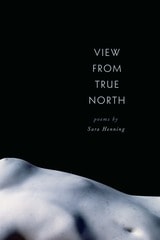
View from True North
Sara Henning
Southern Illinois University Press, 2018
Winner, George Bogin Memorial Award, 2019
Finalist, Julie Suk Award, 2018
In these edgy poems of witness, Sara Henning’s speaker serves as both conduit and curator of the destructive legacies of alcoholism and multigenerational closeting. Considering the impact of addiction and sexual repression in the family and on its individual members, Henning explores with deft compassion the psychological ramifications of traumas across multiple generations.
With the starling as an unspoken trope for victims who later perpetuate the cycle of abuse, suffering and shame became forces dangerous enough to down airliners. The strands Henning weaves—violent relationships, the destructive effects of long-term closeting, and the pall that shame casts over entire lives—are hauntingly epiphanic. And yet these feverish lyric poems find a sharp beauty in their grieving, where Rolling Stone covers and hidden erotic photographs turn into talismans of regret and empathy. After the revelation that her deceased grandfather was a closeted homosexual “who lived two lives,” Henning considers the lasting effects of shame in regard to the silence, oppression, and erasure of sexual identity, issues that are of contemporary concern to the LGBTQIA community. Even through “the dark / earth encircling us,” Henning’s speaker wonders if there isn’t some way out of a place “where my body / is just another smoke-stung / dirge of survival,” if, in the end, love won’t be victorious.
Part eyewitness testimony, part autoethnography, this book of memory and history, constantly seeking and yearning, is full of poems “too brutal and strange to suffer / [their] way anywhere but home.”

Violent Blues
Bruce Willard
Four Way Books, 2016
Violin Playing Herself in a Mirror
PoemsDavid Kutz-Marks
University of Massachusetts Press, 2015
Vise and Shadow
Essays on the Lyric Imagination, Poetry, Art, and CulturePeter Balakian
University of Chicago Press, 2015
Vise and Shadow draws into conversation such disparate figures as W. B. Yeats, Hart Crane, Joan Didion, Primo Levi, Robert Rauschenberg, Bob Dylan, Elia Kazan, and Arshile Gorky, revealing how the lyric imagination of these artists grips experience, "shadows history," and "casts its own type of illumination," creating one of the deepest kinds of human knowledge and sober truth. In these elegantly written essays, Balakian offers a fresh way to think about the power of poetry, art, and the lyrical imagination as well as history, trauma, and memory.
Vision of a Storm Cloud
William Olsen
Northwestern University Press, 1996
Visiting Dr. Williams
Poems Inspired by the Life and Work of William Carlos WilliamsSheila Coghill
University of Iowa Press, 2011

Visiting Emily
Poems Inspired by the Life and Work of Emily DickinsonSheila Coghill
University of Iowa Press, 2000
This unique anthology gathers work by eighty poets inspired by Emily Dickinson. Beginning with Hart Crane's 1927 poem “To Emily Dickinson” and moving forward through the century to such luminary figures as Archibald MacLeish, John Berryman, Yvor Winters, Adrienne Rich, Richard Eberhart, Richard Wilbur, Maxine Kumin, Amy Clampitt, William Stafford, and Galway Kinnell, Visiting Emily offers both a celebration of and an homage to one of the world's great poets.
If there was ever any doubt about Dickinson's influence on modern and contemporary poets, this remarkable collection surely puts it to rest. Gathered here are poems reflecting a wide range of voices, styles, and forms—poems written in traditional and experimental forms; poems whose tones are meditative, reflective, reverent and irreverent, satirical, whimsical, improvisational, and serious. Many of the poets draw from Dickinson's biography, while others imagine events from her life. Some poets borrow lines from Dickinson's poems or letters as triggers for their inspiration. Though most of the poems connect directly to Dickinson's life or work, for others the connection is more oblique.
Visiting Frost
Poems Inspired by the Life and Work of Robert FrostSheila Coghill
University of Iowa Press, 2005
Visiting Picasso
Jim Barnes
University of Illinois Press, 2006
Visiting Wallace
Poems Inspired by the Life and Work of Wallace StevensDennis Barone
University of Iowa Press, 2009
Whether whimsical or serious, solemn or light, the poems in Dennis Barone and James Finnegan’s Visiting Wallace are sure to inspire delight and thought. Alan Filreis’s brilliant foreword asks us to consider whether there is another modern poet who means as much to contemporary verse as Stevens: “seventy-six poems giving us seventy-six distinct Stevenses to follow and succeed.”
Visiting Walt
Poems Inspired by the Life and Work of Walt WhitmanSheila Coghill
University of Iowa Press, 2003
Vita Nova
Dante Alighieri, translated by Andrew Frisardi
Northwestern University Press, 2012
Receipient, 2013 Guggenheim Fellowship
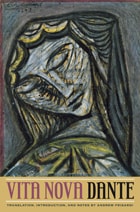
Dante’s Vita Nova (circa 1292–1295) depicts the joys and sorrows, the discoveries and conflicts of Dante’s early love for Beatrice—who would achieve later and even greater fame in Commedia—starting with his first sighting of her and culminating in his prevision of Beatrice among the beatified in heaven. Award-winning translator and poet Andrew Frisardi channels the vigor and nuance of Dante’s first masterpiece for a modern audience.
The “little book,” as Dante calls it, consists of thirty-one lyric poems—mostly sonnets—embedded in a prose narrative, which both recounts an apparently autobiographical set of events also evoked in the poems and offers analysis of the poems’ construction in the medieval critical tradition of divisio textus, or division of the text. Dante selected poetry he had written before age twenty-eight or so and wrote the prose to shape it into a story. The poems anthologize Dante’s growth as a poet, from the influence of his earliest mentors to the stylistic and thematic breakthroughs of his poetic coming-of-age.
The interplay of poetry and prose in Vita Nova, along with the further distinction in the latter between autobiography and critical divisioni, presents a particular challenge for any translator. Frisardi faithfully voices the complex meter and rhyme schemes of the poetry while capturing the tone of each of the prose styles. His introduction and in-depth annotations provide additional context for the twenty-first-century reader.

Vivarium
Natasha Sajé
Tupelo Press, 2014
Vivid Companion
PoemsIrene McKinney
West Virginia University Press, 2004
This fifth collection of poetry from West Virginia's poet laureate and author of Six O'Clock Mine Report is an extraordinary set of poems which reflects the complexity, the magnanimity, and the resilience of the human spirit. McKinney writes with candor, precision, and compassion; most importantly, though, her poems are accessible to all types of readers.
Voices Cast Out to Talk Us In
Ed Roberson
University of Iowa Press, 1995
Voices From the Meadow of the Mind of the Wandering Spirit
David J. Jude
Michigan Publishing Services, 2024
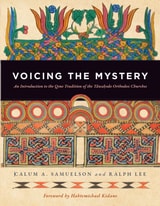
Voicing the Mystery
An Introduction to the Q?ne Tradition of the Täwa??do Orthodox ChurchesCalum A. Samuelson and Ralph Lee
Bridwell Press, 2026
This volume presents a new study of Qǝne, the extemporaneous sacred oral poetry of the Ethiopian and Eritrean Täwaḥǝdo churches. It discusses the technique of “Wax and Gold” used to compose Qǝne through which poets construct multilayered meaning using complex grammatical structures, polysemous vocabulary, and oblique allusions to texts and customs. The Introduction outlines the history of the Qǝne tradition, its liturgical function, and the challenges involved in understanding its multiple layers of meaning, and it provides a detailed account of the translation method developed for this study.
Aimed at both scholars of the Täwaḥǝdo tradition and a wider audience, this book exposes readers to an ancient poetic practice previously inaccessible without a comprehensive knowledge of Gǝʿǝz. The book introduces the new approach of Integrative Translation: each poem is presented through paired Plain and Poetic translations, enabling readers to perceive the branching meanings of the original Gǝʿǝz text and the diverse connections they evoke. A selection of fifteen qǝne poems is included, drawn from published collections compiled by notable traditional scholars of the churches, each featuring the Gǝʿǝz text and paired translations on facing pages.
Extensive annotations guide readers through the interpretive world in which Qǝne is composed, tracing the scriptural, liturgical, exegetical, hagiographical, and cultural sources that shape the tradition and illuminate the multiple meanings embedded in each poem. A Glossary also explains key terms and concepts. This is the first volume to make the Qǝne tradition accessible in English while preserving the distinctive multilayered character of the poetry.
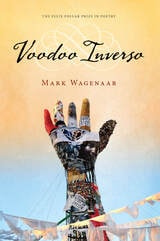
Voodoo Inverso
Mark Wagenaar
University of Wisconsin Press, 2012
In this debut collection, Voodoo Inverso, Mark Wagenaar composes a startling mystical imagism and sets it to music, using self-portraits to explore differing physical and spiritual landscapes. He uses a variety of personae—a victim of sex trafficking in Amsterdam, a fichera dancer, a portrait haunted by Dante, a carillonneur of starlight, an elephant in pink slippers remembering its beloved—to silhouette the intricacies and frailties of the body and the world. In a series of “gospels” and “histories”—such as the poems “History of Ecstasy” and “Moth Hour Gospel”—he shines a light on the possibilities of transcendence and transfiguration, weaving together memory and loss with desire and hope.
Vortex of Indian Fevers
Adrian C. Louis
Northwestern University Press, 1995
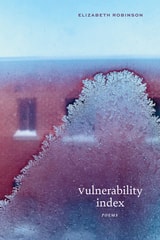
Vulnerability Index
PoemsElizabeth Robinson
Northwestern University Press, 2026
During Elizabeth Robinson’s six years working with chronically unhoused people in Boulder, Colorado, her relationships with the community’s most vulnerable deepened—even as they were filtered through a web of paperwork, systems, and strictures. The Vulnerability Index questionnaire is just one such system. Ubiquitous in shelters across America, it is representative of the endless tasks that people living on the street must complete to receive even minor assistance.
Moving between the local court, jail, shelter, and soup kitchen, Robinson’s poems capture the strange juxtapositions of the intimate, bureaucratic, and absurd that such spaces demand: a frostbite victim wants to share his state-sponsored recovery room with a friend from the street, a domestic violence survivor must change her name and even her social security number, an unhoused activist joins a vigil for another woman only to discover that she is, mistakenly, the person being mourned. Spare yet richly empathetic, Robinson’s verse works to implicate the reader’s own vulnerability on every page.
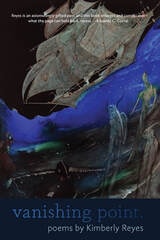
vanishing point.
Kimberly Reyes
Omnidawn, 2023
Through her latest collection, Kimberly Reyes navigates the physical, hereditary, and liminal worlds between land, time, and memory. The poems in vanishing point. take us to San Francisco, Ireland, and the Atlantic Ocean, reclaiming and examining contested space as the poet seeks to revive left-behind histories, reconsider what we see, and reveal what we cannot see.