213 books match the query 'Political parties' and 2 start with v

cover of Venezuela's Movimiento al Socialismo: From Guerrilla Defeat to Innovative Politics

Venezuela's Movimiento al Socialismo

From Guerrilla Defeat to Innovative Politics

Steve Ellner

Duke University Press, 1988

Teodoro Petkoff and the other members of the Movimiento al Socialismo (MAS) in Venezuela had aroused the ire of the orthodox communist leaders by claiming to be both authentic communists and true nationalists, not bound by the dictates of either the Moscow or Maoist/Beijing wings of the party. To infuriate the traditionalists even further, Petkoff and his associates succeeded in being more than isolated critics, as MAS quickly eclipsed the traditional Venezuelan Communist Party and became that country's leading leftist group.

The author places MAS in its international national, and historical contexts in order to determine the extent to which it is a unique communist party, as it claims to be. He traces the theory of "national democratic revolution, " which MAS rejects, back to Lenin, and discusses the Latin American left's reevaluation of that thesis. Ellner examines the guerrilla movement in Venezuela, the student movement of the late 1960s, and the emergence of the "New Left" in other countries, especially noting their influence on the formation of MAS. He also discusses the group's role in Venezuelan elections and it's relations with the other parties.
[more]
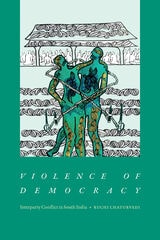
cover of Violence of Democracy: Interparty Conflict in South India

Violence of Democracy

Interparty Conflict in South India

Ruchi Chaturvedi

Duke University Press, 2023

In Violence of Democracy Ruchi Chaturvedi tracks the rise of India’s divisive politics through close examination of decades-long confrontations in Kerala between members of the Communist Party of India (Marxist) and supporters of the Hindu nationalist Rashtriya Swayam Sevak Sangh and the Bharatiya Janata Party. Drawing on ethnographic fieldwork and extensive archival research, Chaturvedi investigates the unique character of the conflict between the party left and the Hindu right. This conflict, she shows, defies explanations centering religious, caste, or ideological differences. It offers instead new ways of understanding how quotidian political competition can produce antagonistic majoritarian communities. Rival political parties mobilize practices of disbursing care and aggressive masculinity in their struggle for electoral and popular power, a process intensified by a criminal justice system that reproduces rather than mitigating violence. Chaturvedi traces these dynamics from the late colonial period to the early 2000s, illuminating the broader relationships between democratic life, divisiveness, and majoritarianism.
[more]