939 books match the query 'Religious aspects' and 11 start with v
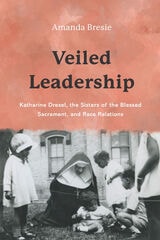
cover of Veiled Leadership: Katharine Drexel, The Sisters of the Blessed Sacrament, and Race Relations

Veiled Leadership

Katharine Drexel, The Sisters of the Blessed Sacrament, and Race Relations

Amanda Bresie

Catholic University of America Press, 2023
On the rainy morning of October 1, 2000, Pope John Paul II canonized Mother Katharine Drexel. Born into a wealthy Philadelphia family, Drexel bucked society and formed the Sisters of the Blessed Sacrament for Indians and Colored People. Her compelling personal story has excited many biographers who have highlighted her holiness and catalogued her good deeds. During her life, newspapers called her the “Millionaire Nun,” and much of the literature on Drexel and the Sisters of the Blessed Sacrament exalts Katharine Drexel’s disbursement of her vast fortune to benefit Black and Indigenous people. The often repeated stories of a riches to rags holy woman miss the true significance of what Mother Katharine and the Sisters of the Blessed Sacrament attempted. Drexel was not merely the ATM of Catholic Home Missions; rather, she challenged the hierarchy to reimagine its mission in the United States. In an era when the Church controlled the actions and censored the opinions of women religious, they had to listen to Mother Katharine. Most writing on Drexel and the SBS focus on Drexel’s spiritual journey, but Veiled Leadership traces the daily operations of her charitable empire and looks at how the Sisters implemented Drexel’s vision in the field. The SBS were not always welcomed in the communities they served, and they experienced conflict from both white supremacists and the people they wanted to aid. Veiled Leadership examines the lives of Mother Katharine and her congregation within the context of larger constructs of gender, race, religion, reform, and national identity. It explores what happens when a non-dominant culture tries to impose its views and morals on other non-dominant cultures. In other words, as outliers themselves—they were semi-cloistered Catholic women from primarily immigrant backgrounds in a culture that regarded their lifestyles as alien and unnatural—their attempts to Americanize and assimilate Black and Indigenous people, whose families had been in the country for generations longer than the nuns’ own, adds complexity to our understanding of cultural hegemony.
[more]
[more]
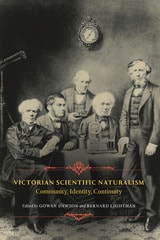
cover of Victorian Scientific Naturalism: Community, Identity, Continuity

Victorian Scientific Naturalism

Community, Identity, Continuity

Edited by Gowan Dawson and Bernard Lightman

University of Chicago Press, 2014
Victorian Scientific Naturalism examines the secular creeds of the generation of intellectuals who, in the wake of The Origin of Species, wrested cultural authority from the old Anglican establishment while installing themselves as a new professional scientific elite. These scientific naturalists—led by biologists, physicists, and mathematicians such as William Kingdon Clifford, Joseph Dalton Hooker, Thomas Henry Huxley, and John Tyndall—sought to persuade both the state and the public that scientists, not theologians, should be granted cultural authority, since their expertise gave them special insight into society, politics, and even ethics.
           
In Victorian Scientific Naturalism, Gowan Dawson and Bernard Lightman bring together new essays by leading historians of science and literary critics that recall these scientific naturalists, in light of recent scholarship that has tended to sideline them, and that reevaluate their place in the broader landscape of nineteenth-century Britain. Ranging in topic from daring climbing expeditions in the Alps to the maintenance of aristocratic protocols of conduct at Kew Gardens, these essays offer a series of new perspectives on Victorian scientific naturalism—as well as its subsequent incarnations in the early twentieth century—that together provide an innovative understanding of the movement centering on the issues of community, identity, and continuity.
[more]
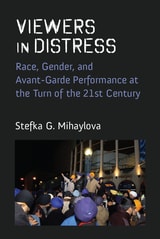
cover of Viewers in Distress: Race, Gender, Religion, and Avant-Garde Performance at the Turn of the Twenty-First Century

Viewers in Distress

Race, Gender, Religion, and Avant-Garde Performance at the Turn of the Twenty-First Century

Stefka G. Mihaylova

University of Michigan Press, 2023

Honorable Mention: American Society for Theatre Research Barnard Hewitt Award | November 8, 2024

Conventional notions of avant-garde art suggest innovative artists rebelling against artistic convention and social propriety, shocking unwilling audiences into new ways of seeing and living. Viewers in Distress tells a different story. Beginning in the tumultuous 1990s, after the fall of the Berlin Wall and in the wake of the Los Angeles riots, rebellious spectators in American and British theaters broke with theater decorum and voiced their radical interpretations of shows that were not meant to be radical. In doing so, audiences tried to understand the complex racial, gender, and religious politics of their times, while insisting that liberal societies fulfill their promise of dignity for all. Stefka Mihaylova argues that such non-conforming viewing amounts to an avant-garde of its own: a bold reimagining of how we live together and tell stories of our lives together, aimed to achieve liberalism’s promise. In telling this story, she analyzes the production and reception politics of works by Susan-Lori Parks, Sarah Kane, Forced Entertainment, Gurpreet Kaur Bhatti, and Young Jean Lee, as well as non-theatrical controversies such as the conflict over Halloween costumes at Yale in 2015. At the core of spectators’ discontent, this book suggests, is an effort to figure out how to get along with people different from ourselves in the diverse U.S. and British societies in which we live.
[more]
cover of Violence and Inequality: An Archaeological History

Violence and Inequality

An Archaeological History

Thomas P. Leppard

University Press of Colorado, 2023

Violence and Inequality explores the deep-time archaeological relationship between violence and inequality, focusing on prehistoric archaeology’s contribution to the understanding of the human dynamics among coercive force, aggression, and the state. Detailed archaeological case studies within a strong theoretical framework built from historical studies consider the role of coercive violence in trajectories toward complexity, how levels and types of violence can be traced alongside emerging wealth disparities, and the social role of violence.

The assumption that violence and its threat buttressed elite social control is now challenged from various perspectives. This volume incorporates new models of the relationship between violence and social inequalities into the archaeology of social complexity, building more complicated and nuanced understandings of how different modes of social violence can militate different types of social constitution. Contributions from a variety of methodological angles—such as the bioarchaeology of health and trauma and radiogenic isotope studies and the aesthetics of violence—use a comparative perspective, drawing on data from the Southwestern US, Bronze Age China, early dynastic Egypt, ancient Mesopotamia, Roman Britain, and the Andes.
 
Violence and Inequality offers an original and deep history of violence and inequality. Understanding the long-term intersection of violence and inequality and how they support or erode one another is of intrinsic importance, making this work significant to the study of archaeology, economic history, and collective action.
 
[more]
cover of Violence and Miracle in the Fourteenth Century: Private Grief and Public Salvation

Violence and Miracle in the Fourteenth Century

Private Grief and Public Salvation

Michael E. Goodich

University of Chicago Press, 1995

As war, pestilence, and famine spread through Europe in the Middle Ages, so did reports of miracles, of hopeless victims wondrously saved from disaster. These "rescue miracles," recorded by over one hundred fourteenth-century cults, are the basis of Michael Goodich's account of the miraculous in everyday medieval life.

Rescue miracles offer a wide range of voices rarely heard in medieval history, from women and children to peasants and urban artisans. They tell of salvation not just from the ravages of nature and war, but from the vagaries of a violent society—crime, unfair judicial practices, domestic squabbles, and communal or factional conflict. The stories speak to a collapse of confidence in decaying institutions, from the law to the market to feudal authority. Particularly, the miraculous escapes documented during the Hundred Years' War, the Italian communal wars, and other conflicts are vivid testimony to the end of aristocratic warfare and the growing victimization of noncombatants.

Miracles, Goodich finds, represent the transcendent and unifying force of faith in a time of widespread distress and the hopeless conditions endured by the common people of the Middle Ages. Just as the lives of the saints, once dismissed as church propaganda, have become valuable to historians, so have rescue miracles, as evidence of an underlying medieval mentalite. This work expands our knowledge of that state of mind and the grim conditions that colored and shaped it.
[more]
cover of Violence and the Medieval Clergy

Violence and the Medieval Clergy

Gerhard Jaritz

Central European University Press, 2012
Violence was omnipresent in medieval society and affected all areas of life and the members of all social strata. Surviving sources deal regularly with any issues of violent actions, signs and results of violence, violent people and coping with violence. In such evidence, also the members of the clergy played an important role – as writers about violence and critics of it, but also as perpetrators, victims, and witnesses.
[more]
cover of Visions of Queer Martyrdom from John Henry Newman to Derek Jarman

Visions of Queer Martyrdom from John Henry Newman to Derek Jarman

Dominic Janes

University of Chicago Press, 2015

With all the heated debates around religion and homosexuality today, it might be hard to see the two as anything but antagonistic. But in this book, Dominic Janes reveals the opposite: Catholic forms of Christianity, he explains, played a key role in the evolution of the culture and visual expression of homosexuality and male same-sex desire in the nineteenth and twentieth centuries. He explores this relationship through the idea of queer martyrdom—closeted queer servitude to Christ—a concept that allowed a certain degree of latitude for the development of same-sex desire.
            Janes finds the beginnings of queer martyrdom in the nineteenth-century Church of England and the controversies over Cardinal John Henry Newman’s sexuality. He then considers how liturgical expression of queer desire in the Victorian Eucharist provided inspiration for artists looking to communicate their own feelings of sexual deviance. After looking at Victorian monasteries as queer families, he analyzes how the Biblical story of David and Jonathan could be used to create forms of same-sex partnerships. Finally, he delves into how artists and writers employed ecclesiastical material culture to further queer self-expression, concluding with studies of Oscar Wilde and Derek Jarman that illustrate both the limitations and ongoing significance of Christianity as an inspiration for expressions of homoerotic desire.
Providing historical context to help us reevaluate the current furor over homosexuality in the Church, this fascinating book brings to light the myriad ways that modern churches and openly gay men and women can learn from the wealth of each other’s cultural and spiritual experience.
[more]
cover of Vital Conflicts in Medical Ethics: A Virtue Approach to Craniotomy and Tubal Pregnancies

Vital Conflicts in Medical Ethics

A Virtue Approach to Craniotomy and Tubal Pregnancies

Martin Rhonheimer

Catholic University of America Press, 2009
Vital Conflicts in Medical Ethics by renowned Swiss philosopher Martin Rhonheimer considers some of the most difficult and disputed questions in Catholic moral theology
[more]
cover of Vocation to Virtue: Christian Marriage as a Consecrated Life

Vocation to Virtue

Christian Marriage as a Consecrated Life

Kent Lasnoski

Catholic University of America Press, 2014
Vocation to Virtue seeks to answer a perennial difficulty in the Catholic theology of marriage: how do the practice and bond of marriage lead to Christian perfection in spouses and their children? If the Second Vatican Council is correct in saying that all in the church are called to Christian perfection, we need an account of how those consecrated in the sacrament of marriage can fulfill that vocation. If the perfection of charity consists in Christ himself, then couples must imitate Christ. But how? If Christ is the poor, chaste, and obedient bridegroom of the church, then spouses achieve holiness inasmuch as they participate in Christ's own virtues: poverty, chastity, and obedience. The thesis is that the language of the evangelical virtues (poverty, chastity, and obedience), a rule of life, and robust preparation (maybe a novitiate) belongs as properly to marriage as to consecrated religious life. Both states are specifications of a common baptismal consecration to Christ himself. Lasnoski seeks to establish this fact and constructively apply this language to conjugal life. The book begins by explaining our marriage crisis and theological paradigms for speaking about Christian marriage as "relationship" or as "practice," and considers modern scholarly attempts to relate conjugal life and consecrated religious life. The book then offers a theological groundwork in Christ and the Trinity for a deeper, noncompetitive relationship between the consecrated religious life and married life. It offers an Augustinian account of the relationship between marriage and consecrated life, and develops the ecclesial connection between the states with recourse to John's Gospel, which sees Christian life in terms of "householding." The church's tradition has a dialogical relationship between the consecrated and married - a mutual sharing of both "monastic" and "domestic" language. The final chapter develops practices of Christian householding for conjugal life using the language of poverty, chastity, and obedience, a rule of life, and a kind of novitiate preparation.
[more]
cover of Von Balthasar & the Option for the Poor: Theodramatics in the Light of Liberation Theology

Von Balthasar & the Option for the Poor

Theodramatics in the Light of Liberation Theology

Todd Walatka

Catholic University of America Press, 2017

Hans Urs von Balthasar’s vast corpus of theological, philosophical, literary, and pastoral writings remains one of the most impressive achievements in 20th century thought. In light of liberation theology and now the papacy of Francis, however, a theological affirmation of the option for the poor remains dangerously weak in Balthasar’s corpus. Von Balthasar and the Option for the Poor offers a sympathetic reforming of Balthasar’s account of the drama of salvation – what he calls “theodramatics” – in response to this weakness.
[more]