Results by title
137 books match the query 'Science & Technology' and 2 start with v
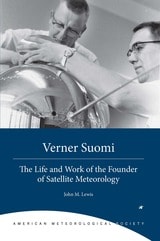
Verner Suomi
The Life and Work of the Founder of Satellite MeteorologyJohn M. Lewis et al.
American Meteorological Society, 2018
As the space age got underway in the wake of Sputnik, one of the earliest areas of science to take advantage of the new observational opportunities it afforded was the study of climate and weather. This book tells the story of Finnish-American educator, inventor, and scientist Verner Suomi, who, in those early days of space science, brought his pragmatic engineering skills to bear on finding ways to use our new access to space to put observational instruments into orbit. In 1959, Suomi’s work resulted in the launching of Explorer VII, a satellite that measured the earth’s radiation budget, a major step in our ability to understand and forecast weather. Drawing on personal letters and oral histories, the book presents a rounded picture of the man who launched the field of satellite meteorology—in the process changing forever the way we understand and interact with the weather around us.
[more]
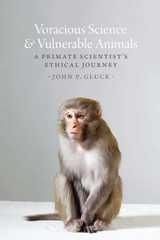
Voracious Science and Vulnerable Animals
A Primate Scientist's Ethical JourneyJohn P. Gluck
University of Chicago Press, 2016
The National Institute of Health recently announced its plan to retire the fifty remaining chimpanzees held in national research facilities and place them in sanctuaries. This significant decision comes after a lengthy process of examination and debate about the ethics of animal research. For decades, proponents of such research have argued that the discoveries and benefits for humans far outweigh the costs of the traumatic effects on the animals; but today, even the researchers themselves have come to question the practice. John P. Gluck has been one of the scientists at the forefront of the movement to end research on primates, and in Voracious Science and Vulnerable Animals he tells a vivid, heart-rending, personal story of how he became a vocal activist for animal protection.
Gluck begins by taking us inside the laboratory of Harry F. Harlow at the University of Wisconsin, where Gluck worked as a graduate student in the 1960s. Harlow’s primate lab became famous for his behavioral experiments in maternal deprivation and social isolation of rhesus macaques. Though trained as a behavioral scientist, Gluck finds himself unable to overlook the intense psychological and physical damage these experiments wrought on the macaques. Gluck’s sobering and moving account reveals how in this and other labs, including his own, he came to grapple with the uncomfortable justifications that many researchers were offering for their work. As his sense of conflict grows, we’re right alongside him, developing a deep empathy for the often smart and always vulnerable animals used for these experiments.
At a time of unprecedented recognition of the intellectual cognition and emotional intelligence of animals, Voracious Science and Vulnerable Animals is a powerful appeal for our respect and compassion for those creatures who have unwillingly dedicated their lives to science. Through the words of someone who has inflicted pain in the name of science and come to abhor it, it’s important to know what has led this far to progress and where further inroads in animal research ethics are needed.
[more]