Results by title
370 books match the query 'Spain' and 4 start with v
Vandals to Visigoths
Rural Settlement Patterns in Early Medieval SpainKaren Eva Carr
University of Michigan Press, 2002
Vandals to Visigoths uses archaeological survey data as a springboard to a theoretical discussion of rural survival strategies in the non-industrial world and the ways in which these strategies are affected by government actions. Carr draws on historical, archaeological, and ethnographic comparanda to conclude that the larger, more powerful Roman government was more advantageous for the rural poor than the weaker Vandal and Visigothic regimes. Though Carr agrees that the lives of the rural people and the free slaves were miserable, she shows through her data and theory that they became even more wretched after the decline of the empire.
Vandals to Visigoths will appeal to historians of Rome, as well as of Early Medieval Europe and Spain. Anthropologists, economists, and political scientists who study Late Antiquity and the medieval period will also be interested, as it discusses the broader implications of the role of government in the lives of early medieval Spain's subjects.
Karen Eva Carr is Associate Professor of History, Portland State University.
Vertical Empire
The General Resettlement of Indians in the Colonial AndesJeremy Ravi Mumford
Duke University Press, 2012
Virginia's Apple
Collected MemoirsJudith Barrington
Oregon State University Press, 2024
Virginia’s Apple is a collection of fourteen literary memoirs that explore pivotal episodes across poet and writer Judith Barrington’s life. Artfully crafted, each one stands alone yet they are linked—characters reappear and, taken together, they create a larger narrative.
The content is wide-ranging: the early days of the Second Wave of feminism—the exhilaration, the wildness, the love affairs, the surprises, and the self-invention, as well as the confusion and conflicts of those heady times; navigating a sometimes precarious existence as an out lesbian long before it was commonplace; leaving England and becoming an American citizen; finding a life partner; and growing old with an inherited disability. The author’s friendship with the distinguished poet Adrienne Rich is the subject of one story. In another, there’s an appearance by the notorious murderer, Lord Lucan, whose wife was a chance acquaintance.
These stories are laced with humor and joy, while pulsing below the surface is the slow unfolding of delayed grief over her parents’ drowning when she was nineteen, revealing how such a loss can shape a life.
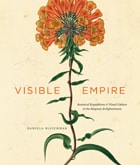
Visible Empire
Botanical Expeditions and Visual Culture in the Hispanic EnlightenmentDaniela Bleichmar
University of Chicago Press, 2012
Between 1777 and 1816, botanical expeditions crisscrossed the vast Spanish empire in an ambitious project to survey the flora of much of the Americas, the Caribbean, and the Philippines. While these voyages produced written texts and compiled collections of specimens, they dedicated an overwhelming proportion of their resources and energy to the creation of visual materials. European and American naturalists and artists collaborated to manufacture a staggering total of more than 12,000 botanical illustrations. Yet these images have remained largely overlooked—until now.
In this lavishly illustrated volume, Daniela Bleichmar gives this archive its due, finding in these botanical images a window into the worlds of Enlightenment science, visual culture, and empire. Through innovative interdisciplinary scholarship that bridges the histories of science, visual culture, and the Hispanic world, Bleichmar uses these images to trace two related histories: the little-known history of scientific expeditions in the Hispanic Enlightenment and the history of visual evidence in both science and administration in the early modern Spanish empire. As Bleichmar shows, in the Spanish empire visual epistemology operated not only in scientific contexts but also as part of an imperial apparatus that had a long-established tradition of deploying visual evidence for administrative purposes.