Results by title
428 books match the query 'Stories' and 5 start with v
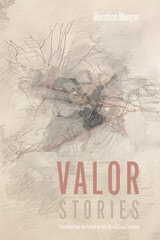
Valor
StoriesMurathan Mungan, translated from the Turkish by Aron Aji and David Gramling
Northwestern University Press, 2022
Among Murathan Mungan’s signature works, Cenk Hikâyeleri (Valor: Stories) has long been considered a milestone of twentieth-century Turkish literature. The six short stories in the collection reflect the author’s multiethnic background (which includes Kurdish, Arab, and Turkish heritage) and represent his lush poetics, literary breadth, and sociopolitical commitments.
Valor reimagines Shahmaran, a mythical half‑human, half‑snake figure that commonly appears in the folklore of Turkey’s southeastern provinces. Legend interweaves with the contemporary realities of ethnicity, religious dogma, gender, and sexuality. Uncovering hidden narratives within a rich and complicated culture, Mungan’s stories depict self-realization and sexual awakening as they showcase one of Turkey’s most popular literary voices.
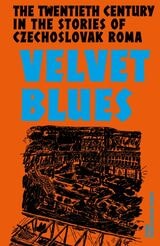
Velvet Blues
Twentieth Century in the Stories of Czechoslovak RomaEdited by Karolína Ryvolová
Karolinum Press, 2026
Romani writers from former Czechoslovakia offer their history and perspective in this important collection that fills a gap in world literature.
As representatives of an oral culture, the Romani people have throughout history been the subject of stories written by outsiders. Sometimes idealized, often defamed, and even condemned, they have seldom been accurately portrayed by the majority of writers. It has only been in the last century that the Roma have finally started writing for themselves.
The fifteen Romani writers from former Czechoslovakia featured in this anthology speak of the people, times, and places they particularly hold dear. Although the roads of the Roma have always been paved with disrespect, discrimination, and vicious racial persecution by mainstream societies, these stories frequently talk about the good things in life. Be it the writers’ homes in the traditional settlements of rural Eastern Slovakia, the Czech industrial towns where the families moved after WWII in search of a better life, or the bustling cities of the post-transition period, they demonstrate immense pride in their Romani identity, love of their Romani language, and heartfelt respect for their elders. Velvet Blues provides a very different picture from the stock character of “the Gypsy” so common in world literature.
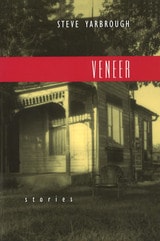
Veneer
StoriesStories by Steve Yarbrough
University of Missouri Press, 1998
Acclaimed short story writer Steve Yarbrough, whose works have been included in the Pushcart Prize anthology and The Best American Mystery Stories 1998, once again demonstrates his gift for vividly rendered characters and evocative themes in his latest collection of fiction.
Veneer presents a variety of characters from cultural backgrounds and settings that range from California to Mississippi to Eastern Europe. Yarbrough's sensitive portrayals of loss and longing are individual and unsettling; a disaffected college football coach, a movie star with a "substance problem," and a small-town girl coming to grips with the murder of her mother are just a few examples of the turbulent lives he portrays. In every instance, each character is "constantly searching for some way to bridge the gap, so small and yet so vast, between a right move and a wrong one."
A poignant theme running through this collection is the conflict between appearance and reality. Yarbrough presents the reader with deep narrative layers, juxtaposing the gritty present with nostalgic recollections of an idealized past or hopeful projections into a rosy future. "Veneer," the title piece, beautifully reveals the depth of this conflict. On the surface, the narrator, a married man whose family is away on vacation, enjoys a dinner with a woman who has been a longtime friend. Beneath that "veneer," however, lies a more complex, perhaps troubling, relationship between the two friends, a relationship only partially obscured by the comic recounting of a childhood Independence Day.
Yarbrough is at his best when he offers us brief glimpses into his characters' minds and imaginations, brilliantly exposing subtle vulnerabilities as cracks in the veneer. "Bohemia" follows the travels of two young lovers as they explore Europe. The woman fears that her lover will abandon her, and when she wakes to find him gone one evening, she believes her fear is confirmed. Yet his return does not alleviate her insecurity. The reality of her lover's presence and her continued anxiety emphasize the many layers that constitute the woman's world.
Diverse in locale, character, and content, the stories in Veneer present rare views into the rifts between husband and wife, parent and child, one sibling and another. Crafting these compelling, deceptively simple stories is a writer whose "true subject is the human heart."
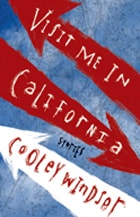
Visit Me in California
StoriesCooley Windsor
Northwestern University Press, 2008
Deftly moving between the comic and the tragic, the sacred and the profane, this collection of short stories is populated by modern children, ancient poets, dying men, and your basic, mundane Greek gods. Windsor turns familiar stories from the Bible and from myth inside out, exploring the feelings of minor characters and looking at events from imaginative perspectives. His prose is rich with detail and emotion and he touches on themes of art and artifice, success and failure, family and its sacrifices, and expectations met or missed.
In “The Last Israelite in the Red Sea,” a follower of Moses who dallies during their Exodus finds it more difficult to walk across the bottom of the temporarily displaced Red Sea without shoes. “Four of the Times My Sister Cried” follows a young narrator as his family rehearses for his mother’s death and then, as they must, lives without her. The wry “The Art of War” has characters from Homer to a courtesan talking shop about the battle of Troy from their perspectives. Set as a series of short pieces, “The Fleshly School of Poetry” tells of lessons learned and lessons taught. With its explorations of expectations, “Meet the Author” gives readers intimate portraits of various plans or coping mechanisms people put up when death draws close. “The End of the World” approaches the Rapture with a humorously practical spin: wouldn’t the angels need a plan to ensure that it goes smoothly? “In Parting” explores some of the troubles with family, especially when a sister’s child turns out to be a marionette. The geographically explicit “Three Mediums in San Francisco” touches on frustrated and imagined eroticism. The collection ends with “The Hilton Epiphany,” a fitting closer in which divinity comes to an unlikely person in an unlikely place.
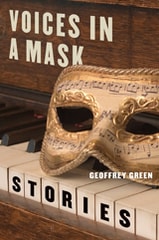
Voices in a Mask
StoriesGeoffrey Green
Northwestern University Press, 2008
Based on images of disguise in literature, theater, and opera, this short-story cycle explores themes of identity and subterfuge in a fictional fugue that ranges from comic to poignant. Into the librettos of Don Giovanni, Tosca, Rigoletto, and other operas, Green weaves the authentic biographies of their singers and composers, modern-day settings, and his own imaginative twists. Throughout Voices in a Mask, characters obscure and reveal themselves as art mimics life and life, art. Ultimately the very acts of masking and projecting reveal a truth about the power of art and its inherent deceptions.