Results by title
461 books match the query 'Teaching' and 5 start with v
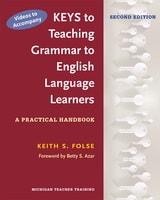
Videos to Accompany Keys to Teaching Grammar to English Language Learners
Keith S. Folse
University of Michigan Press, 2019
- Key 6, Prepositions
- Key 11, Phrasal Verbs
- Chapter 4: Hot Seat Questions
These videos are only available through our online platform: michelt.ublish.com.
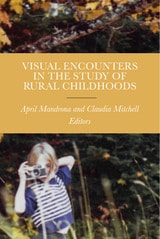
Visual Encounters in the Study of Rural Childhoods
Mandrona, April R.
Rutgers University Press, 2018
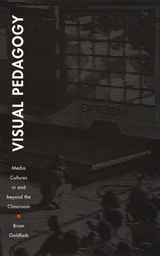
Visual Pedagogy
Media Cultures in and beyond the ClassroomBrian Goldfarb
Duke University Press, 2002
Looking beyond the popular media texts and mainstream classroom technologies that are the objects of most analyses of media and education, Goldfarb encourages readers to see a range of media subcultures as pedagogical tools. The projects he analyzes include media produced by AIDS/HIV advocacy groups and social services agencies for classroom use in the 1990s; documentary and fictional cinemas of West Africa used by the French government and then by those resisting it; museum exhibitions; and TV Anhembi, a municipally sponsored collaboration between the television industry and community-based videographers in São Paolo, Brazil.
Combining media studies, pedagogical theory, and art history, and including an appendix of visual media resources and ideas about the most productive ways to utilize visual technologies for educational purposes, Visual Pedagogy will be useful to educators, administrators, and activists.
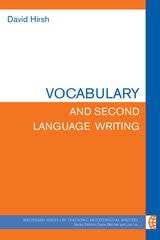
Vocabulary and Second Language Writing
David Hirsh
University of Michigan Press, 2021
Each chapter concludes with a list of key points and tasks and discussion questions for pre- and in-service instructors. Several chapters also include sample activities for teaching vocabulary at various instructional levels, designed to encourage readers to consider more deeply how they will include vocabulary instruction in their classrooms.
Vocabulary and Second Language Writing will be an excellent guide for all college-level writing instructors and help them understand the critical role that vocabulary plays in writing quality—something that is often disregarded in favor of holistic features like genre and rhetoric. The volume may also be useful for writing center administrators and those who train writing tutors.
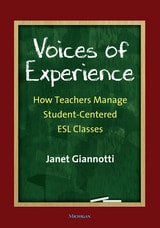
Voices of Experience
How Teachers Manage Student-Centered ESL ClassesJanet Giannotti
University of Michigan Press, 2015
Voices of Experience was designed and written with teachers-in-training and seasoned professionals in mind; the book would be used differently by each.
The book has five units: The Classroom Environment, Lesson Planning, Pair and Group Work, Classroom Interactions, and Classroom Trouble Spots. Each unit has two or three chapters that discuss the survey responses and relevant quotes from participants. Each unit concludes with a Connections section that features:
· *Challenging Beliefs: What Teachers Think, which presents a statement for readers to respond to and compare their responses to others who completed the survey.
· * Classroom Connections: What Teachers Do, which lists reflection or discussion questions
· * Strategies and Motivations: What Teachers Say, which presents more quotes from respondents, particularly those that look at what’s behind teachers’ choices. These too could be used for reflection or discussion.