493 books match the query 'Theory' and 3 start with v
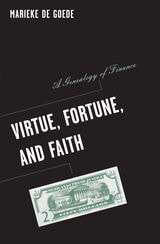
cover of Virtue, Fortune, and Faith: A Genealogy of Finance

Virtue, Fortune, and Faith

A Genealogy of Finance

Marieke de Goede

University of Minnesota Press, 2005

Less than two centuries ago finance - today viewed as the center of economic necessity and epitome of scientific respectability - stood condemned as disreputable fraud. How this change in status came about, and what it reveals about the nature of finance, is the story told in Virtue, Fortune, and Faith. A unique cultural history of modern financial markets from the early eighteenth century to the present day, the book offers a genealogical reading of the historical insecurities, debates, and controversies that had to be purged from nascent credit practices in order to produce the image of today's coherent and - largely - rational global financial sphere. Marieke de Goede discusses moral, religious, and political transformations that have slowly naturalized the domain of finance. Using a deft integration of feminist and poststructuralist approaches, her book demonstrates that finance - not just its rules of personal engagement, but also its statistics, formulas, instruments, and institutions - is a profoundly cultural and politically contingent practice. When closely examined, the history of finance is one of colonial conquest, sexual imagination, constructions of time, and discourses of legitimate (or illegitimate) profit making. Regardless, this history has had a far-reaching impact on the development of the modern international financial institutions that act as the stewards of the world's economic resources. De Goede explores the political contestations over ideas of time and money; the gendered discourse of credit and credibility; differences among gambling, finance, and speculation; debates over the proper definition of the free market; the meaning of financial crisis; and the morality of speculation. In an era when financial practices are pronounced too specialized for broad-based public, democratic debate, Virtue, Fortune, and Faith questions assumptions about international finance's unchallenged position and effectively exposes its ambiguous scientific authority.
[more]
cover of Vocational Interest Measurement: Theory and Practice

Vocational Interest Measurement

Theory and Practice

John G. Darley and Theda Hagenah

University of Minnesota Press, 1955

Vocational Interest Measurement was first published in 1955. Minnesota Archive Editions uses digital technology to make long-unavailable books once again accessible, and are published unaltered from the original University of Minnesota Press editions.

Many years of clinical experience at the University of Minnesota, using the Strong Vocational Interest Bank in counseling services, form the basis for this book. The work will help other counselors to understand the meaning of the interest scores which they obtain with this test. In successive chapters, the authors discuss the meaning of work and jobs in our society, deal with the anatomy of interests, analyze interest patterns and outline a normative framework for their system of analysis, discuss personality factors as related to interests, review theories of origin and development of interests, and illustrate the use of interest measurement in counseling through a series of case studies. A volume in the Minnesota Library on Student Personnel Work.
[more]
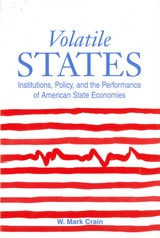
cover of Volatile States: Institutions, Policy, and the Performance of American State Economies

Volatile States

Institutions, Policy, and the Performance of American State Economies

W. Mark Crain

University of Michigan Press, 2003

Why do American state economies grow at such vastly different rates and manifest such wide differences in living standards? Volatile States identifies the sources of rising living standards by examining the recent economic and fiscal history of the American states. With new insights about the factors that contribute to state economic success, the book departs from traditional analyses of economic performance in its emphasis on the role of volatility.
Volatile States identifies institutions and policies that are key determinants of economic success and illustrates the considerable promise of a mean-variance criterion for assessing state economic performance. The mean-variance perspective amends applications of growth models that rely on the mobility of productive factors keyed to income levels alone. Simply measuring the level of growth in state economies reveals an incomplete and perhaps distorted picture of performance. Taking the volatility of state economies explicitly into account refines the whole notion of "economic success."
This book is essential reading for economists, political scientists, and policy-makers who routinely confront questions about the consequences of alternative institutional arrangements and economic policy choices.
W. Mark Crain is Professor of Economics and Research Associate, James M. Buchanan Center for Political Economy, George Mason University.
[more]