Results by title
1185 books match the query 'Travel' and 11 start with v
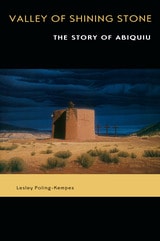
Valley of Shining Stone
The Story of AbiquiuLesley Poling-Kempes
University of Arizona Press, 1997
O'Keeffe saw the magic of sandstone cliffs and turquoise skies, but her life and death here are only part of the story. Reading almost like a novel, this book spills over with other legends buried deep in time, just as some of North America's oldest dinosaur bones lie hidden beneath the valley floor. Here are the stories of Pueblo Indians who have claimed this land for generations. Here, too, are Utes, Navajos, Jicarilla Apaches, Hispanos, and Anglos—many lives tangled together, yet also separate and distinct.
Underlying these stories is the saga of Ghost Ranch itself, a last living vestige of the Old West ideal of horses, cowboys, and wide-open spaces. Readers will meet a virtual Who's Who of visitors from "dude ranch" days, ranging from such luminaries as Willa Cather, Ansel Adams, and Charles Lindbergh to World War II scientist J. Robert Oppenheimer and his colleagues, who were working on the top-secret atomic bomb in nearby Los Alamos. Moving on through the twentieth century, the book describes struggles to preserve the valley's wild beauty in the face of land development and increased tourism.
Just as the Piedra Lumbre landscape has captivated countless wayfarers over hundreds of years, so its stories cast their own spell. Indispensable for travelers, pure pleasure for history buffs and general readers, these pages are a magic carpet to a magic land: Abiquiu, Ghost Ranch, the Valley of Shining Stone.
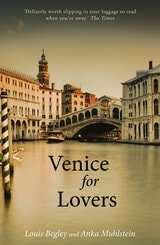
Venice For Lovers
Louis Begley and Anka Muhlstein
Haus Publishing, 2003
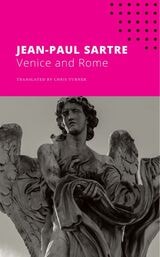
Venice and Rome
Jean-Paul Sartre
Seagull Books, 2021
Iconic French novelist, playwright, and essayist Jean-Paul Sartre is widely recognized as one of the most important philosophers of the twentieth century, and his work has remained relevant and thought-provoking through the decades. The Seagull Sartre Library now presents some of his most incisive philosophical, cultural, and literary critical essays in twelve newly designed and affordable editions.
“Venice speaks to us; this false witness’s voice, shrill at times, whispering at others, broken by silences, is its voice.” In these three moving short pieces, we discover Sartre as a master stylist, lyrically describing his time in two bewitching eternal cities—Venice and Rome. “Antiquity,” Sartre writes, “is alive in Rome, with a hate-filled, magical life.”
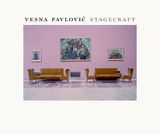
Vesna Pavlovic
StagecraftVesna Pavlovic
Vanderbilt University Press, 2021
The book includes critical essays that contextualize and expound on Pavlović's unique treatment of the photographic medium, in which a photographic moment is expanded to include the conditions of image making, production, documentation, and representation.
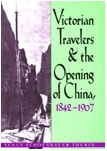
Victorian Travelers and the Opening of China 1842–1907
Susan Shoenbauer Thurin
Ohio University Press, 1999
Three men and three women: a plant collector, a merchant and his novelist wife, a military officer, and two famous women travelers went to China between the Opium War and the formal end of the opium trade, 1842–1907. Their range of perspectives, their acquaintance with one another and their similar scope of travel to Hong Kong, the treaty ports, and Sichuan lend intensity to their picture of China and the Western presence there.
What the travelers record reveals is a continuity in the response of the West and China to each other. Susan Schoenbauer Thurin’s study of these writings presents a rich tapestry of impressions, biases, and cultural perspectives that inform our own understanding of the Victorians and their views of the world outside their own.
The strange mix of opium and missionaries, the aura of fabled “Cathay” and its valuable trade items, the attraction and repulsion of the exotic otherness the travelers experience, reflect the political, religious, and racial views of their era, and explain the allure of the Orient that, in part, characterized their age. Victorian Travelers and the Opening of China, 1842–1907 is a remarkable look into the cultural past.
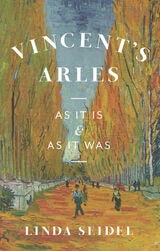
Vincent's Arles
As It Is and as It WasLinda Seidel
University of Chicago Press, 2023
Once admired as “a little Rome” on the banks of the Rhône, the town of Arles in the south of France had been a place of significance long before the painter Vincent van Gogh arrived in February of 1888. Aware of Arles’s history as a haven for poets, van Gogh spent an intense fifteen months there, scouring the city’s streets and surroundings in search of subjects to paint when he wasn’t thinking about other places or lamenting his woeful circumstances.
In Vincent’s Arles, Linda Seidel serves as a guide to the mysterious and culturally rich town of Arles, taking us to the places immortalized by van Gogh and cherished by innumerable visitors and pilgrims. Drawing on her extensive expertise on the region and the medieval world, Seidel presents Arles then and now as seen by a walker, visiting sites old and new. Roman, Romanesque, and contemporary structures come alive with the help of the letters the artist wrote while in Arles. The result is the perfect blend of history, art, and travel, a chance to visit a lost past and its lingering, often beautiful, traces in the present.
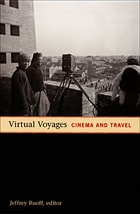
Virtual Voyages
Cinema and TravelJeffrey Ruoff, ed.
Duke University Press, 2006
Some contributors take a broad view of travelogues by examining the colonial and imperial perspectives embodied in early travel films, the sensation of movement that those films evoked, and the role of live presentations such as lectures in our understanding of travelogues. Other essays are focused on specific films, figures, and technologies, including early travelogues encouraging Americans to move to the West; the making and reception of the documentary Grass (1925), shot on location in Turkey, Syria, Iraq, and Iran; the role of travel imagery in 1930s Hollywood cinema; the late-twentieth-century 16mm illustrated-lecture industry; and the panoramic possibilities presented by IMAX technologies. Together the essays provide a nuanced appreciation of how, through their representations of travel, filmmakers actively produce the worlds they depict.
Contributors. Rick Altman, Paula Amad, Dana Benelli, Peter J. Bloom, Alison Griffiths, Tom Gunning, Hamid Naficy, Jennifer Lynn Peterson, Lauren Rabinovitz, Jeffrey Ruoff, Alexandra Schneider, Amy J. Staples
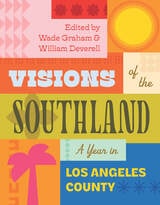
Visions of the Southland
A Year in Los Angeles CountyEdited by Wade Graham and William Deverell
University of Chicago Press, 2026
Experience a year in Los Angeles County, in all its glitter and grit, through a unique anthology that pairs essays by acclaimed writers and historians with custom maps.
When many of us picture Los Angeles, we’re actually thinking of LA County. Home to roughly ten million people, the county alone is more populous than forty-two US states. Its eighty-eight cities include places made famous by Hollywood glamor and California dreaming—Beverly Hills, Malibu, and Santa Monica—but also working-class municipalities and the self-explanatory City of Industry. With a territory that includes the Pacific coastline, mountain ranges, and the high Mojave Desert, the county’s landscapes have been touched by earthquakes, droughts, and, of course, devastating fires. LA County is a place of extremes: progress and injustice, innovation and stagnation.
Visions of the Southland collects essays by writers, journalists, and historians to create a nuanced portrait of LA that’s grounded in the county itself—its sites, structures, and stories. Contributors—including Gustavo Arellano, Keri Blakinger, Lynell George, Christopher Hawthorne, Michael Hiltzik, Greg Hise, Carolina Miranda, Becky Nicolaides, Susan Straight, and David L. Ulin—delve into LA’s infamous air pollution, movie ranches, prisons, aqueducts, urban forests, SoCal Bohemianism, and more. A custom map by Ezra Rawitsch enriches each piece and grounds the reader in specific locations throughout the county. Unfolding over the course of a year, the book traces the rhythms of politics, sports, weather, and wildlife across this sprawling and enigmatic place.
Sweeping in its scope and gorgeous in its design, Visions of the Southland will delight Angelenos, history buffs, urbanists, and map enthusiasts alike.
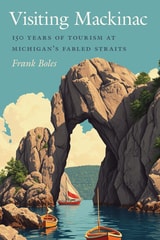
Visiting Mackinac
150 Years of Tourism at Michigan's Fabled StraitsFrank Boles
Michigan State University Press, 2025
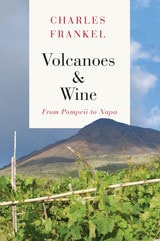
Volcanoes and Wine
From Pompeii to NapaCharles Frankel
University of Chicago Press, 2019
Traveling across regions wellknown to wine lovers like Sicily, Oregon, and California, as well as the less familiar places, such as the Canary Islands, Frankel gives an in-depth account of famous volcanoes and the wines that spring from their idiosyncratic soils. From Santorini’s vineyards of rocky pumice dating back to a four-thousand-year-old eruption to grapes growing in craters dug in the earth of the Canary Islands, from Vesuvius’s famous Lacryma Christi to the ambitious new generation of wine growers reviving the traditional grapes of Mount Etna, Frankel takes us across the stunning and dangerous world of volcanic wines. He details each volcano’s most famous eruptions, the grapes that grow in its soils, and the people who make their homes on its slopes, adapting to an ever-menacing landscape. In addition to introducing the history and geology of these volcanoes, Frankel's book serves as a travel guide, offering a host of tips ranging from prominent vineyards to visit to scenic hikes in each location.
This illuminating guide will be indispensable for wine lovers looking to learn more about volcanic terroirs, as well as anyone curious about how cultural heritage can survive and thrive in the shadow of geological danger.
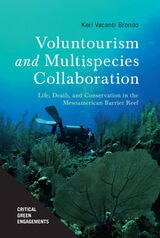
Voluntourism and Multispecies Collaboration
Life, Death, and Conservation in the Mesoamerican Barrier ReefKeri Vacanti Brondo
University of Arizona Press, 2021
Winner of the 2022 Edward M. Bruner Book Award
Voluntourism and Multispecies Collaboration is a lively ethnographic exploration of the world of conservation voluntourism and its engagement with marine and terrestrial biodiversity on the Honduran Bay Island of Utila, located in the ecologically critical Mesoamerican Barrier Reef.
In this highly readable text, anthropologist Keri Vacanti Brondo provides a pioneering theoretical framework that conceptualizes conservation voluntourism as a green industry. Brondo argues that the volunteer tourism industry is the product of coloniality and capitalism that works to produce and sustain an economy of affect while generating inequalities and dispossession. Employing a decolonizing methodology based on landscape assemblage theory, Brondo offers “thinking-like-a-mangrove” to attend to alternative worldings in Utila beyond the hegemonic tourist spectacle–dominated world attached to the volunteer tourism industry. Readers journey through the mangroves and waters alongside voluntourists, iguanas, whale sharks, turtles, lionfish, and islanders to build valuable research experience in environmental management while engaging in affective labor and multispecies relations of care.
Conservation organizations benefit from the financial capital and labor associated with conservation tourism, an industry boosted by social media. This critical work asks us to consider the impacts of this new alternative tourism market, one that relies on the exchange of “affect” with other species. How are human socialities made through interactions with other species? What lives and dies in Utila’s affect economy? Why are some species killable? Who gets to decide?