Results by title
331 books match the query 'World Literature' and 4 start with v
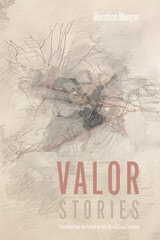
Valor
StoriesMurathan Mungan, translated from the Turkish by Aron Aji and David Gramling
Northwestern University Press, 2022
Among Murathan Mungan’s signature works, Cenk Hikâyeleri (Valor: Stories) has long been considered a milestone of twentieth-century Turkish literature. The six short stories in the collection reflect the author’s multiethnic background (which includes Kurdish, Arab, and Turkish heritage) and represent his lush poetics, literary breadth, and sociopolitical commitments.
Valor reimagines Shahmaran, a mythical half‑human, half‑snake figure that commonly appears in the folklore of Turkey’s southeastern provinces. Legend interweaves with the contemporary realities of ethnicity, religious dogma, gender, and sexuality. Uncovering hidden narratives within a rich and complicated culture, Mungan’s stories depict self-realization and sexual awakening as they showcase one of Turkey’s most popular literary voices.
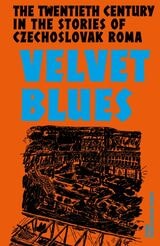
Velvet Blues
Twentieth Century in the Stories of Czechoslovak RomaEdited by Karolína Ryvolová
Karolinum Press, 2026
Romani writers from former Czechoslovakia offer their history and perspective in this important collection that fills a gap in world literature.
As representatives of an oral culture, the Romani people have throughout history been the subject of stories written by outsiders. Sometimes idealized, often defamed, and even condemned, they have seldom been accurately portrayed by the majority of writers. It has only been in the last century that the Roma have finally started writing for themselves.
The fifteen Romani writers from former Czechoslovakia featured in this anthology speak of the people, times, and places they particularly hold dear. Although the roads of the Roma have always been paved with disrespect, discrimination, and vicious racial persecution by mainstream societies, these stories frequently talk about the good things in life. Be it the writers’ homes in the traditional settlements of rural Eastern Slovakia, the Czech industrial towns where the families moved after WWII in search of a better life, or the bustling cities of the post-transition period, they demonstrate immense pride in their Romani identity, love of their Romani language, and heartfelt respect for their elders. Velvet Blues provides a very different picture from the stock character of “the Gypsy” so common in world literature.
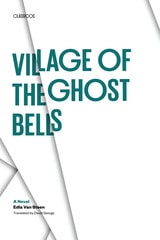
Village of the Ghost Bells
A NovelBy Edla Van Steen
University of Texas Press, 1991
In the village of the ghost bells, the church chimes ring—even though the church has no bells. One of the neighbors wants to buy dreams—or is she a dream that someone else is dreaming? Where and why do dreams become nightmares?
These are only some of the fascinating questions raised in Village of the Ghost Bells, Edla Van Steen’s second novel. First published in 1983 as Coraçôes mordidos, the novel tells the story of the would-be utopian community built on an old plantation of the outskirts of São Paulo, Brazil. Its atmosphere is dreamlike, often verging on the supernatural, and strange events signal the transformation of the utopian dream into a nightmare. Ultimately destroyed by greed, corruption, and exploitation, the community becomes a microcosm of the Brazilian socioeconomic system, in which it takes all of a person’s warmth, idealism, passion, and humor to survive the bleak environment.
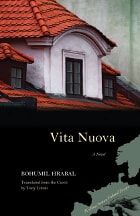
Vita Nuova
A NovelBohumil Hrabal
Northwestern University Press, 2010
Vita Nuova is the second in a trilogy of memoirs written from the perspective of Bohumil Hrabal’s wife, Elis.ka, about their life in Prague from the 1950s to the 1970s, when Communist repression of artists was at its peak.
Hrabal’s inimitable humor, which in Elis.ka’s ruminations ranges from bawdy slapstick to cutting irony, is all the more penetrating for being directed at himself. Vita Nuova showcases Hrabal’s legendary bohemian intellectual life, particularly his relationship with Vladimír Boudník. Hrabal creates a shrewd, lively portrait of Eastern European intellectual life in the mid-twentieth century.