Results by title
141 books match the query 'World War I' and 2 start with v
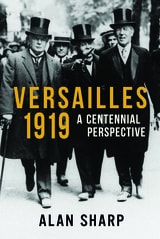
Versailles 1919
A Centennial PerspectiveAlan Sharp
Haus Publishing, 2018
Fully revised and updated for the centennial of the Conference, Versailles 1919 sets the ramifications of the Paris Peace treaties—for good or ill—within a long-term context. Alan Sharp mounts a powerful argument that the responsibility for Europe’s continuing interwar instability cannot be wholly attributed to the peacemakers of 1919–23. Concise and convincing, Versailles 1919 is a clear guide to the global legacy of the Versailles Settlement.
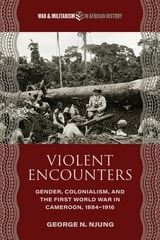
Violent Encounters
Gender, Colonialism, and the First World War in Cameroon, 1884–1916George N. Njung
Ohio University Press, 2027
Violent Encounters offers a powerful and original gendered history of colonial rule and warfare in Cameroon from the advent of German imperialism to the end of the First World War. Centering German Cameroon as an understudied but pivotal site of empire and global conflict, George N. Njung demonstrates that violence was a calculated instrument of colonial governance, which was systematically organized along racial and gendered lines to conquer territory, discipline African communities, and suppress resistance.
Drawing on extensive archival research in Africa and Europe, oral traditions, and interdisciplinary gender analysis, Njung reconstructs how empire and war were lived differently by African men and women. He shows that gender-based violence—especially sexual abuse—functioned as a deliberate political strategy embedded in military campaigns, forced labor regimes, and systems of punishment. African women bore disproportionate burdens at the intersection of gender, race, and militarization, even as they acted as resisters, mobilizers, and negotiators. African men, meanwhile, experienced forced recruitment, battlefield violence, and profound challenges to social authority under colonial rule.
Reinterpreting the First World War in Africa as an escalation rather than a rupture, Violent Encounters situates wartime atrocities, mass displacement, and one of the twentieth century’s earliest refugee crises within a longer continuum of imperial violence. By foregrounding gender, the book repositions Cameroon—and Africa more broadly—as central to understanding the global dynamics of empire, militarization, and resistance in the early twentieth century.