Results by title
3703 books match the query '19th century' and 56 start with v
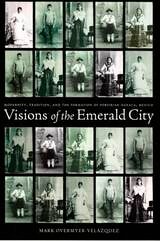
Visions of the Emerald City
Modernity, Tradition, and the Formation of Porfirian Oaxaca, MexicoMark Overmyer-Velázquez
Duke University Press, 2006
Incorporating a nuanced understanding of visual culture into his analysis, Overmyer-Velázquez shows how ideas of modernity figured in Oaxacans’ ideologies of class, race, gender, sexuality, and religion and how they were expressed in Oaxaca City’s streets, plazas, buildings, newspapers, and public rituals. He pays particular attention to the roles of national and regional elites, the Catholic church, and popular groups—such as Oaxaca City’s madams and prostitutes—in shaping the discourses and practices of modernity. At the same time, he illuminates the dynamic interplay between these groups. Ultimately, this well-illustrated history provides insight into provincial life in pre-Revolutionary Mexico and challenges any easy distinctions between the center and the periphery or modernity and tradition.
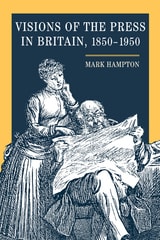
Visions of the Press in Britain, 1850-1950
Mark Hampton
University of Illinois Press, 2004
In Visions of the Press in Britain, 1850-1950, Mark Hampton argues that qualities expected of the contemporary British press--lively writing, speed, impartiality, depth, and the ability to topple corrupt governments by informing readers--are not obvious attributes of journalism but derive from more than a century of debate. He analyzes the various historical conceptions of the British press that helped to create its modern role, and demonstrates that these conceptions were intimately involved in the emergence of mass democracy in the late nineteenth and early twentieth centuries.
Hampton surveys a diversity of sources--Parliamentary speeches and commissions, books, pamphlets, periodicals and select private correspondence--in order to identify how governmental elites, the educated public, professional journalists, and industry moguls characterized the political and cultural function of the press. The resulting blend of cultural history and media sociology demonstrates how once optimistic visions of the press have given way to more pessimistic contemporary views about the power of the mass media.
With clarity and panache, this book shows that many competing conceptions continued to influence twentieth-century understandings of the press but did not remain satisfactory in new political, cultural, and media environments. Visions of the Press in Britain, 1850-1950 provides a rich tapestry against which to understand the contemporary realities of journalism, democracy, and mass media.
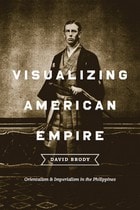
Visualizing American Empire
Orientalism and Imperialism in the PhilippinesDavid Brody
University of Chicago Press, 2010
In 1899 an American could open a newspaper and find outrageous images, such as an American soldier being injected with leprosy by Filipino insurgents. These kinds of hyperbolic accounts, David Brody argues in this illuminating book, were just one element of the visual and material culture that played an integral role in debates about empire in late nineteenth- and early twentieth-century America.
Visualizing American Empire explores the ways visual imagery and design shaped the political and cultural landscape. Drawing on a myriad of sources—including photographs, tattoos, the decorative arts, the popular press, maps, parades, and material from world’s fairs and urban planners—Brody offers a distinctive perspective on American imperialism. Exploring the period leading up to the Spanish-American War, as well as beyond it, Brody argues that the way Americans visualized the Orient greatly influenced the fantasies of colonial domestication that would play out in the Philippines. Throughout, Brody insightfully examines visual culture’s integral role in the machinery that runs the colonial engine. The result is essential reading for anyone interested in the history of the United States, art, design, or empire.
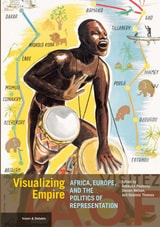
Visualizing Empire
Africa, Europe, and the Politics of RepresentationRebecca Peabody
J. Paul Getty Trust, The, 2021
An exploration of how an official French visual culture normalized France’s colonial project and exposed citizens and subjects to racialized ideas of life in the empire.
By the end of World War I, having fortified its colonial holdings in the Caribbean, Latin America, Africa, the Indian Ocean, and Asia, France had expanded its dominion to the four corners of the earth. This volume examines how an official French visual culture normalized the country’s colonial project and exposed citizens and subjects alike to racialized ideas of life in the empire. Essays analyze aspects of colonialism through investigations into the art, popular literature, material culture, film, and exhibitions that represented, celebrated, or were created for France’s colonies across the seas.
These studies draw from the rich documents and media—photographs, albums, postcards, maps, posters, advertisements, and children’s games—related to the nineteenth- and twentieth-century French empire that are held in the Getty Research Institute’s Association Connaissance de l’histoire de l’Afrique contemporaine (ACHAC) collections. ACHAC is a consortium of scholars and researchers devoted to exploring and promoting discussions of race, iconography, and the colonial and postcolonial periods of Africa and Europe.
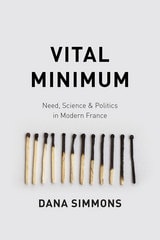
Vital Minimum
Need, Science, and Politics in Modern FranceDana Simmons
University of Chicago Press, 2015
The result was the concept of the "vital minimum"--the living wage, a measure of physical and social needs. In this book, Dana Simmons traces the history of this concept, revealing the intersections between technologies of measurement, such as calorimeters and social surveys, and technologies of wages and welfare, such as minimum wages, poor aid, and welfare programs. In looking at how we define and measure need, Vital Minimum raises profound questions about the authority of nature and the nature of inequality.

Volunteer Forty-Niners
Tennesseans and the California Gold RushWalter T. Durham
Vanderbilt University Press, 1997
In Volunteer Forty-Niners, Walter T. Durham provides the first comprehensive examination of the role Tennessee and Tennesseans played in creating a new state and a new society on the West Coast. Drawing from such archival sources and personal narratives in letters and diaries, public records, and newspaper reports, Durham has woven a wealth of information into his recounting of their adventures. He follows many of the emigrants into the mines and details the activities of others in commerce and government. In the process, he shows that Tennesseans made an enormous contribution to the beginnings of government in California. Among the many offices they held were governor, assemblyman, sheriff, state senator, secretary of state, state treasurer, controller, U.S. senator, U.S. marshal, U.S. surveyor general and Indian commissioner.