Results by title
8642 books match the query '20th century' and 89 start with v
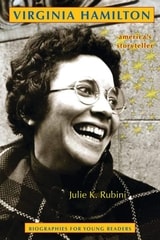
Virginia Hamilton
America’s StorytellerJulie K. Rubini
Ohio University Press, 2017
A Bank Street College of Education Best Children’s Book of 2018 (Outstanding Merit selection) • Finalist, 2018 Ohioana Book Award
Long before she wrote The House of Dies Drear, M. C. Higgins, the Great, and many other children’s classics, Virginia Hamilton grew up among her extended family near Yellow Springs, Ohio, where her grandfather had been brought as a baby through the Underground Railroad. The family stories she heard as a child fueled her imagination, and the freedom to roam the farms and woods nearby trained her to be a great observer. In all, Hamilton wrote forty-one books, each driven by a focus on “the known, the remembered, and the imagined”—particularly within the lives of African Americans.
Over her thirty-five-year career, Hamilton received every major award for children’s literature. This new biography gives us the whole story of Virginia’s creative genius, her passion for nurturing young readers, and her clever way of crafting stories they’d love.

Virginia Hasn't Always Been for Lovers
Interracial Marriage Bans and the Case of Richard and Mildred LovingPhyl Newbeck
Southern Illinois University Press, 2004
This landmark volume chronicles the history of laws banning interracial marriage in the United States with particular emphasis on the case of Richard and Mildred Loving, a white man and a black woman who were convicted by the state of Virginia of the crime of marrying across racial lines in the late 1950s. The Lovings were not activists, but their battle to live together as husband and wife in their home state instigated the 1967 U.S. Supreme Court ruling that antimiscegenation laws were unconstitutional, which ultimately resulted in the overturning of laws against interracial marriage that were still in effect in sixteen states by the late 1960s.

Virginia Woolf Icon
Brenda R. Silver
University of Chicago Press, 1999
From Virginia Woolf's 1937 appearance on the cover of Time magazine to her current roles in theater, film, and television, Silver traces the often contradictory representations and the responses they provoke, highlighting the recurring motifs that associate Virginia Woolf with fear. By looking more closely at who is afraid and the contexts in which she is perceived to be frightening, Silver illustrates how Virginia Woolf has become the site of conflicts about cultural boundaries and legitimacy that continue to rage today.

Virginia Woolf and the Fictions of Psychoanalysis
Elizabeth Abel
University of Chicago Press, 1989
"Virginia Woolf and the Fictions of Psychoanalysis brings Woolf's extraordinary craftsmanship back into view; the book combines powerful claims about sexual politics and intellectual history with the sort of meticulous, imaginative close reading that leaves us, simply, seeing much more in Woolf's words than we did before. It is the most exciting book on Woolf to come along in some time."—Lisa Ruddick, Modern Philology
Virginia Woolf’s Mythic Method
Amy C. Smith
The Ohio State University Press, 2022
Virginia's Apple
Collected MemoirsJudith Barrington
Oregon State University Press, 2024
Virginia’s Apple is a collection of fourteen literary memoirs that explore pivotal episodes across poet and writer Judith Barrington’s life. Artfully crafted, each one stands alone yet they are linked—characters reappear and, taken together, they create a larger narrative.
The content is wide-ranging: the early days of the Second Wave of feminism—the exhilaration, the wildness, the love affairs, the surprises, and the self-invention, as well as the confusion and conflicts of those heady times; navigating a sometimes precarious existence as an out lesbian long before it was commonplace; leaving England and becoming an American citizen; finding a life partner; and growing old with an inherited disability. The author’s friendship with the distinguished poet Adrienne Rich is the subject of one story. In another, there’s an appearance by the notorious murderer, Lord Lucan, whose wife was a chance acquaintance.
These stories are laced with humor and joy, while pulsing below the surface is the slow unfolding of delayed grief over her parents’ drowning when she was nineteen, revealing how such a loss can shape a life.

Virtual Lotus
Modern Fiction of Southeast AsiaTeri Shaffer Yamada, Editor
University of Michigan Press, 2002
Short introductions to each story provide a sketch of the country's literary history, revealing the interaction between individual writers and their sociopolitical situations. Many of the stories are ethnographic and provide snapshots of cultures at a specific historical moment. The stories also reflect gender balance, diversity of style, and quality of literary expression. Exploring everything from the realities of being a middle-aged woman in Burma in the witty drama "An Umbrella" to the difficult choice between appeasing a troubled Vietnamese community or tending to an ailing father in "Tu Ben the Actor," this collection is sure to appeal to a variety of readers the world over.
This anthology will be useful in courses in comparative translation and culture, postcolonial studies, political science, Asian history, and gender studies. It is also appropriate for a literary reading public interested in comparative world literature.
Teri Shaffer Yamada is Associate Professor, California State University, Long Beach.
Virtual Modernism
Writing and Technology in the Progressive EraKatherine Biers
University of Minnesota Press, 2013
In Virtual Modernism, Katherine Biers offers a fresh view of the emergence of American literary modernism from the eruption of popular culture in the early twentieth century. Employing dynamic readings of the works of Stephen Crane, Henry James, James Weldon Johnson, Djuna Barnes, and Gertrude Stein, she argues that American modernist writers developed a “poetics of the virtual” in response to the rise of mass communications technologies before World War I. These authors’ modernist formal experimentation was provoked by the immediate, individualistic pleasures and thrills of mass culture. But they also retained a faith in the representational power of language—and the worth of common experience—more characteristic of realism and naturalism. In competition with new media experiences such as movies and recorded music, they simultaneously rejected and embraced modernity.
Biers establishes the virtual poetics of these five writers as part of a larger “virtual turn” in the United States, when a fascination with the writings of Henri Bergson, William James, and vitalist philosophy—and the idea of virtual experience—swept the nation. Virtual Modernism contends that a turn to the virtual experience of language was a way for each of these authors to carve out a value for the literary, both with and against the growth of mass entertainments. This technologically inspired reengagement with experience was formative for American modernism.
Situated at the crossing points of literary criticism, philosophy, media studies, and history, Virtual Modernism provides an examination of Progressive Era preoccupations with the cognitive and corporeal effects of new media technologies that traces an important genealogy of present-day concerns with virtuality.
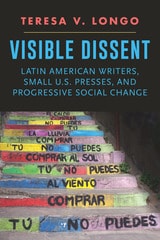
Visible Dissent
Latin American Writers, Small U.S. Presses, and Progressive Social ChangeTeresa V. Longo
University of Iowa Press, 2018
As Teresa Longo’s groundbreaking examination reveals, North America’s dissident literature has its roots in the Latin American literary tradition. From Pablo Neruda’s Canto General to Eduardo Galeano’s Open Veins of Latin America to Gabriel García Márquez’s One Hundred Years of Solitude—among others—contemporary writers throughout the Americas have forced us to reconsider the United States’s relationship with Latin America, and more broadly with the Global South. Highlighting the importance of reading and re-reading the Latin American canon in the United States, Longo finds that literature can be an instrument of progressive social change, and argues that small literary presses—City Lights, Curbstone, and Seven Stories—have made that dissent visible in the United States. In the book’s final two chapters on the Robert F. Kennedy Center’s Speak Truth to Power initiative and the publication of Marc Falkoff’s Poems from Guantánamo, the author turns our attention further outward, probing the role poetry, theater, and photography play in global human rights work.
Locating the work of artists and writers alongside that of scholars and legal advocates, Visible Dissent not only unveils the staying-power of committed writing, it honors the cross-currents and the on-the-ground implications of humane political engagement.
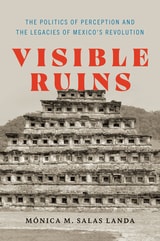
Visible Ruins
The Politics of Perception and the Legacies of Mexico's RevolutionMónica M. Salas Landa
University of Texas Press, 2024
2026 Honorable Mention, Mejor Libro, Historia Reciente y Memoria Section of the Latin American Studies Association
An examination of the failures of the Mexican Revolution through the visual and material records.
The Mexican Revolution (1910–1920) introduced a series of state-led initiatives promising modernity, progress, national grandeur, and stability; state surveyors assessed land for agrarian reform, engineers used nationalized oil for industrialization, archaeologists reconstructed pre-Hispanic monuments for tourism, and anthropologists studied and photographed Indigenous populations to achieve their acculturation. Far from accomplishing their stated goals, however, these initiatives concealed violence, and permitted land invasions, forced displacement, environmental damage, loss of democratic freedom, and mass killings. Mónica M. Salas Landa uses the history of northern Veracruz to demonstrate how these state-led efforts reshaped the region's social and material landscapes, affecting what was and is visible. Relying on archival sources and ethnography, she uncovers a visual order of ongoing significance that was established through postrevolutionary projects and that perpetuates inequality based on imperceptibility.

Vision/Re-Vision
Adapting Contemporary American Fiction To FilmBarbara Tepa Lupack
University of Wisconsin Press, 1996
The essays in Vision/Re-Vision analyze in detail ten popular and important films adapted from contemporary American fiction by women, addressing the ways in which the writers' latent or overt feminist messages are reinterpreted by the filmmakers who bring them to the screen, demonstrating that there is much to praise as well as much to fault in the adaptations and that the process of adaptation itself is instructive rather than destructive, since it enriches understanding about both media.
Visions of Violence
German Avant-Gardes After FascismRichard Langston
Northwestern University Press, 2007
An extreme faction of aesthetic modernity intent on bulldozing contemporary life, the avant-garde has regularly employed visions of violence in their push for societal and cultural renewal. But in the shadow of unparalleled war and genocide, such aesthetic violence lost its force. This book explores the reconfiguration of the avant-garde in response to the violent transformation of European reality. Citing the emergence of independent avant-garde practitioners in the place of the previous collective, Richard Langston considers six individual exemplars of Germany’s post-fascist avant-garde—works that span the last six decades: painter, writer, and filmmaker Peter Weiss’s appropriation of French surrealism in the fifties; writer Dieter Wellershoff’s coterie of “new realists”; artist Wolf Vostell’s mediation and conflation of the experiences of the Auschwitz trials and the Vietnam War; poet and novelist Dieter Brinkmann’s collages from the seventies; the multimedia displacements of Alexander Kluge; and the performative engagements of dramatists Christoph Schlingensief and Rene Pollesch.
Taking stock of the evolution of Germany’s post-fascist avant-gardes, Langston’s book shows how the movement from Weiss to Pollesch exhibits the problems that both modernity and postmodernity pose for an aesthetic engagement of Germany’s violent past.
Visions of War
World War II in Popular Literature and CultureM. Paul Holsinger
University of Wisconsin Press, 1992
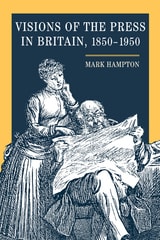
Visions of the Press in Britain, 1850-1950
Mark Hampton
University of Illinois Press, 2004
In Visions of the Press in Britain, 1850-1950, Mark Hampton argues that qualities expected of the contemporary British press--lively writing, speed, impartiality, depth, and the ability to topple corrupt governments by informing readers--are not obvious attributes of journalism but derive from more than a century of debate. He analyzes the various historical conceptions of the British press that helped to create its modern role, and demonstrates that these conceptions were intimately involved in the emergence of mass democracy in the late nineteenth and early twentieth centuries.
Hampton surveys a diversity of sources--Parliamentary speeches and commissions, books, pamphlets, periodicals and select private correspondence--in order to identify how governmental elites, the educated public, professional journalists, and industry moguls characterized the political and cultural function of the press. The resulting blend of cultural history and media sociology demonstrates how once optimistic visions of the press have given way to more pessimistic contemporary views about the power of the mass media.
With clarity and panache, this book shows that many competing conceptions continued to influence twentieth-century understandings of the press but did not remain satisfactory in new political, cultural, and media environments. Visions of the Press in Britain, 1850-1950 provides a rich tapestry against which to understand the contemporary realities of journalism, democracy, and mass media.

Visiting Emily
Poems Inspired by the Life and Work of Emily DickinsonSheila Coghill
University of Iowa Press, 2000
This unique anthology gathers work by eighty poets inspired by Emily Dickinson. Beginning with Hart Crane's 1927 poem “To Emily Dickinson” and moving forward through the century to such luminary figures as Archibald MacLeish, John Berryman, Yvor Winters, Adrienne Rich, Richard Eberhart, Richard Wilbur, Maxine Kumin, Amy Clampitt, William Stafford, and Galway Kinnell, Visiting Emily offers both a celebration of and an homage to one of the world's great poets.
If there was ever any doubt about Dickinson's influence on modern and contemporary poets, this remarkable collection surely puts it to rest. Gathered here are poems reflecting a wide range of voices, styles, and forms—poems written in traditional and experimental forms; poems whose tones are meditative, reflective, reverent and irreverent, satirical, whimsical, improvisational, and serious. Many of the poets draw from Dickinson's biography, while others imagine events from her life. Some poets borrow lines from Dickinson's poems or letters as triggers for their inspiration. Though most of the poems connect directly to Dickinson's life or work, for others the connection is more oblique.
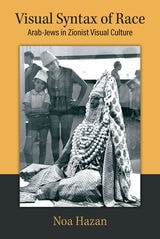
Visual Syntax of Race
Arab-Jews in Zionist Visual CultureNoa Hazan
University of Michigan Press, 2022
Analyzing the visual syntax and display rhetoric applied in newspaper photos, national historical albums, and museum exhibitions, Noa Hazan shows that although racial thought was and still is verbally suppressed in Israel, it is vividly present in its nonverbal official and public visual sphere. The racist perspective of newspaper editors, book publishers, photographers, and museum curators were morally justified in its time by such patronizing ideals as realistic news coverage or the salvation of Jewish heritage assets. Although their perspectives played a dominant role in establishing a visual syntax of race in Israel, they were not seen as racially discriminating at the time. The racist motifs and actions are revealed here by colligating multiple cases into a coherent narrative in retrospect.
This book points to a direct influence of the anti-Semitic discourse in Europe toward Mizrahim in Israel, highlighting the shared visual stereotypes used in both Europe and the fledgling state of Israel. Engraved in their body, these cultural traits were depicted and understood as racial-biological qualities and were visually manipulated to silo Ashkenazim and Mizrahim in Israel as distinct racial types.
Visualities 2
More Perspectives on Contemporary American Indian Film and ArtDenise K. Cummings
Michigan State University Press, 2019
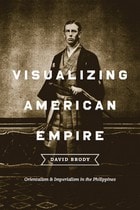
Visualizing American Empire
Orientalism and Imperialism in the PhilippinesDavid Brody
University of Chicago Press, 2010
In 1899 an American could open a newspaper and find outrageous images, such as an American soldier being injected with leprosy by Filipino insurgents. These kinds of hyperbolic accounts, David Brody argues in this illuminating book, were just one element of the visual and material culture that played an integral role in debates about empire in late nineteenth- and early twentieth-century America.
Visualizing American Empire explores the ways visual imagery and design shaped the political and cultural landscape. Drawing on a myriad of sources—including photographs, tattoos, the decorative arts, the popular press, maps, parades, and material from world’s fairs and urban planners—Brody offers a distinctive perspective on American imperialism. Exploring the period leading up to the Spanish-American War, as well as beyond it, Brody argues that the way Americans visualized the Orient greatly influenced the fantasies of colonial domestication that would play out in the Philippines. Throughout, Brody insightfully examines visual culture’s integral role in the machinery that runs the colonial engine. The result is essential reading for anyone interested in the history of the United States, art, design, or empire.
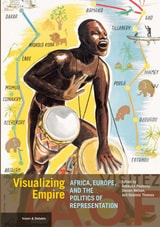
Visualizing Empire
Africa, Europe, and the Politics of RepresentationRebecca Peabody
J. Paul Getty Trust, The, 2021
An exploration of how an official French visual culture normalized France’s colonial project and exposed citizens and subjects to racialized ideas of life in the empire.
By the end of World War I, having fortified its colonial holdings in the Caribbean, Latin America, Africa, the Indian Ocean, and Asia, France had expanded its dominion to the four corners of the earth. This volume examines how an official French visual culture normalized the country’s colonial project and exposed citizens and subjects alike to racialized ideas of life in the empire. Essays analyze aspects of colonialism through investigations into the art, popular literature, material culture, film, and exhibitions that represented, celebrated, or were created for France’s colonies across the seas.
These studies draw from the rich documents and media—photographs, albums, postcards, maps, posters, advertisements, and children’s games—related to the nineteenth- and twentieth-century French empire that are held in the Getty Research Institute’s Association Connaissance de l’histoire de l’Afrique contemporaine (ACHAC) collections. ACHAC is a consortium of scholars and researchers devoted to exploring and promoting discussions of race, iconography, and the colonial and postcolonial periods of Africa and Europe.
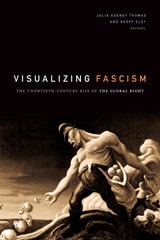
Visualizing Fascism
The Twentieth-Century Rise of the Global RightJulia Adeney Thomas and Geoff Eley, editors
Duke University Press, 2020
Contributors. Nadya Bair, Paul D. Barclay, Ruth Ben-Ghiat, Maggie Clinton, Geoff Eley, Lutz Koepnick, Ethan Mark, Bertrand Metton, Lorena Rizzo, Julia Adeney Thomas, Claire Zimmerman
Vita Nuova
A NovelBohumil Hrabal
Northwestern University Press, 2010
Vita Nuova is the second in a trilogy of memoirs written from the perspective of Bohumil Hrabal’s wife, Elis.ka, about their life in Prague from the 1950s to the 1970s, when Communist repression of artists was at its peak.
Hrabal’s inimitable humor, which in Elis.ka’s ruminations ranges from bawdy slapstick to cutting irony, is all the more penetrating for being directed at himself. Vita Nuova showcases Hrabal’s legendary bohemian intellectual life, particularly his relationship with Vladimír Boudník. Hrabal creates a shrewd, lively portrait of Eastern European intellectual life in the mid-twentieth century.
Vital Minimum
Need, Science, and Politics in Modern FranceDana Simmons
University of Chicago Press, 2015
The result was the concept of the "vital minimum"--the living wage, a measure of physical and social needs. In this book, Dana Simmons traces the history of this concept, revealing the intersections between technologies of measurement, such as calorimeters and social surveys, and technologies of wages and welfare, such as minimum wages, poor aid, and welfare programs. In looking at how we define and measure need, Vital Minimum raises profound questions about the authority of nature and the nature of inequality.
Vital signs
contemporary American poetry from the university pressesRonald Wallace
University of Wisconsin Press, 1989
The selections in this anthology represent the full range and vitality of contemporary American poetry--from minimalism to epic, from free verse to traditional form, from plain conversation to richly embroidered tapestry, form passionate political utterance to intense personal drama, from light verse to tough lyricism. Since 1950 university presses have published more than 900 volumes of original poetry , opening the canon to a wide range of rich and exciting voices. Nearly 200 of the those volumes are represented here.
Vital Signs features poems by such well established poets as John Ashbery, Marge Piercy, Adrienne Rich, and James Wright. Because the presses have also played a role in discovering and promoting the work of new poets, the reader will find here poems by many younger writers as well.
Vitality Politics
Health, Debility, and the Limits of Black EmancipationStephen Knadler
University of Michigan Press, 2019
Vladimir's Carrot
Modern Drama and the Modern ImaginationJohn Peter
University of Chicago Press, 1987
For Peter, Beckett's Waiting for Godot makes such a radical break with dramatic tradition that it prompts the question: Is this play the single most important event in the theater since Aeschylus? Or is it the fulfillment of forces at work long before Beckett wrote it? Peter shows how Beckett's work represents a change in the very subject matter of drama, a fundamental revision of concepts of character, plot, and meaning, which in turn requires a new way of responding to drama. Where plays have traditionally engaged audiences in critical and moral dialogue, theater like Beckett's, according to Peter, is closed to questioning; it presents a vision of the world which can only be accepted or rejected. As such, it not only signals a new form of drama, but also posits a fundamentally changed audience.
Peter views this change—essentially, a change of mind—in its wider context. The times and the thought that contribute to the modern imagination are represented here by novels, paintings, and music—works by Wagner, Kafka, Proust, Picasso, and Braque—as well as plays. Peter shows how the depiction of the world by these artists echoes—and is echoed by—the work of modern thinkers such as Schopenhauer, Nietzsche, and Freud.
Vladimir's Carrot will provoke and stimulate readers who find themselves either lost or perfectly at home in "modern" culture.

Voegelin Recollected
Conversations on a LifeEdited by Barry Cooper & Jodi Bruhn
University of Missouri Press, 2007
Although his contributions to philosophy are revered and his writings have been collected, Eric Voegelin’s persona will inevitably fade with the memories of those who knew him. This book preserves the human element of Voegelin by capturing those valuable personal recollections.
Barry Cooper and Jodi Bruhn conducted intensive interviews with Voegelin’s wife, his closest friends, and his first-generation students—many of whom have since passed on—in order to bring to print everything important about his life and personality. American scholars will especially appreciate the glimpses provided by Voegelin’s German colleagues into his life in Munich, as well as the thoughts of his students in Vienna. Reflections of people such as Paul Caringella, Bruno Schlesinger, and Heinz Barazon capture Voegelin’s greatness and shortcomings alike and also shed new light on his philosophical quest for truth.
By descending progressively further into the past, the book takes readers deeper into the essence of Voegelin as reminiscences become more dramatic. Ranging widely from America back to Germany—with recollections of Gestapo intimidation and eventual emigration—the accounts interweave episodes of pathos, humor, fear, rivalry, and ambition. We witness Voegelin’s persistent and partly self-imposed communication problems and impatience with administrative duties, his respect for prudent political actors and public servants, and his genuine affection not only for his colleagues and best students but also for diligent secretaries and empathetic nurses. Through these recollections, key elements of his personality repeatedly emerge: his intelligence, optimism, and integrity, combined with an acute perception of the significance of his work.
This is the most revealing and comprehensive biographical work yet available on a man known to be captivating as a thinker—and now shown to be equally fascinating as a human being. His own publications attest to his mind and methods; Voegelin Recollected provides a deeper understanding of the man himself.
Voice Lessons
By Alice Embree
University of Texas Press, 2021
Voice Lessons explores the rich personal and political terrain of Alice Embree, a 1960s activist and convert to the women’s liberation movement of the 1970s, bringing a woman’s perspective to a transformational time in US history. This riveting memoir traces the author’s roots in segregated Austin and her participation in efforts to integrate the University of Texas. It follows her antiwar activism from a vigil in front of President Lyndon Johnson’s ranch in 1965 to a massive protest after the shootings at Kent State in 1970. Embree’s activism brought her and the Students for a Democratic Society into conflict with Frank Erwin, the powerful chairman of the UT Board of Regents, and inspired a campus free speech movement. She recounts her experiences living in New York during the tumultuous years of 1968 and 1969, including the Columbia University strike and the Woodstock music festival. She also tells about protesting at the Chicago Democratic Convention, her interactions with Yippies and poets, and her travels to Chile, Cuba, and Mexico. Embree highlights the radical roots of the women’s liberation movement in Austin and the audacious women’s community that challenged gender roles, fought for reproductive justice, and inspired a lifetime of activism.

Voiceless Vanguard
The Infantilist Aesthetic of the Russian Avant-GardeSara Pankenier Weld
Northwestern University Press, 2014
Voiceless Vanguard: The Infantilist Aesthetic of the Russian Avant-Garde offers a new approach to the Russian avant-garde. It argues that central writers, artists, and theorists of the avant-garde self-consciously used an infantile aesthetic, as inspired by children’s art, language, perspective, and logic, to accomplish the artistic renewal they were seeking in literature, theory, and art. It treats the influence of children’s drawings on the Neo-Primitivist art of Mikhail Larionov, the role of children’s language in the Cubo-Futurist poetics of Aleksei Kruchenykh, the role of the naive perspective in the Formalist theory of Viktor Shklovsky, and the place of children’s logic and lore in Daniil Kharms’s absurdist writings for children and adults. This interdisciplinary and cultural study not only illuminates a rich period in Russian culture but also offers implications for modernism in a wider Western context, where similar principles apply.

Voices From the Other Side
An Oral History of Terrorism Against CubaKeith Bolender
Pluto Press, 2010
Keith Bolender brings to bear the enormous impact that terrorism has had on Cuba’s civilian population, with over 1,000 documented incidents resulting in more than 3,000 deaths and 2,000 injuries. Bolender allows the victims to articulate the atrocities the Cuban people have suffered - which largely originate from Cuban counter-revolutionaries based in the US, often with the active help of the CIA.
Voices From The Other Side includes first-person interviews with more than 75 Cuban citizens who have been victims of these terrorist acts, or have had family members or close friends die from the attacks. It is a unique resource for activists, journalists and students interested in Cuba's torrid relationship with the US.
Voices from Shanghai
Jewish Exiles in Wartime ChinaEdited by Irene Eber
University of Chicago Press, 2008
When Hitler came to power and the German army began to sweep through Europe, almost 20,000 Jewish refugees fled to Shanghai. A remarkable collection of the letters, diary entries, poems, and short stories composed by these refugees in the years after they landed in China, Voices from Shanghai fills a gap in our historical understanding of what happened to so many Jews who were forced to board the first ship bound for anywhere.
Once they arrived, the refugees learned to navigate the various languages, belief systems, and ethnic traditions they encountered in an already booming international city, and faced challenges within their own community based on disparities in socioeconomic status, levels of religious observance, urban or rural origin, and philosophical differences. Recovered from archives, private collections, and now-defunct newspapers, these fascinating accounts make their English-languge debut in this volume. A rich new take on Holocaust literature, Voices from Shanghai reveals how refugees attempted to pursue a life of creativity despite the hardships of exile.
Voices from the Thai Countryside
Samruam Singh
University of Wisconsin Press, 2008
Set in northern Thailand during the mid-1970s, the stories in this collection capture a period of dramatic social and economic change. Amidst a setting of marketplaces and paddyfields, lemon trees and leaf-roofed houses, these vignettes offer revealing insights into the daily lives of ordinary villagers and hillspeople struggling to survive.
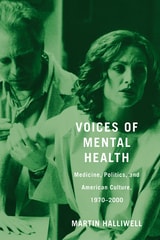
Voices of Mental Health
Medicine, Politics, and American Culture, 1970-2000Halliwell, Martin
Rutgers University Press, 2017
Together, these three dimensions bring into conversation a diverse cast of late-century writers, filmmakers, actors, physicians, politicians, policy-makers, and social critics. In doing so, Martin Halliwell’s Voices of Mental Health breaks new ground in deepening our understanding of the place, politics, and trajectory of mental health from the moon landing to the millennium.
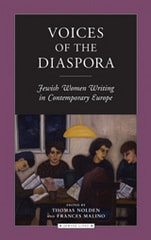
Voices of the Diaspora
Jewish Women Writing in Contemporary EuropeThomas Nolden
Northwestern University Press, 2005
At the same time, these writers address themes specific to their national contexts. Berlin-born Barbara Honigmann questions the possibility of Jewish life in the country responsible for the "final solution." Maghreb-born Marlène Amar and Reina Roffé address the experiences of displacement and emancipation as Sephardic women in Western, post-colonial societies. Clara Sereni describes how Jews in post-Fascist Italy reemerged with a self-assertiveness that troubled a society that had found comfort in amnesia. Ludmila Ulitskaya portrays a Jewish girlhood on the eve of Stalin's death empowered by the religious traditions of Jewish resistance.
From the unique perspective of women's literary voices, this volume reveals to English-speaking readers the extraordinary vivacity and diversity of European Jewry, and introduces them to a new generation of women writers.
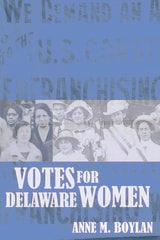
Votes for Delaware Women
Anne M. Boylan
University of Delaware Press, 2021

Voting and the Spirit of American Democracy
Essays on the History of Voting and Voting Rights in AmericaEdited by Donald W. Rogers
University of Illinois Press, 1992
manner, leading historians and political scientists trace the history of American
voting from the colonial period to the present incorporating the latest scholarship
on suffrage reform, woman suffrage, black voting rights, and electoral participation.
They explain how voting practices changed over time as the result of broad historical
forces such as economic growth, demographic shifts, the results of war, and
the rise of political reform movements.

Voting for Hitler and Stalin
Elections under 20th Century DictatorshipsEdited by Ralph Jessen and Hedwig Richter
Campus Verlag, 2011

Voyages of Catholic Thought to North America
Intellectual Networks and Cultural Exchanges Between Europe, Canada, and the United States, 1920-1950Florian Michel
Catholic University of America Press, 2026
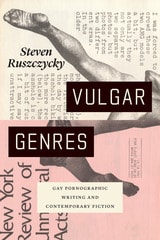
Vulgar Genres
Gay Pornographic Writing and Contemporary FictionSteven Ruszczycky
University of Chicago Press, 2021
Long fixated on visual forms, the field of porn studies is overdue for a book-length study of gay pornographic writing. Steven Ruszczycky delivers with an impressively researched work on the ways gay pornographic writing emerged as a distinct genre in the 1960s and went on to shape queer male subjectivity well into the new millennium.
Ranging over four decades, Ruszczycky draws on a large archive of pulp novels and short fiction, lifestyle magazines and journals, reviews, editorial statements, and correspondence. He puts these materials in conversation with works by a number of contemporary writers, including William Carney, Dennis Cooper, Samuel Delany, John Rechy, and Matthew Stadler. While focused on the years 1966 to 2005, Vulgar Genres reveals that the history of gay pornographic writing during this period informs much of what has happened online over the past twenty years, from cruising to the production of digital pornographic texts. The result is a milestone in porn studies and an important contribution to the history of gay life.
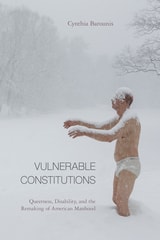
Vulnerable Constitutions
Queerness, Disability, and the Remaking of American ManhoodCynthia Barounis
Temple University Press, 2019
Amputation need not always signify castration; indeed, in Jack London’s fiction, losing a limb becomes part of a process through which queerly gendered men become properly masculinized. In her astute book, Vulnerable Constitutions, Cynthia Barounis explores the way American writers have fashioned alternative—even resistant—epistemologies of queerness, disability, and masculinity. She seeks to understand the way perverse sexuality, physical damage, and bodily contamination have stimulated—rather than created a crisis for—masculine characters in twentieth- and early twenty-first-century literature.
Barounis introduces the concept of “anti-prophylactic citizenship”—a mode of political belonging characterized by vulnerability, receptivity, and risk—to examine counternarratives of American masculinity. Investigating the work of authors including London, William Faulkner, James Baldwin, and Eli Clare, she presents an evolving narrative of medicalized sexuality and anti-prophylactic masculinity. Her literary readings interweave queer theory, disability studies, and the history of medicine to demonstrate how evolving scientific conversations around deviant genders and sexualities gave rise to a new model of national belonging—ultimately rewriting the story of American masculinity as a story of queer-crip rebellion.