Results by title
22279 books match the query 'Social Science' and 211 start with v

Voices
An Anthropologist's Dialogue with an Italian-American FestivalRichard M. Swiderski
University of Wisconsin Press, 1987
Volksgeist as Method and Ethic
Essays on Boasian Ethnography and the German Anthropological TraditionEdited by George W. Stocking, Jr.
University of Wisconsin Press, 1998

Voluminous States
Sovereignty, Materiality, and the Territorial ImaginationFranck Billé
Duke University Press, 2020
Contributors. Debbora Battaglia, Franck Billé, Wayne Chambliss, Jason Cons, Hilary Cunningham (Scharper), Klaus Dodds, Elizabeth Cullen Dunn, Gastón Gordillo, Sarah Green, Tina Harris, Caroline Humphrey, Marcel LaFlamme, Lisa Sang Mi Min, Aihwa Ong, Clancy Wilmott, Jerry Zee
Voluntourism and Multispecies Collaboration
Life, Death, and Conservation in the Mesoamerican Barrier ReefKeri Vacanti Brondo
University of Arizona Press, 2021
Winner of the 2022 Edward M. Bruner Book Award
Voluntourism and Multispecies Collaboration is a lively ethnographic exploration of the world of conservation voluntourism and its engagement with marine and terrestrial biodiversity on the Honduran Bay Island of Utila, located in the ecologically critical Mesoamerican Barrier Reef.
In this highly readable text, anthropologist Keri Vacanti Brondo provides a pioneering theoretical framework that conceptualizes conservation voluntourism as a green industry. Brondo argues that the volunteer tourism industry is the product of coloniality and capitalism that works to produce and sustain an economy of affect while generating inequalities and dispossession. Employing a decolonizing methodology based on landscape assemblage theory, Brondo offers “thinking-like-a-mangrove” to attend to alternative worldings in Utila beyond the hegemonic tourist spectacle–dominated world attached to the volunteer tourism industry. Readers journey through the mangroves and waters alongside voluntourists, iguanas, whale sharks, turtles, lionfish, and islanders to build valuable research experience in environmental management while engaging in affective labor and multispecies relations of care.
Conservation organizations benefit from the financial capital and labor associated with conservation tourism, an industry boosted by social media. This critical work asks us to consider the impacts of this new alternative tourism market, one that relies on the exchange of “affect” with other species. How are human socialities made through interactions with other species? What lives and dies in Utila’s affect economy? Why are some species killable? Who gets to decide?
Voodoo Priests, Noble Savages, and Ozark Gypsies
The Life of Folklorist Mary Alicia OwenGreg Olson
University of Missouri Press, 2025
Folklorist Wayland Hand once called Mary Alicia Owen “the most famous American Woman Folklorist of her time.” Drawing on primary sources, such as maps, census records, court documents, personal letters and periodicals, and the scholarship of others who have analyzed various components of Owen’s multifaceted career, historian Greg Olson offers the most complete account of her life and work to date. He also offers a critical look at some of the short stories Owen penned, sometimes under the name Julia Scott, and discusses how the experience she gained as a fiction writer helped lead her to a successful career in folklore.
Olson analyzes many of the nineteenth-century theories, stereotypes, and popular beliefs that influenced the work of Owen and many of her peers. By taking a cross-disciplinary look at her works of fiction, poetry, folklore, history, and anthropology, this volume sheds new light on elements of Owen’s career that have not previously been discussed in print. Examples of the romance stories that Owen wrote for popular magazines in the 1880’s are identified and examined in the context of the time in which Owen wrote them.
This groundbreaking biography shows that Owen was more than just a folklorist—she was a nineteenth-century woman of many contradictions. She was an independent woman of many interests who possessed a keen intellect and a genuine interest in people and their stories. Specialists in folklore, anthropology, women’s studies, local and regional history, and Missouriana will find much to like in this thoroughly researched study.
Voting the Gender Gap
Edited by Lois Duke Whitaker
University of Illinois Press, 2007
This book concentrates on the gender gap in voting--the difference in the proportion of women and men voting for the same candidate. Evident in every presidential election since 1980, this polling phenomenon reached a high of 11 percentage points in the 1996 election. The contributors discuss the history, complexity, and ways of analyzing the gender gap; the gender gap in relation to partisanship; motherhood, ethnicity, and the impact of parental status on the gender gap; and the gender gap in races involving female candidates. Voting the Gender Gap analyzes trends in voting while probing how women's political empowerment and gender affect American politics and the electoral process.
Contributors are Susan J. Carroll, Erin Cassese, Cal Clark, Janet M. Clark, M. Margaret Conway, Kathleen A. Dolan, Laurel Elder, Kathleen A. Frankovic, Steven Greene, Leonie Huddy, Mary-Kate Lizotte, Barbara Norrander, Margie Omero, and Lois Duke Whitaker.
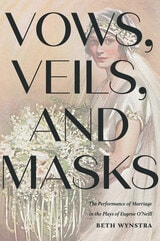
Vows, Veils, and Masks
The Performance of Marriage in the Plays of Eugene O'NeillBeth Wynstra
University of Iowa Press, 2023
Weaving in artifacts like advice columns, advertisements, theatrical reviews, and even the lived experiences of the actors who brought O’Neill’s wife characters to life, Beth Wynstra points to new ways of seeing and empathizing with those who are betrothed and new possibilities for reading marriage in literary and dramatic works. She suggests that the various ways women were, and still are, expected to divert from their true ambitions, desires, and selves in the service of appropriate wifely behavior is a detrimental performance and one at the crux of O’Neill’s marital tragedies. This book invites more inclusive and nuanced ways of thinking about the choices married characters must make and the roles they play, both on and off the stage.
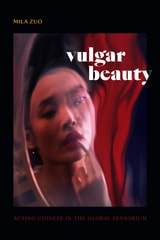
Vulgar Beauty
Acting Chinese in the Global SensoriumMila Zuo
Duke University Press, 2022
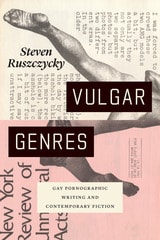
Vulgar Genres
Gay Pornographic Writing and Contemporary FictionSteven Ruszczycky
University of Chicago Press, 2021
Long fixated on visual forms, the field of porn studies is overdue for a book-length study of gay pornographic writing. Steven Ruszczycky delivers with an impressively researched work on the ways gay pornographic writing emerged as a distinct genre in the 1960s and went on to shape queer male subjectivity well into the new millennium.
Ranging over four decades, Ruszczycky draws on a large archive of pulp novels and short fiction, lifestyle magazines and journals, reviews, editorial statements, and correspondence. He puts these materials in conversation with works by a number of contemporary writers, including William Carney, Dennis Cooper, Samuel Delany, John Rechy, and Matthew Stadler. While focused on the years 1966 to 2005, Vulgar Genres reveals that the history of gay pornographic writing during this period informs much of what has happened online over the past twenty years, from cruising to the production of digital pornographic texts. The result is a milestone in porn studies and an important contribution to the history of gay life.
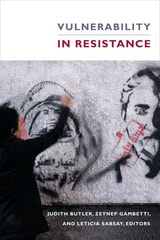
Vulnerability in Resistance
Judith Butler, Zeynep Gambetti, and Leticia Sabsay, editors
Duke University Press, 2016
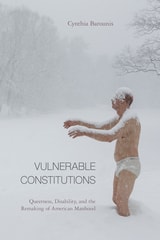
Vulnerable Constitutions
Queerness, Disability, and the Remaking of American ManhoodCynthia Barounis
Temple University Press, 2019
Amputation need not always signify castration; indeed, in Jack London’s fiction, losing a limb becomes part of a process through which queerly gendered men become properly masculinized. In her astute book, Vulnerable Constitutions, Cynthia Barounis explores the way American writers have fashioned alternative—even resistant—epistemologies of queerness, disability, and masculinity. She seeks to understand the way perverse sexuality, physical damage, and bodily contamination have stimulated—rather than created a crisis for—masculine characters in twentieth- and early twenty-first-century literature.
Barounis introduces the concept of “anti-prophylactic citizenship”—a mode of political belonging characterized by vulnerability, receptivity, and risk—to examine counternarratives of American masculinity. Investigating the work of authors including London, William Faulkner, James Baldwin, and Eli Clare, she presents an evolving narrative of medicalized sexuality and anti-prophylactic masculinity. Her literary readings interweave queer theory, disability studies, and the history of medicine to demonstrate how evolving scientific conversations around deviant genders and sexualities gave rise to a new model of national belonging—ultimately rewriting the story of American masculinity as a story of queer-crip rebellion.