Results by title
1713 books match the query '21st century' and 70 start with w
Wages Against Artwork
Decommodified Labor and the Claims of Socially Engaged ArtLeigh Claire La Berge
Duke University Press, 2019
Waiting for the Sky to Fall
The Age of Verticality in American NarrativeRuth Mackay
The Ohio State University Press, 2016
With this study, Mackay asks: In what oblique ways has verticality leaked into American narrative? Why do metaphors of up and down recur across the twentieth century? With close readings of Jonathan Safran Foer’s Extremely Loud and Incredibly Close, Winsor McCay’s comic strip Little Nemo in Slumberland, Upton Sinclair’s Oil! and its film rendering There Will Be Blood, Allen Ginsberg’s poetic dissections of the nuclear bomb, and Leslie Marmon Silko’s imagining of flight in Almanac of the Dead, this interdisciplinary study culminates with a discussion of Philippe Petit’s tightrope walk between the Twin Towers. Waiting for the Sky to Fall examines how vertical representation cleaves to, and often transforms the associations of, specific events that are physically and visually disorienting, disquieting, or even traumatic.
Walking the Clouds
An Anthology of Indigenous Science FictionEdited by Grace L. Dillon
University of Arizona Press, 2012
In this first-ever anthology of Indigenous science fiction Grace Dillon collects some of the finest examples of the craft with contributions by Native American, First Nations, Aboriginal Australian, and New Zealand Maori authors. The collection includes seminal authors such as Gerald Vizenor, historically important contributions often categorized as "magical realism" by authors like Leslie Marmon Silko and Sherman Alexie, and authors more recognizable to science fiction fans like William Sanders and Stephen Graham Jones. Dillon's engaging introduction situates the pieces in the larger context of science fiction and its conventions.
Organized by sub-genre, the book starts with Native slipstream, stories infused with time travel, alternate realities and alternative history like Vizenor's "Custer on the Slipstream." Next up are stories about contact with other beings featuring, among others, an excerpt from Gerry William's The Black Ship. Dillon includes stories that highlight Indigenous science like a piece from Archie Weller's Land of the Golden Clouds, asserting that one of the roles of Native science fiction is to disentangle that science from notions of "primitive" knowledge and myth. The fourth section calls out stories of apocalypse like William Sanders' "When This World Is All on Fire" and a piece from Zainab Amadahy's The Moons of Palmares. The anthology closes with examples of biskaabiiyang, or "returning to ourselves," bringing together stories like Eden Robinson's "Terminal Avenue" and a piece from Robert Sullivan's Star Waka.
An essential book for readers and students of both Native literature and science fiction, Walking the Clouds is an invaluable collection. It brings together not only great examples of Native science fiction from an internationally-known cast of authors, but Dillon's insightful scholarship sheds new light on the traditions of imagining an Indigenous future.

Wall Street Women
Melissa S. Fisher
Duke University Press, 2012
Fisher charts the evolution of the women's careers, the growth of their political and economic clout, changes in their perspectives and the cultural climate on Wall Street, and their experiences of the 2008 financial collapse. While most of the pioneering subjects of Wall Street Women did not participate in the women's movement as it was happening in the 1960s and 1970s, Fisher argues that they did produce a "market feminism" which aligned liberal feminist ideals about meritocracy and gender equity with the logic of the market.
War Against the People
Israel, the Palestinians and Global PacificationJeff Halper
Pluto Press, 2015
Modern warfare has a new form. The days of international combat are fading. So how do major world powers maintain control over their people today?
This book is a disturbing insight into the new ways world powers such as the US, Israel, Britain and China forge war today. It is a subliminal war of surveillance and whitewashed terror, conducted through new, high-tech military apparatuses, designed and first used in Israel against the Palestinian population. Including nano-technology, hidden camera systems, information databases on civilian activity, automated targeting systems and unmanned drones, it is used to control the very people the nation's leaders profess to serve.
Jeff Halper reveals that this practice is much more insidious than was previously thought. As Western governments claw back individual liberties, War Against the People is a reminder that fundamental human rights are being compromised for vast sections of the world, and that this is a subject that should concern everyone.
War Is Not a Game
The New Antiwar Soldiers and the Movement They BuiltLevinson, Nan
Rutgers University Press, 2016
Warhol's Mother's Pantry
Art, America, and the Mom in PopM. I. Devine
The Ohio State University Press, 2020
“What are these fragments we’ve Jersey Shored against our ruin?” asks M. I. Devine, remixing T. S. Eliot, in this dizzying collection of essays that pays homage to the cultural forms that hold us steady. These fragments are stored in Warhol’s Mother’s Pantry, which takes us deep beneath the surfaces of pop to explore our shared quest for meaning today. Julia Warhola, an immigrant who arrived as the US was closing its borders a century ago, is the muse of reuse in these essays that cross boundaries—between now and then, high and low. She is the mom in pop who cut tin cans into flowers and taught Andy (and us) how to reshape and redeem our world. In essays as lyrical, witty, and experimental as the works they cover, Devine offers a new account of pop humanism. How we cut new things from the traditions we’re given, why we don’t stop believin’ (and carry on, wayward sons) when so much is stacked against us. Here are Leonard Cohen’s last songs and Molly Bloom’s last words; Vampire Weekend’s Rostam and Philip Larkin too; Stevie Smith, John Donne, and Kendrick Lamar; sonnets and selfies; early cinema and post–9/11 film, pop hooks, and pop art. In Devine’s hands, these literary and cultural artifacts are provocatively reassembled into an urgent and refreshing history that refuses to let its readers forget where pop came from and where it can go.
Warring over Valor
How Race and Gender Shaped American Military Heroism in the Twentieth and Twenty-First CenturiesWendt, Simon
Rutgers University Press, 2019

Warriors and Scholars
A Modern War ReaderPeter B. Lane
University of North Texas Press, 2005
Watergate's Legacy and the Press
The Investigative ImpulseJon Marshall
Northwestern University Press, 2011
Bob Woodward and Carl Bernstein symbolize an era when investigative reporters were seen as courageous fighters of corruption and injustice. Although many mainstream news outlets no longer have the resources to support expensive investigative reporters on staff, journalists have found other ways to support themselves Marshall’s discussion of the opportunities they have found in blogs, crowd-sourcing, and nonprofit institutions offers hope for the future of investigative journalism.

Waters of the World
The Story of the Scientists Who Unraveled the Mysteries of Our Oceans, Atmosphere, and Ice Sheets and Made the Planet WholeSarah Dry
University of Chicago Press, 2019
From the glaciers of the Alps to the towering cumulonimbus clouds of the Caribbean and the unexpectedly chaotic flows of the North Atlantic, Waters of the World is a tour through 150 years of the history of a significant but underappreciated idea: that the Earth has a global climate system made up of interconnected parts, constantly changing on all scales of both time and space. A prerequisite for the discovery of global warming and climate change, this idea was forged by scientists studying water in its myriad forms. This is their story.
Linking the history of the planet with the lives of those who studied it, Sarah Dry follows the remarkable scientists who summited volcanic peaks to peer through an atmosphere’s worth of water vapor, cored mile-thick ice sheets to uncover the Earth’s ancient climate history, and flew inside storm clouds to understand how small changes in energy can produce both massive storms and the general circulation of the Earth’s atmosphere. Each toiled on his or her own corner of the planetary puzzle. Gradually, their cumulative discoveries coalesced into a unified working theory of our planet’s climate.
We now call this field climate science, and in recent years it has provoked great passions, anxieties, and warnings. But no less than the object of its study, the science of water and climate is—and always has been—evolving. By revealing the complexity of this history, Waters of the World delivers a better understanding of our planet’s climate at a time when we need it the most.
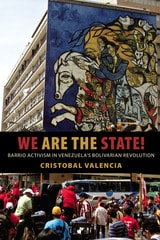
We Are the State!
Barrio Activism in Venezuela’s Bolivarian RevolutionCristobal Valencia
University of Arizona Press, 2015
The author offers an anthropological analysis of the state, social movements, and democracy as lived experiences of the poor, gendered, and racialized residents of two parishes in Caracas, Venezuela, and Afro-Venezuelan communities nearby. Ethnographic research reveals the shift in relationships of power and the evolving political practices among the Chavistas, the Chávez government, and the opposition. Examining the subjective experiences of barrio residents in everyday processes of state formation, this book provides a new perspective on the Chavistas, arguing that they are a broad-based social movement and driving force behind a revolution struggling to transfer state power to organized civil society.
Through his intense engagement with the constantly changing social, political, and economic dynamics, Valencia dramatically challenges top-down understandings of the state and power in Venezuela. He shows the unequal relationships between sectors of civil society, and he shows state formation as a process enmeshed in the struggles for social justice, demonstrating that the state is a sociopolitical entity that acts through civil society, rather than above it.
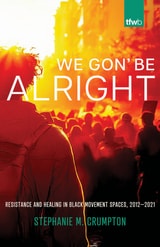
We Gon’ Be Alright
Resistance and Healing in Black Movement Spaces, 2012–2021Stephanie M. Crumpton
University of Arizona Press, 2025
Drawing on oral histories and personal narratives, Crumpton provides an intimate look at the lived experiences of thirty-seven full-time community organizers. These activists and organizers share their strategies for maintaining an ethic of care that sustains them while fighting against both external oppression and internal community struggles. The book highlights how contemporary Black resisters have leveraged a growing understanding of trauma and healing to enhance their activism. This blend of historical knowledge and modern therapeutic practices has equipped them with a broader array of tools to support their communities.
Rooted in womanist practical theology, We Gon’ Be Alright emphasizes the interconnectedness of white supremacy with other forms of oppression such as sexism, homophobia, and classism. Crumpton’s work underscores the necessity of “deep, deep healing” to address these multifaceted threats to Black life. This book is an essential resource for scholars, activists, and anyone interested in understanding the dynamics of Black resistance and healing in contemporary America. Through its detailed examination of the past decade, it offers valuable insights into the ongoing struggle for Black humanity, dignity, and a thriving future.

We Mark Your Memory
writings from the descendants of indentureEdited by David Dabydeen, Maria del Pilar Kaladeen, and Tina K. Ramnarine
University of London Press, 2018
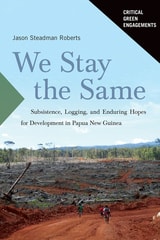
We Stay the Same
Subsistence, Logging, and Enduring Hopes for Development in Papua New GuineaJason Steadman Roberts
University of Arizona Press, 2024
Following a long history of smaller-scale and largely unsuccessful resource development efforts, New Hanover became the site of three multinational-controlled special agricultural and business leases (SABLs) that combined to cover over 75 percent of the island for ninety-nine-year lease terms. These agroforestry projects were part of a national effort to encourage “sustainable” rural development by tapping into the growing global demand for agricultural lands and crops like oil palm and biofuels. They were supposed to succeed where the smaller-scale projects of the past had failed. Unfortunately, these SABLs resulted in significant forest loss and livelihood degradation, while doing little to promote the type of economic development that many Lavongai had been hoping for.
It is within this context that We Stay the Same grounds questions of hope for transformative economic change within Lavongai assessments of the inequitable relationships between global processes of resource development and the local lives that have become increasingly defined by the necessities and failures of these processes. Written in a clear and relatable style for students, We Stay the Same combines ethnographic and ecological research to show how the Lavongai continue to survive and make meaningful lives in a situation where their own hopes for a better future have often been used against them as a mechanism of a more distantly profitable dispossession.
We Take Our Cities with Us
A MemoirSorayya Khan
The Ohio State University Press, 2022
Weak Planet
Literature and Assisted SurvivalWai Chee Dimock
University of Chicago Press, 2020
Drawing on Native American studies, disability studies, and environmental humanities, Dimock shows how hope can be found not in heroic statements but in incremental and unspectacular teamwork. Reversing the usual focus on hegemonic institutions, she highlights instead incomplete gestures given an afterlife with the help of others. She looks at Louise Erdrich’s and Sherman Alexie’s user-amended captivity narratives; nontragic sequels to Moby-Dick by C. L. R. James, Frank Stella, and Amitav Ghosh; induced forms of Irishness in Henry James, Colm Tóibín, W. B. Yeats, and Gish Jen; and the experimentations afforded by a blurry Islam in works by Henri Matisse, James Joyce, Ezra Pound, and Langston Hughes. Celebrating literature’s durability as an assisted outcome, Weak Planet gives us new ways to think about our collective future.
Welcome to the Neighborhood
An Anthology of American CoexistenceSarah Green
Ohio University Press, 2019
How to live with difference—not necessarily in peace, but with resilience, engagement, and a lack of vitriol—is a defining worry in America at this moment. The poets, fiction writers, and essayists (plus one graphic novelist) who contributed to Welcome to the Neighborhood don’t necessarily offer roadmaps to harmonious neighboring. Some of their narrators don’t even want to be neighbors. Maybe they grieve, or rage. Maybe they briefly find resolution or community. But they do approach the question of what it means to be neighbors, and how we should do it, with open minds and nuance.
The many diverse contributors give this collection a depth beyond easy answers. Their attentions to the theme of neighborliness as an ongoing evolution offer hope to readers: possible pathways for rediscovering community, even just by way of a shared wish for it. The result is an enormously rich resource for the classroom and for anyone interested in reflecting on what it means to be American today, and how place and community play a part.
Contributors include Leila Chatti, Rita Dove, Jonathan Escoffery, Rebecca Morgan Frank, Amina Gautier, Ross Gay, Mark Halliday, Joy Harjo, Edward Hirsch, Marie Howe, Sonya Larson, Dinty W. Moore, Robert Pinsky, Christine Schutt, and many more.
What Are Poets For?
An Anthropology of Contemporary Poetry and PoeticsGerald L. Bruns
University of Iowa Press, 2012
Conceptions and practices of poetry change not only from time to time and from place to place but also from poet to poet. This has never been more the case than in recent years. Gerald Bruns’s magisterial What Are Poets For? explores typographical experiments that distribute letters randomly across a printed page, sound tracks made of vocal and buccal noises, and holographic poems that recompose themselves as one travels through their digital space. Bruns surveys one-word poems, found texts, and book-length assemblies of disconnected phrases; he even includes descriptions of poems that no one could possibly write, but which are no less interesting (or no less poetic) for all of that. The purpose of the book is to illuminate this strange poetic landscape, spotlighting and describing such oddities as they appear, anomalies that most contemporary poetry criticism ignores.
What Did You Do Today?
Anthony Varallo
University of North Texas Press, 2023
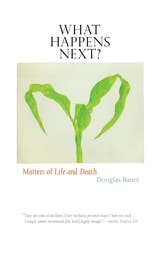
What Happens Next?
Matters of Life and DeathDouglas Bauer
University of Iowa Press, 2013
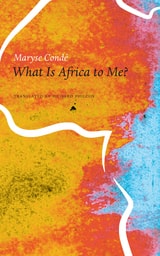
What Is Africa to Me?
Fragments of a True-to-Life AutobiographyMaryse Condé
Seagull Books, 2017
What Is Africa to Me? traces the late 1950s to 1968, chronicling Condé’s life in Sékou Touré’s Guinea to her time in Kwame N’Krumah’s Ghana, where she rubbed shoulders with Malcolm X, Che Guevara, Julius Nyerere, and Maya Angelou. Accusations of subversive activity resulted in Condé’s deportation from Ghana. Settling down in Sénégal, Condé ended her African years with close friends in Dakar, including filmmakers, activists, and Haitian exiles, before putting down more permanent roots in Paris.
Condé’s story is more than one of political upheaval, however; it is also the story of a mother raising four children as she battles steep obstacles, of a Guadeloupean seeking her identity in Africa, and of a young woman searching for her freedom and vocation as a writer. What Is Africa to Me? is a searing portrait of a literary genius—it should not be missed.
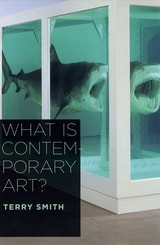
What Is Contemporary Art?
Terry Smith
University of Chicago Press, 2009
Who gets to say what counts as contemporary art? Artists, critics, curators, gallerists, auctioneers, collectors, or the public? Revealing how all of these groups have shaped today’s multifaceted definition, Terry Smith brilliantly shows that an historical approach offers the best answer to the question: What is Contemporary Art?
Smith argues that the most recognizable kind is characterized by a return to mainstream modernism in the work of such artists as Richard Serra and Gerhard Richter, as well as the retro-sensationalism of figures like Damien Hirst and Takashi Murakami. At the same time, Smith reveals, postcolonial artists are engaged in a different kind of practice: one that builds on local concerns and tackles questions of identity, history, and globalization. A younger generation embodies yet a third approach to contemporaneity by investigating time, place, mediation, and ethics through small-scale, closely connective art making. Inviting readers into these diverse yet overlapping art worlds, Smith offers a behind-the-scenes introduction to the institutions, the personalities, the biennials, and of course the works that together are defining the contemporary. The resulting map of where art is now illuminates not only where it has been but also where it is going.
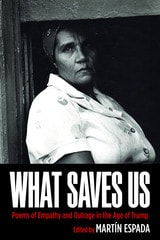
What Saves Us
Poems of Empathy and Outrage in the Age of TrumpEdited by Martín Espada
Northwestern University Press, 2019
This is an anthology of poems in the Age of Trump—and much more than Trump. These are poems that either embody or express a sense of empathy or outrage, both prior to and following his election, since it is empathy the president lacks and outrage he provokes.
There is an extraordinary diversity of voices here. The ninety-three poets featured include Elizabeth Alexander, Julia Alvarez, Richard Blanco, Carolyn Forché, Aracelis Girmay, Donald Hall, Juan Felipe Herrera, Yusef Komunyakaa, Naomi Shihab Nye, Marge Piercy, Robert Pinsky, Danez Smith, Patricia Smith, Brian Turner, Ocean Vuong, Bruce Weigl, and Eleanor Wilner. They speak of persecuted and scapegoated immigrants. They bear witness to violence: police brutality against African Americans, mass shootings in a school or synagogue, the rage inflicted on women everywhere. They testify to poverty: the waitress surviving on leftovers at the restaurant, the battles of a teacher in a shelter for homeless mothers, the emergency-room doctor listening to the heartbeats of his patients. There are voices of labor, in the factory and the fields. There are prophetic voices, imploring us to imagine the world we will leave behind in ruins lest we speak and act.
However, this is not merely a collection of grievances. The poets build bridges. One poet steps up to translate in Arabic at the airport; another walks through the city and sees her immigrant past in the immigrant present; another declaims a musical manifesto after the hurricane that devastated his island; another evokes a demonstration in the street, shouting in an ecstasy of defiance. The poets take back the language, resisting the demagogic corruption of words themselves. They assert our common humanity in the face of dehumanization.
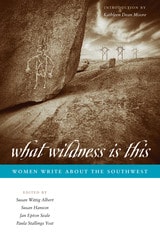
What Wildness Is This
Women Write about the SouthwestEdited by Susan Wittig Albert, Susan Hanson, Jan Epton Seale, and Paula Stallings Yost
University of Texas Press, 2007
Winner, WILLA Literary Award for Creative Nonfiction, 2008
How do women experience the vast, arid, rugged land of the American Southwest? The Story Circle Network, a national organization dedicated to helping women write about their lives, posed this question, and nearly three hundred women responded with original pieces of writing that told true and meaningful stories of their personal experiences of the land. From this deep reservoir of writing—as well as from previously published work by writers including Joy Harjo, Denise Chávez, Diane Ackerman, Naomi Shihab Nye, Leslie Marmon Silko, Gloria Anzaldua, Terry Tempest Williams, and Barbara Kingsolver—the editors of this book have drawn nearly a hundred pieces that witness both to the ever-changing, ever-mysterious life of the natural world and to the vivid, creative, evolving lives of women interacting with it.
Through prose, poetry, creative nonfiction, and memoir, the women in this anthology explore both the outer landscape of the Southwest and their own inner landscapes as women living on the land—the congruence of where they are and who they are. The editors have grouped the writings around eight evocative themes:
- The way we live on the land
- Our journeys through the land
- Nature in cities
- Nature at risk
- Nature that sustains us
- Our memories of the land
- Our kinship with the animal world
- What we leave on the land when we are gone
From the Gulf Coast of Texas to the Pacific Coast of California, and from the southern borderlands to the Great Plains and the Rocky Mountains, these intimate portraits of women's lives on the land powerfully demonstrate that nature writing is no longer the exclusive domain of men, that women bring unique and transformative perspectives to this genre.
What the Right Hand Knows
Tom Healy
Four Way Books, 2009
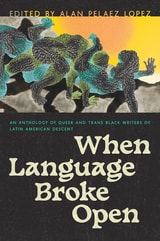
When Language Broke Open
An Anthology of Queer and Trans Black Writers of Latin American DescentEdited by Alan Pelaez Lopez
University of Arizona Press, 2023
By exploring themes of memory, care, and futurity, these contributions expand understandings of Blackness in Latin America, the Caribbean, and their U.S.-based diasporas. The volume offers up three central questions: How do queer and/or trans Black writers of Latin American descent address memory? What are the textures of caring, being cared for, and accepting care as Black queer and/or trans people of Latin American descent? And how do queer and trans embodiments help us understand and/or question the past and the present, and construct a Black, queer, and trans future?
The works collected in this anthology encompass a multitude of genres—including poetry, autobiography, short stories, diaries, visual art, and a graphic memoir—and feature the voices of established writers alongside emerging voices. Together, the contributors challenge everything we think we know about gender, sexuality, race, and what it means to experience a livable life.
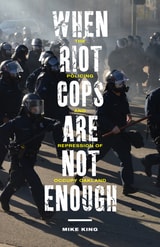
When Riot Cops Are Not Enough
The Policing and Repression of Occupy OaklandKing, Mike
Rutgers University Press, 2017
Drawn from King’s intensive field work, the book focuses on the physical, legal, political, and ideological dimensions of repression—in the streets, in courtrooms, in the media, in city hall, and within the movement itself—When Riot Cops Are Not Enough highlights the central role of political legitimacy, both for mass movements seeking to create social change, as well as for governmental forces seeking to control such movements. Although Occupy Oakland was different from other Occupy sites in many respects, King shows how the contradictions it illuminated within both social movement and police strategies provide deep insights into the nature of protest policing generally, and a clear map to understanding the full range of social control techniques used in North America in the twenty-first century.
When We Were Birds
PoemsJoe Wilkins
University of Arkansas Press, 2016
Finalist, 2016 Miller Williams Poetry Prize, edited by Billy Collins
In When We Were Birds, Joe Wilkins wrests his attention away from the griefs, deprivations, and high prairies of his Montana childhood and turns toward “the bean-rusted fields & gutted factories of the Midwest,” toward ordinary injustice and everyday sadness, toward the imminent birth of his son and his own confusions in taking up the mantle of fatherhood, toward faith and grace, legacy and luck.
A panoply of voices are at play—the escaped convict, the late-night convenience store clerk, and the drowned child all have their say—and as this motley chorus rises and crests, we begin to understand something of what binds us and makes us human: while the world invariably breaks all our hearts, Wilkins insists that is the very “place / hope lives, in the breaking.”
Within a notable range of form, concern, and voice, the poems here never fail to sing. Whether praiseful or interrogating, When We Were Birds is a book of flight, light, and song. “When we were birds,” Wilkins begins, “we veered & wheeled, we flapped & looped— / it’s true, we flew.”
Winner, 2017 Stafford/Hall Award for Poetry, Oregon Book Awards
When the Bones Speak
The Living, the Dead, and the Sacrifice of Contemporary OkinawaChristopher T. Nelson
Duke University Press, 2025
When the Good Life Goes Bad
The US and Its Seven Deadly SinsStacey M. Floyd-Thomas Foreword by Michael Eric Dyson
University of Illinois Press, 2026
Stacey M. Floyd-Thomas examines how the Seven Deadly Sins have shaped the moral strivings and sociopolitical condition of American society and culture in the twenty-first century. Drawing on a multidimensional approach, Floyd-Thomas uses race, gender, class, and other lenses to break down the moral crises that define the American Dream. Her critique exposes the harm done by individual and collective practices of sexual objectification, capitalist materialism, wealth inequality, and technological hubris before pivoting to the rise of right-wing populism, white Christian nationalism, and the politics of cruelty. But Floyd-Thomas also proposes an ethic that emphasizes truth-telling, community engagement, and values rooted in humility, justice, and mercy—a new path for the US to overcome systemic oppression and create a more just society.
Evocative and ambitious, When the Good Life Goes Bad takes readers on a wide-ranging journey through US life and culture to explain what corrupted the American dream.
When the Light Is Fire
Maasai Schoolgirls in Contemporary KenyaHeather D. Switzer
University of Illinois Press, 2018
Heather D. Switzer's interviews with over one hundred Kenyan Maasai schoolgirls challenge the widespread view of education as a silver bullet solution to global poverty. In their own voices, the girls offer incisive insights into their commitments, aspirations, and desires. Switzer weaves this ethnographic material into an astute analysis of historical literature, education and development documents, and theoretical literature. Maasai schoolgirls express a particular knowledge about themselves and provocative hopes for their futures. Yet, as Switzer shows, new opportunities force them to face, and navigate, new vulnerabilities and insecurities within a society that is itself in flux.
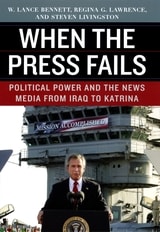
When the Press Fails
Political Power and the News Media from Iraq to KatrinaW. Lance Bennett, Regina G. Lawrence, and Steven Livingston
University of Chicago Press, 2007
“The hand-in-glove relationship of the U.S. media with the White House is mercilessly exposed in this determined and disheartening study that repeatedly reveals how the press has toed the official line at those moments when its independence was most needed.”—George Pendle, Financial Times
“Bennett, Lawrence, and Livingston are indisputably right about the news media’s dereliction in covering the administration’s campaign to take the nation to war against Iraq.”—Don Wycliff, Chicago Tribune
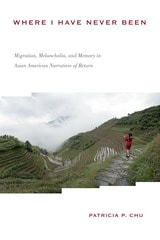
Where I Have Never Been
Migration, Melancholia, and Memory in Asian American Narratives of ReturnPatricia P. Chu
Temple University Press, 2019
In researching accounts of diasporic Chinese offspring who returned to their parents’ ancestral country, author Patricia Chu learned that she was not alone in the experience of growing up in America with an abstract affinity to an ancestral homeland and community. The bittersweet emotions she had are shared in Asian American literature that depicts migration-related melancholia, contests official histories, and portrays Asian American families as flexible and transpacific.
Where I Have Never Been explores the tropes of return, tracing both literal return visits by Asian emigrants and symbolic “returns”: first visits by diasporic offspring. Chu argues that these Asian American narratives seek to remedy widely held anxieties about cultural loss and the erasure of personal and family histories from public memory. In fiction, memoirs, and personal essays, the writers of return narratives—including novelists Lisa See, May-lee Chai, Lydia Minatoya, and Ruth Ozeki, and best-selling author Denise Chong, diplomat Yung Wing, scholar Winberg Chai, essayist Josephine Khu, and many others—register and respond to personal and family losses through acts of remembrance and countermemory.
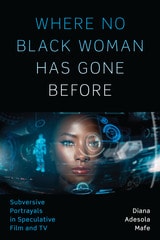
Where No Black Woman Has Gone Before
Subversive Portrayals in Speculative Film and TVBy Diana Adesola Mafe
University of Texas Press, 2018
When Lieutenant Uhura took her place on the bridge of the Starship Enterprise on Star Trek, the actress Nichelle Nichols went where no African American woman had ever gone before. Yet several decades passed before many other black women began playing significant roles in speculative (i.e., science fiction, fantasy, and horror) film and television—a troubling omission, given that these genres offer significant opportunities for reinventing social constructs such as race, gender, and class. Challenging cinema’s history of stereotyping or erasing black women on-screen, Where No Black Woman Has Gone Before showcases twenty-first-century examples that portray them as central figures of action and agency.
Writing for fans as well as scholars, Diana Adesola Mafe looks at representations of black womanhood and girlhood in American and British speculative film and television, including 28 Days Later, AVP: Alien vs. Predator, Children of Men, Beasts of the Southern Wild, Firefly, and Doctor Who: Series 3. Each of these has a subversive black female character in its main cast, and Mafe draws on critical race, postcolonial, and gender theories to explore each film and show, placing the black female characters at the center of the analysis and demonstrating their agency. The first full study of black female characters in speculative film and television, Where No Black Woman Has Gone Before shows why heroines such as Lex in AVP and Zoë in Firefly are inspiring a generation of fans, just as Uhura did.

Where the Hood At?
Fifty Years of Change in Black NeighborhoodsMichael C. Lens
Russell Sage Foundation, 2024
Hip hop music was born out of Black neighborhoods in the 1970s and has evolved alongside them. In Where the Hood At? Lens uses rap’s growth and influence across the country to frame discussions about the development and conditions of Black neighborhoods. Lens finds that social and economic improvement in Black neighborhoods since the 1970s has been slow. However, how well Black neighborhoods are doing varies substantially by region. Overall, Black neighborhoods in the South are doing well and growing quickly. Washington D.C. and Atlanta, in particular, stand out as centers of Black affluence. Black neighborhoods in the Midwest and the Rust Belt, on the other hand, are particularly disadvantaged. The welfare of Black neighborhoods is related not only to factors within neighborhoods, such as the unemployment rate, but also to characteristics of the larger metropolitan area, such as overall income inequality. Lens finds that while gentrification is increasingly prevalent, it is growing slowly, and is not as pressing an issue as public discourse would make it seem. Instead, concentrated disadvantage is by far the most common and pressing problem in Black neighborhoods.
Lens argues that Black neighborhoods represent urban America’s greatest policy failures, and that recent housing policies have only had mild success. He provides several suggestions for policies with the goal of uplifting Black neighborhoods. One radical proposal is enacting policies and programs, such as tax breaks for entrepreneurs or other small business owners, that would encourage Black Americans to move back to the South. Black Americans migrating South would have a better chance at moving to an advantaged Black neighborhood as improving neighborhood location is higher when moving across regions. It would also help Black Americans expand their political and economic power. He also suggests a regional focus for economic development policies, particularly in the Midwest where Black neighborhoods are struggling the most. One way to boost economic development would be to move federal agencies to the area. He also calls for building more affordable housing in Black suburbs. Black poverty is lower in suburbs than in central cities, so increasing housing in Black suburbs would allow Black households to relocate to more advantaged neighborhoods, which research has shown leads to improved life outcomes.
Where the Hood At? is a remarkable and comprehensive account of Black neighborhoods that helps us to better understand the places and conditions that allow them flourish or impedes their advancement.
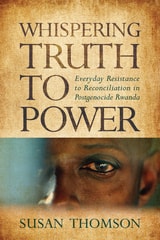
Whispering Truth to Power
Everyday Resistance to Reconciliation in Postgenocide RwandaSusan Thomson
University of Wisconsin Press, 2013
“Reveals the lengths [to which] the current government has gone to restructure all spaces of Rwandan society, and how Rwandans continue to resist this state interference in their everyday lives.”—Ethnic and Racial Studies
“Thomson’s elegant research is praiseworthy and her arguments are forthright. . . . This important publication will be of great value to scholars of Rwanda and genocide as well as students of reconciliation politics and transitional justice.”—Human Rights Quarterly
“Sobering and disturbing. . . . The peasant peoples’ resistance to official policies of national unity and reconciliation emerged because these national schemes do not reflect the peasants’ own lived realities and experiences of state power, genocide, and day-to-day living within their communities. Instead, these official policies disrupt everyday life and endanger existing networks of mutual support and dependence.”—Canadian Journal of Development Studies
Outstanding Academic Title, Choice Magazine
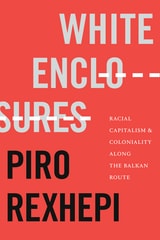
White Enclosures
Racial Capitalism and Coloniality along the Balkan RoutePiro Rexhepi
Duke University Press, 2022
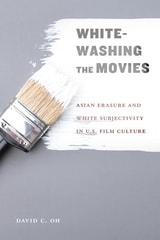
Whitewashing the Movies
Asian Erasure and White Subjectivity in U.S. Film CultureDavid C Oh
Rutgers University Press, 2022
Who Is Antiracist?
Beliefs, Motivations, and PoliticsGeorge Yancey and Hayoung Oh
Temple University Press, 2025
Who Is Antiracist? provides a systematic approach to understanding the motivations and intentions of racial progressives as well as the impact of political ideology on antiracism. The authors discuss the theoretical origins of contemporary antiracism and review key works of antiracism to piece together the characteristics that define it. They also create the Antiracism Attitude Scale to explore the demographic makeup and social views of those who support the type of antiracism popularized in the United States.
Acknowledging that antiracism faces powerful challenges in fully obtaining the goals articulated by its proponents, Who Is Antiracist? enlightens us about the continuing racial conflict in our society and warns against the risk of antiracism becoming just a proxy for ordinary party politics.
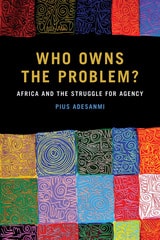
Who Owns the Problem?
Africa and the Struggle for AgencyPius Adesanmi
Michigan State University Press, 2020
committed and passionate voice of an African writer lost far too soon. Adesanmi urges his readers to commit themselves to Africa’s cultural agency.
Who Will Speak for America?
Stephanie Feldman and Nathaniel Popkin
Temple University Press, 2018
The editors and contributors to Who Will Speak for America? are passionate and justifiably angry voices providing a literary response to today’s political crisis. Inspired by and drawing from the work of writers who participated in nationwide Writers Resist events in January 2017, this volume provides a collection of poems, stories, essays, and cartoons that wrestle with the meaning of America and American identity. The contributions—from established figures including Eileen Myles, Melissa Febos, Jericho Brown, and Madeleine Thien, as well as rising new voices, such as Carmen Maria Machado, Ganzeer, and Liana Finck—confront a country beset by racial injustice, poverty, misogyny, and violence.
Contributions reflect on the terror of the first days after the 2016 Presidential election, but range well beyond it to interrogate the past and imagine possible American futures.
Who Will Speak for America? inspires readers by emphasizing the power of patience, organizing, resilience and community. These moving works advance the conversation the American colonists began, and that generations of activists, in their efforts to perfect our union, have elevated and amplified.
All royalties will benefit the Southern Poverty Law Center.
Why Fiction Matters in Contemporary China
David Der-wei Wang
Brandeis University Press, 2020
Contemporary discussions of China tend to focus on politics and economics, giving Chinese culture little if any attention. Why Fiction Matters in Contemporary China offers a corrective, revealing the crucial role that fiction plays in helping contemporary Chinese citizens understand themselves and their nation. Where history fails to address the consequences of man-made and natural atrocities, David Der-Wei Wang argues, fiction arises to bear witness to the immemorial and unforeseeable.
Beginning by examining President Xi Jinping’s call in 2013 to “tell the good China story,” Wang illuminates how contemporary Chinese cultural politics have taken a “fictional turn,” which can trace its genealogy to early modern times. He does so by addressing a series of discourses by critics within China, including Liang Qichao, Lu Xun, and Shen Congwen, as well as critics from the West such as Arendt, Benjamin, and Deleuze. Wang highlights the variety and vitality of fictional works from China as well as the larger Sinophone world, ranging from science fiction to political allegory, erotic escapade to utopia and dystopia. The result is an insightful account of contemporary China, one that affords countless new insights and avenues for understanding.
Why They Die
Civilian Devastation in Violent ConflictDaniel Rothbart and Karina V. Korostelina
University of Michigan Press, 2013
Why do civilians suffer most during times of violent conflict? Why are civilian fatalities as much as eight times higher, calculated globally for current conflicts, than military fatalities? In Why They Die, Daniel Rothbart and Karina V. Korostelina address these questions through a systematic study of civilian devastation in violent conflicts. Pushing aside the simplistic definition of war as a guns-and-blood battle between two militant groups, the authors investigate the identity politics underlying conflicts of many types. During a conflict, all those on the opposite side are perceived as the enemy, with little distinction between soldiers and civilians. As a result, random atrocities and systematic violence against civilian populations become acceptable.
Rothbart and Korostelina devote the first half of the book to case studies: deportation of the Crimean Tatars from the Ukraine, genocide in Rwanda, the Lebanon War, and the war in Iraq. With the second half, they present new methodological tools for understanding different types of violent conflict and discuss the implications of these tools for conflict resolution.
Why the Humanities Matter
A Commonsense ApproachBy Frederick Luis Aldama
University of Texas Press, 2008
Is there life after postmodernism? Many claim that it sounded the death knell for history, art, ideology, science, possibly all of Western philosophy, and certainly for the concept of reality itself. Responding to essential questions regarding whether the humanities can remain politically and academically relevant amid this twenty-first-century uncertainty, Why the Humanities Matter offers a guided tour of the modern condition, calling upon thinkers in a variety of disciplines to affirm essential concepts such as truth, goodness, and beauty.
Offering a lens of "new humanism," Frederick Aldama also provides a liberating examination of the current cultural repercussions of assertions by such revolutionary theorists as Said, Foucault, Lacan, and Derrida, as well as Latin Americanists such as Sommer and Mignolo. Emphasizing pedagogy and popular culture with equal verve, and writing in colloquial yet multifaceted prose, Aldama presents an enlightening way to explore what "culture" actually does—who generates it and how it shapes our identities—and the role of academia in sustaining it.
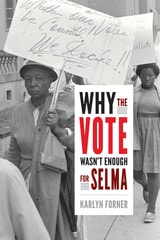
Why the Vote Wasn't Enough for Selma
Karyn Forner
Duke University Press, 2017
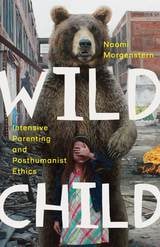
Wild Child
Intensive Parenting and Posthumanist EthicsNaomi Morgenstern
University of Minnesota Press, 2018
Exploring how the figure of the “wild child” in contemporary fiction grapples with contemporary cultural anxieties about reproductive ethics and the future of humanity
In the eighteenth century, Western philosophy positioned the figure of “the child” at the border between untamed nature and rational adulthood. Contemporary cultural anxieties about the ethics and politics of reproductive choice and the crisis of parental responsibility have freighted this liminal figure with new meaning in twenty-first-century narratives.
In Wild Child, Naomi Morgenstern explores depictions of children and their adult caregivers in extreme situations—ranging from the violence of slavery and sexual captivity to accidental death, mass murder, torture, and global apocalypse—in such works as Toni Morrison’s A Mercy, Cormac McCarthy’s The Road, Lionel Shriver’s We Need to Talk about Kevin, Emma Donoghue’s Room, and Denis Villeneuve’s film Prisoners. Morgenstern shows how, in such narratives, “wild” children function as symptoms of new ethical crises and existential fears raised by transformations in the technology and politics of reproduction and by increased ethical questions about the very decision to reproduce. In the face of an uncertain future that no longer confirms the confidence of patriarchal humanism, such narratives displace or project present-day apprehensions about maternal sacrifice and paternal protection onto the wildness of children in a series of hyperbolically violent scenes.
Urgent and engaging, Wild Child offers the only extended consideration of how twenty-first-century fiction has begun to imagine the decision to reproduce and the ethical challenges of posthumanist parenting.
Wild Mustard
New Voices from VietnamEdited by Charles Waugh, Nguyen Lien, and Van Giá
Northwestern University Press, 2017
In the tradition of the "Under 40" collections popularized by magazines such as the New Yorker and Granta, but with greater stakes and greater differences between the previous generation of writers and this new one, Wild Mustard seeks to change how North American readers think of Vietnam. Escaping the common fixation on the Vietnam War and its aftermath, these stories reflect the movement and dynamism of the young Vietnamese who locate themselves amid the transnational encounters and proliferating identities of a global economy.
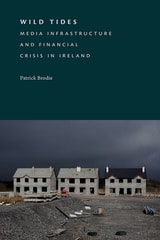
Wild Tides
Media Infrastructure and Financial Crisis in IrelandPatrick Brodie
Duke University Press, 2026
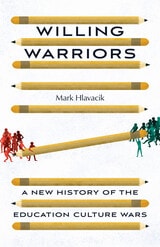
Willing Warriors
A New History of the Education Culture WarsMark Hlavacik
University of Chicago Press, 2025
On August 9, 2022, the Denton Independent School District held a meeting to address complaints about its libraries. Like so many districts in Texas and across the country, Denton had been responding to accusations that children had access to inappropriate books at school. During the public comment session, a local man stood up to the podium and read a sexually explicit passage from a book that he wanted removed from Denton’s school libraries. But beguiled by the prospect of securing a political win, he had confused the title of the lurid psychological thriller he read aloud with a young adult fiction series about mermaids. While his attempt to ban a book that was never in Denton’s school libraries in the first place received a few laughs, it also reflects a deeply serious and troubling culture of conflict that has taken over the politics of education and now divides people so completely as to make public education as a shared endeavor seem impossible.
In Willing Warriors, Mark Hlavacik shows how the culture wars have redefined the politics of US schooling from the 1970s to the present through vivid accounts of public controversies featuring Allan Bloom, Oprah Winfrey, Lynne Cheney, Rush Limbaugh, Betsy DeVos, Nikole Hannah-Jones, and others. Beginning in the 1970s, Hlavacik shows, efforts at innovation in schooling have increasingly been met by attempts to discredit them through exposé. As the culture wars have accelerated and exploded, this cycle of innovation and exposé has embroiled public schools in increasingly heated debates. He explains the dynamics that make curriculum controversies so intractable and confronts the delicate question of whether raucous public arguments are bad for education.
With clarity and insight, Hlavacik reveals why bitter contests between educational ideologies not only add another burden for the schools, but also for the people—the willing warriors—who devote their lives to fighting for their betterment.