Results by title
313 books match the query 'Administration' and 21 start with w

WELCOME TO HEIGHTS HIGH
THE CRIPPLING POLITICS OF RESTRUCTURINGDiana Tittle
The Ohio State University Press, 1995
WPAing in a Pandemic and Beyond
Revision, Innovation, and AdvocacyTodd Ruecker
Utah State University Press, 2025
The chapters in this collection include a variety of voices who have been involved in writing program administration in recent years to reflect on the work done in this moment of crisis. Through both short vignettes and longer chapters, this book explores the complicated interactions between WPA work and navigating times of crisis to provide insights for moving forward. Authors explore a variety of topics including professional development, curricular change, advocating in the face of intransigent administrations and others, caring for students, and taking time for self-care. Pointing to specific actions for continued advocacy, WPAing in a Pandemic and Beyond will be of great interest to WPAs and writing studies scholars.
WPAs in Transition
Navigating Educational Leadership PositionsCourtney Adams Wooten
Utah State University Press, 2017
WPAs in Transition shares a wide variety of professional and personal perspectives about the costs, benefits, struggles, and triumphs experienced by writing program administrators making transitions into and out of leadership positions. Contributors to the volume come from various positions, as writing center directors, assistant writing program administrators, and WPAs; mixed settings, including community colleges, small liberal arts colleges, and research institutions; and a range of career stages, from early to retiring. They recount insightful anecdotes and provide a scholarly context in which WPAs can share experiences related to this long-ignored aspect of their work.
During such transitions, WPAs and other leaders who function as both administrators and faculty face the professional and personal challenges of redefining who they are, the work they do, and with whom they collaborate. WPAs in Transition creates a grounded and nuanced experiential understanding of what it means to navigate changing roles, advancing the dialogue around WPAs’ and other administrators’ identities, career paths, work-life balance, and location, and is a meaningful addition to the broader literature on administration and leadership.
Contributors: Mark Blaauw-Hara, Christopher Blankenship, Jennifer Riley Campbell, Nicole I. Caswell, Richard Colby, Steven J. Corbett, Beth Daniell, Laura J. Davies, Jaquelyn Davis, Holland Enke, Letizia Guglielmo, Beth Huber, Karen Keaton Jackson, Rebecca Jackson, Tereza Joy Kramer, Jackie Grutsch McKinney, Kerri K. Morris, Liliana M. Naydan, Reyna Olegario, Kate Pantelides, Talinn Phillips, Andrea Scott, Paul Shovlin, Bradley Smith, Cheri Lemieux Spiegel, Sarah Stanley, Amy Rupiper Taggart, Molly Tetreault, Megan L. Titus, Chris Warnick
Wannabe U
Inside the Corporate UniversityGaye Tuchman
University of Chicago Press, 2009
Based on years of observation at a large state university, Wannabe U tracks the dispiriting consequences of trading in traditional educational values for loyalty to the market. Aping their boardroom idols, the new corporate administrators at such universities wander from job to job and reductively view the students there as future workers in need of training. Obsessed with measurable successes, they stress auditing and accountability, which leads to policies of surveillance and control dubiously cloaked in the guise of scientific administration. In this eye-opening exposé of the modern university, Tuchman paints a candid portrait of the corporatization of higher education and its impact on students and faculty.
Like the best campus novelists, Tuchman entertains with her acidly witty observations of backstage power dynamics and faculty politics, but ultimately Wannabe U is a hard-hitting account of how higher education’s misguided pursuit of success fails us all.
When Middle-Class Parents Choose Urban Schools
Class, Race, and the Challenge of Equity in Public EducationLinn Posey-Maddox
University of Chicago Press, 2014
Drawing on in-depth research at an urban elementary school, Posey-Maddox examines parents’ efforts to support the school through their outreach, marketing, and volunteerism. She shows that when middle-class parents engage in urban school communities, they can bring a host of positive benefits, including new educational opportunities and greater diversity. But their involvement can also unintentionally marginalize less-affluent parents and diminish low-income students’ access to the improving schools. In response, Posey-Maddox argues that school reform efforts, which usually equate improvement with rising test scores and increased enrollment, need to have more equity-focused policies in place to ensure that low-income families also benefit from—and participate in—school change.
Where We Start
A Practical Guide to Technical Communication Program AdministrationK. Alex Ilyasova
Utah State University Press, 2026
Providing practical, pragmatic guidance for current and aspiring administrators, Where We Start is the first book in technical communication that professionalizes administrativework and practices, offering practical advice on curricular, undergraduate, and graduate program development.
Where We Start teaches by example with each chapter combining personal knowledge with published research to direct readers toward their own practices. Some ofthe most experienced program leaders in technical communication share strategies for program design, curriculum development, assessment, inclusivity, and external partnerships. The collection is divided into three main sections: Programmatic Development and Planning, which focuses on the foundational aspects of strategic planning, curriculum development, and programmatic assessment; Developing Differently, which highlights approaches to inclusivity, diversity, and unconventional career paths in program administration; and Building Beyond, which discusses strategies for expanding technical communication programs through partnerships with industry and international institutions.
A resource for administrators as well as graduate students and early-career faculty looking to understand the intricacies of program management, Where We Start fills a critical gap, offering insights from a uniquely technical communication perspective, where programmatic resources are scarce.
Where You Stand Is Where You Sit
An Academic Administrator's HandbookRobert V. Smith
University of Arkansas Press, 2006
This handbook addresses the three key responsibilities of academic officers: inspiration, evaluation, and representation. “Getting a Good Start” deals with the promise of a new position, communicating with supervisors, and “getting around.” “Offering Inspiration and Direction” looks at the integrated scholar and “academic intrapreneurs”; diversity; the joys, challenges, and failure of professional life; and dealing with tragedies. “Guidance to Various Academic Administrators and Support Staff” examines the development, roles, and responsibilities of academic officers and institutional planning and budgeting. Reviewing the state of the institution and its personnel is covered in “Assessments and Evaluations,” and “Policies and Partnerships” deals with ethics-based policies, academic consortia and partnerships, and international outreach.
Throughout this valuable handbook, Smith offers background, advice, and examples that will interest both the novice and seasoned administrator as he takes us on a tour of success stories, challenges, and foibles.

Whither College Sports
Amateurism, Athlete Safety, and Academic IntegrityAndrew Zimbalist
Rutgers University Press, 2022

Wild about Harry
Everything You Have Ever Wanted to Know about the Truman ScholarshipSuzanne McCray
University of Arkansas Press, 2021
Working Lives of New Writing Center Directors
Nicole I. Caswell
Utah State University Press, 2016
The first book-length empirical investigation of writing center directors’ labor, The Working Lives of New Writing Center Directors presents a longitudinal qualitative study of the individual professional lives of nine new directors. Inspired by Kinkead and Harris’s Writing Centers in Context (1993), the authors adopt a case study approach to examine the labor these directors performed and the varied motivations for their labor, as well as the labor they ignored, deferred, or sidelined temporarily, whether or not they wanted to.
The study shows directors engaged in various types of labor—everyday, disciplinary, and emotional—and reveals that labor is never restricted to a list of job responsibilities, although those play a role. Instead, labor is motivated and shaped by complex and unique combinations of requirements, expectations, values, perceived strengths, interests and desires, identities, and knowledge. The cases collectively distill how different institutions define writing and appropriate resources to writing instruction and support, informing the ongoing wider cultural debates about skills (writing and otherwise), the preparation of educators, the renewal/tenuring of educators, and administrative “bloat” in academe.
The nine new directors discuss more than just their labor; they address their motivations, their sense of self, and their own thoughts about the work they do, facets of writing center director labor that other types of research or scholarship have up to now left invisible. The Working Lives of New Writing Center Directors strikes a new path in scholarship on writing center administration and is essential reading for present and future writing center administrators and those who mentor them.
Working with Faculty Writers
Anne Ellen Geller and Michele Eodice
Utah State University Press, 2013
Contributors from a variety of institution types and perspectives consider who faculty writers are and who they may be in the future, reveal the range of locations and models of support for faculty writers, explore the ways these might be delivered and assessed, and consider the theoretical, philosophical, political, and pedagogical approaches to faculty writing support, as well as its relationship to student writing support.
With the pressure on faculty to be productive researchers and writers greater than ever, this is a must-read volume for administrators, faculty, and others involved in developing and assessing models of faculty writing support.
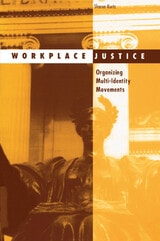
Workplace Justice
Organizing Multi-Identity MovementsSharon Kurtz
University of Minnesota Press, 2002
An unheralded union battle offers new insight into identity politics.
In 1991, Columbia University’s one thousand clerical workers launched a successful campaign for justice in their workplace. This diverse union-two-thirds black and Latina, three-fourths women-was committed to creating an inclusive movement organization and to fighting for all kinds of justice. How could they address the many race and gender injustices members faced, avoid schism, and maintain the unity needed to win? Sharon Kurtz, an experienced union activist and former clerical worker herself, was welcomed into the union and pursued these questions. Using this case study and secondary studies of sister clerical unions at Yale and Harvard, she examines the challenges and potential of identity politics in labor movements.
With the Columbia strike as a point of departure, Kurtz argues that identity politics are valuable for mobilizing groups, but often exclude members and their experiences of oppression. However, Kurtz believes that identity politics should not be abandoned as a component in building movements, but should be reframed-as multi-identity politics. In the end she shows an approach to organizing with great potential impact not only for labor unions but for any social movement.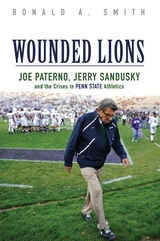
Wounded Lions
Joe Paterno, Jerry Sandusky, and the Crises in Penn State AthleticsRonald A. Smith
University of Illinois Press, 2016
In Wounded Lions, acclaimed sport historian and longtime Penn State professor Ronald A. Smith heavily draws from university archives to answer the How? and Why? at the heart of the scandal. The Sandusky case was far from the first example of illegal behavior related to the football program or the university's attempts to suppress news of it. As Smith shows, decades of infighting among administrators, alumni, trustees, faculty, and coaches established policies intended to protect the university, and the football team considered synonymous with its name, at all costs. If the habits predated Paterno, they also became sanctified during his tenure. Smith names names to show how abuses of power warped the "Penn State Way" even with hires like women's basketball coach Rene Portland, who allegedly practiced sexual bias against players for decades. Smith also details a system that concealed Sandusky's horrific acts just as deftly as it whitewashed years of rules violations, coaching malfeasance, and player crime while Paterno set records and raised hundreds of millions of dollars for the university.
A myth-shattering account of misplaced priorities, Wounded Lions charts the intertwined history of an elite university, its storied sports program, and the worst scandal in collegiate athletic history.
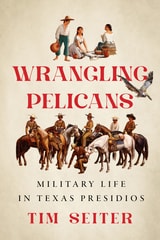
Wrangling Pelicans
Military Life in Texas PresidiosTim Seiter
University of Texas Press, 2025
2026 Excellence in Historic Preservation Award, Daughters of the American Revolution
2026 Summerlee Book Prize, Center for History and Culture of Southeast Texas and the Upper Gulf Coast
2026 Tejano Book Prize, Tejano Genealogy Society of Austin (TGSA)
A richly detailed history of daily life for colonial Spanish soldiers surviving on the eighteenth-century Texas Gulf Coast.
In 1775, Spanish King Carlos III ordered the capture of American pelicans for his wildlife park in Madrid. The command went to the only Spanish fort on the Texas coast—Presidio Nuestra Señora de Loreto de la Bahía in present-day Goliad. But the overworked soldiers stationed at the fort had little interest indulging a king an ocean away. Their days were consumed with guarding their community against powerful Indigenous peoples and managing the demands of frontier life. The royal order went ignored.
Wrangling Pelicans brings to life the world of Presidio La Bahía’s Hispano soldiers, whose duties ranged from heated warfare to high-stakes diplomacy, while their leisure pursuits included courtship, card playing, and cockfighting. It highlights the lives of presidio women and reveals the ways the Spanish legal system was used by and against the soldiers as they continually negotiated their roles within the empire and their community. Although they were agents of the Spanish crown, soldiers at times defied their king and even their captain as they found ways to assert their autonomy. Offering a fresh perspective on colonial Texas, Wrangling Pelicans recreates the complexities of life at the empire’s edge, where survival mattered more than royal decrees.
Writing Center Administrators as Campus Leaders
Candis Bond
Utah State University Press, 2026
Writing Center Administrators as Campus Leaders challenges the current erasure of the WCA role within discourse on campus leadership by highlighting the various ways these leaders have had transformative impacts on their institutions, emphasizing the wide range of knowledge, skills, and added value that WCAs bring to the university ecosystem.
Contributors from diverse institutions, institutional contexts, identity formations, and career paths theorize different forms of leadership from within and beyond writing centers. The first section brings together perspectives on leadership theory and practice, focusing on the practical gains offered and challenges afforded via writing center professional pathways. The second section emphasizes partnerships and networks forged through intentional and creative leadership models. In the final section, contributors consider the emotional and affective dimensions of WCA labor, offering multiple roadmaps for WCAs to transition their experiences into more recognition, resources, and broader administrative roles while underscoring the potential of inclusive, community-focused leadership for current and aspiring WCAs.
Providing key insights and practical examples, Writing Center Administrators as Campus Leaders validates and inspires current and future WCAs and informs university administrators on the ways that WCAs can and do impact higher education as true campus leaders.
Writing Centers and Learning Commons
Staying Centered While Sharing Common GroundSteven J. Corbett
Utah State University Press, 2022
The chapters comprehensively examine the ways writing centers make the most of sharing common ground. Directors, coordinators, administrators, and stakeholders draw on past and present attention to writing center studies to help shape the future of the learning commons and narrate their substantial collective experience with collaborative efforts to stay centered while empowering colleagues and student writers at their institutions. The contributors explore what is gained and lost by affiliating writing centers with learning commons, how to create sound pedagogical foundations that include writing center philosophies, how writing center practices evolved or have been altered by learning center affiliations, and more.
Writing Centers and Learning Commons is for all stakeholders of writing in and across campuses collaborating on (by choice or edict), or wishing to explore the possibilities of, a learning commons enterprise.
Contributors: Alice Batt, Cassandra Book, Charles A. Braman, Elizabeth Busekrus Blackmon, Virginia Crank, Celeste Del Russo, Patricia Egbert, Christopher Giroux, Alexis Hart, Suzanne Julian, Kristen Miller, Robby Nadler, Michele Ostrow, Helen Raica-Klotz, Kathleen Richards, Robyn Rohde, Nathalie Singh-Corcoran, David Stock
Writing Centers and Racial Justice
A Guidebook for Critical PraxisTalisha Haltiwanger Morrison
Utah State University Press, 2023
In five thematically organized sections—Countering Racism and Colonialism in Higher Education; Recruitment, Hiring, and Retention; Tutor Education and Professional Development; Engaging with Campus and Community; and Holding Our Professional Organizations Accountable—scholars from a variety of institutions, both large and small, public and private, present critical reflection and concrete guidance on anti-racist writing center administrative policies and practices. Several chapters include sample materials, such as course syllabi, consultant education activities, and recruitment materials, to help current and aspiring writing center administrators implement changes in their own contexts.
Writing Centers and Racial Justice is the first book to offer clear and actionable advice on how writing centers and their staff can take up racial or social justice work that will result in real sustainable change. Writing center directors, professionals, and tutors, as well as administrators and decision makers at the institutional level, will benefit from this thoughtful and effective text.
Writing Emergencies
Composing (Ourselves) in Times of CrisisHolly Hassel
Utah State University Press, 2026
Despite the adage “there are no writing emergencies,” at times situations invite or require immediate written response. In a modern era of social media and with the constancy of “crisis,” knowing when, how, and why to respond quickly is increasingly important. In Writing Emergencies, a diverse group of authors contribute scholarly, narrative-based discussions of writing emergencies, descriptions of more and less successful strategies, and a reflective conclusion that offers implications for writing studies praxis and theory.
In this collection, contributors demonstrate the reality of writing emergencies—in their own writing lives, classrooms, and programs—and they offer both self- and community-focused approaches for response. Chapters focus on discernment and prioritization, recognizing that all stressors are not necessarily emergencies. Instead, expanding our vocabulary for (and subsequent understanding) of the kinds of difficulties we come across can build our professional capacity and support greater career sustainability. The volume also illustrates the role of coalitions in navigating writing emergencies and how purposefully building and activating these coalitions subverts some challenges before they become emergencies, particularly those that are recurrent or manufactured.
Writing Emergencies both names and grapples with writing emergencies and offers insights for capacity-building in the acts of filtering and prioritizing competing urgent demands. The findings are meaningful for all leaders, students, and teachers who center care in their relationships with others.
Writing Program Architecture
Thirty Cases for Reference and ResearchBryna Siegel Finer
Utah State University Press, 2017
Writing Program Architecture offers an unprecedented abundance of information concerning the significant material, logistical, and rhetorical features of writing programs. Presenting the realities of thirty diverse and award-winning programs, contributors to the volume describe reporting lines, funding sources, jurisdictions, curricula, and other critical programmatic matters and provide insight into their program histories, politics, and philosophies.
Each chapter opens with a program snapshot that includes summary demographic and historical information and then addresses the profile of the WPA, program conception, population served, funding, assessment, technology, curriculum, and more. The architecture of the book itself makes comparison across programs and contexts easy, not only among the programs described in each chapter but also between the program in any given chapter and the reader’s own program. An online web companion to the book includes access to the primary documents that have been of major importance to the development or sustainability of the program, described in a “Primary Document” section of each chapter.
The metaphor of architecture allows us to imagine the constituent parts of a writing program as its foundation, beams, posts, scaffolding—the institutional structures that, alongside its people, anchor a program to the ground and keep it standing. The most extensive resource on program structure available to the field, Writing Program Architecture illuminates structural choices made by leaders of exemplary programs around the United States and provides an authoritative source of standard practice that a WPA might use to articulate programmatic choices to higher administration.
Contributors: Susan Naomi Bernstein, Remica Bingham-Risher, Brent Chappelow, Malkiel Choseed, Angela Clark-Oates, Patrick Clauss, Emily W. Cosgrove, Thomas Deans, Bridget Draxler, Leigh Ann Dunning, Greg A. Giberson, Maggie Griffin Taylor, Paula Harrington, Sandra Jamieson, Marshall Kitchens, Michael Knievel, Amy Lannin, Christopher LeCluyse, Sarah Liggett, Deborah Marrott, Mark McBeth, Tim McCormack, John McCormick, Heather McGrew, Heather McKay, Heidi A. McKee, Julianne Newmark, Lori Ostergaard, Joannah Portman-Daley, Jacqueline Preston, James P. Purdy, Ben Rafoth, Dara Regaignon, Nedra Reynolds, Shirley Rose, Bonnie Selting, Stacey Sheriff, Steve Simpson, Patricia Sullivan, Kathleen Tonry, Sanford Tweedie, Meg Van Baalen-Wood, Shevaun Watson, Christy I. Wenger, Lisa Wilkinson, Candace Zepeda
Writing the Classroom
Pedagogical Documents as Rhetorical Genresedited by Stephen E. Neaderhiser
Utah State University Press, 2022
The contributors to this unique collection employ a wide range of methodological frameworks to demonstrate how pedagogical genres—even ones as seemingly straightforward as the class syllabus—have lives extending well beyond the classroom as they become part of how college teachers represent their own academic identities, advocate for pedagogical values, and negotiate the many external forces that influence the act of teaching. Writing the Classroom shines a light on genres that are often treated as two-dimensional, with purely functional purposes, arguing instead that genres like assignment prompts, course proposals, teaching statements, and policy documents play a fundamental role in constructing the classroom and the broader pedagogical enterprise within academia.
Writing the Classroom calls on experienced teachers and faculty administrators to critically consider their own engagement with pedagogical genres and offers graduate students and newer faculty insight into the genres that they may only now be learning to inhabit as they seek to establish their personal teacherly identities. It showcases the rhetorical complexity of the genres written in the service of pedagogy not only for students but also for the many other audiences within academia that have a role in shaping the experience of teaching.
Contributors: Michael Albright, Lora Arduser, Lesley Erin Bartlett, Logan Bearden, Lindsay Clark, Dana Comi, Zack K. De Piero, Matt Dowell, Amy Ferdinandt Stolley, Mark A. Hannah, Megan Knight, Laura R. Micciche, Cindy Mooty, Dustin Morris, Kate Navickas, Kate Nesbit, Jim Nugent, Lori A. Ostergaard, Cynthia Pengilly, Jessica Rivera-Mueller, Christina Saidy, Megan Schoen, Virginia Schwarz, Christopher Toth
Writing-Enriched Curricula
Models of Faculty-Driven and Departmental Transformationedited by Chris M. Anson, and Pamela Flash
University Press of Colorado, 2022