Results by title
314 books match the query 'African' and 19 start with w
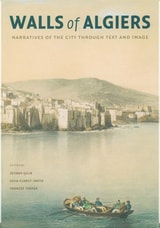
Walls of Algiers
Narratives of the city through text and imageZeynep Çelik
J. Paul Getty Trust, The, 2023
The contributors' wide-ranging but intersecting essays span the disciplines of art history, social and cultural history, urban studies, and film history. Walls of Algiers presents a multifaceted look at the social use of urban space in a North African city. Its contributors' innovative methodologies allow important insights into often overlooked aspects of life in a city whose name even today conjures up enchantment as well as incomprehensible violence.
Wanasema
Conversations with African WritersDon Burness
Ohio University Press, 1985
Wasted Wombs
Navigating Reproductive Interruptions in CameroonErica van der Sijpt
Vanderbilt University Press, 2017
Providing an intimate look into these processes, Wasted Wombs shows how Gbigbil women constantly shift their interpretations of when a pregnancy starts, what it contains, and what is lost in case of a reproductive interruption, in contrast to Western conceptions of fertility and loss. Depending on the context and on their life aspirations—be it marriage and motherhood, or an educational trajectory and employment, or profitable sexual affairs with so-called "big fish"—women negotiate and manipulate the meanings and effects of reproductive interruptions. Paradoxically, they often do so while portraying themselves as powerless. Wasted Wombs carefully analyzes such tactics in relation to the various social predicaments that emerge around reproductive interruptions, as well as the capricious workings of women's physical bodies.
We Are All Zimbabweans Now
James Kilgore
Ohio University Press, 2011
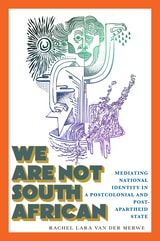
We Are Not South African
Mediating National Identity in a Postcolonial and Postapartheid StateRachel Lara van der Merwe
Rutgers University Press, 2026
We Are Not South African explores how national identity functions as a colonial tool of communication, control, and power. Author Rachel Lara van der Merwe examines how humans and the planet are integrally shaped by the idea of the nation and speculates on how different sociopolitical imaginaries, instead of the nation, could inform ways of being-together in the world.
Linking national identity to colonialism, the book broadens the idea of the nation to include its impact on all forms of life, human and more-than-human. Van der Merwe builds her argument on three central observations: that nations are made up of conflicting and fractured imaginaries, not unified, cohesive ones; the nation is divisive by nature, tracing back to its colonial origins; and the nation, along with the state, exploits both humans and more-than-humans. In order to build a more just and sustainable planetary society, she argues, liberation from such colonial formations is vital. In response, the book asks, How could we reimagine how we organize our societies through values of relationality and mutual care rather than rigid borders? What sociopolitical imaginaries do we need, or already possess, that might inform new configurations of community?
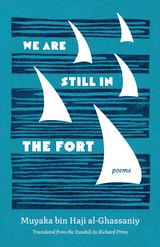
We Are Still in the Fort
PoemsMuyaka bin Haji al-Ghassaniy; Translated from the Swahili by Richard Prins
Vanderbilt University Press, 2026
We Are Still in the Fort is a curated selection of about seventy poems by Muyaka bin Haji al-Ghassaniy, divided into three sections spanning the quotidian, the amorous, and the political. The first part, “‘I Swipe Their String of Fish’: Poems of Mombasan Society,” features his often satirical commentary on daily life in Mombasa. The second part, “‘Take Your Misery With You’: Poems of Love and Marriage,” focuses on his psychologically sensitive observations on the volatility of love, marriage, and illicit affairs. The last part, “‘We Are Still in the Fort’: Poems of War and State,” includes epigrammatic critiques of local political leaders and a series of anti-imperialist poems defending Mombasa’s independence against the invading Omani Empire. The volume also features contextual materials on Muyaka and the context of Swahili poetry, a translator’s note, and introductions for each of the three sections.
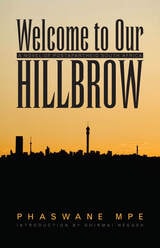
Welcome to Our Hillbrow
A Novel of Postapartheid South AfricaPhaswane Mpe
Ohio University Press, 2011
West African Folktales
Translated by Jack Berry, Edited and with an introduction by Richard Spears
Northwestern University Press, 1991
West African Screen Media
Comedy, TV Series, and TransnationalizationBoukary Sawadogo
Michigan State University Press, 2019
What Is African Art?
A Short HistoryPeter Probst
University of Chicago Press, 2022
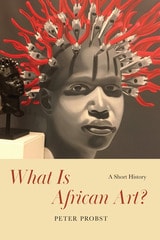
This book examines the invention and development of African art as an art historical category. It starts with a simple question: What do we mean when we talk about African art? By confronting the historically shifting answers to this question, Peter Probst identifies “African art” as a conceptual vessel that manifests wider societal transformations.
What Is African Art? covers three key stages in the field’s history. Starting with the late nineteenth through the mid-twentieth centuries, the book first discusses the colonial formation of the field by focusing on the role of museums, collectors, and photography in disseminating visual cultures as relations of power. It then explores the remaking of the field at the dawn of African independence with the shift toward contemporary art and the rise of Black Atlantic studies in the 1970s and 1980s. Finally, it examines the post- and decolonial reconfiguration of the field driven by questions of representation, repair, and restitution.
Who Owns the Problem?
Africa and the Struggle for AgencyPius Adesanmi
Michigan State University Press, 2020
committed and passionate voice of an African writer lost far too soon. Adesanmi urges his readers to commit themselves to Africa’s cultural agency.
William Kentridge
Being Led by the NoseJane Taylor
University of Chicago Press, 2017
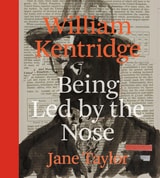
Kentridge has long been admired for his unconventional use of conventional media to produce art that is stunning, evocative, and narratively powerful—and how he works is as important as what he creates. This book is more than just a simple record of The Nose. The opera serves as a springboard into a bracing conversation about how Kentridge’s methods serve his unique mode of expression as a narrative and political artist. Taylor draws on his etchings, sculptures, and drawings to render visible the communication that occurs between his mind and hand as he thinks through the activity of making. Beautifully illustrated in color, William Kentridge offers striking insights about one of the most innovative artists of our present moment.
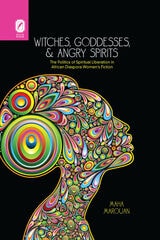
Witches, Goddesses, and Angry Spirits
The Politics of Spiritual Liberation in African Diaspora Women's FictionMaha Marouan
The Ohio State University Press, 2013
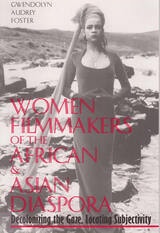
Women Filmmakers of the African & Asian Diaspora
Decolonizing the Gaze, Locating SubjectivityGwendolyn Audrey Foster
Southern Illinois University Press, 1997
Black women filmmakers not only deserve an audience, Gwendolyn Audrey Foster asserts, but it is also imperative that their voices be heard as they struggle against Hollywood’s constructions of spectatorship, ownership, and the creative and distribution aspects of filmmaking.
Foster provides a voice for Black and Asian women in the first detailed examination of the works of six contemporary Black and Asian women filmmakers. She also includes a detailed introduction and a chapter entitled "Other Voices," documenting the work of other Black and Asian filmmakers.
Foster analyzes the key films of Zeinabu irene Davis, "one of a growing number of independent Black women filmmakers who are actively constructing [in the words of bell hooks] ‘an oppositional gaze’"; British filmmaker Ngozi Onwurah and Julie Dash, two filmmakers working with time and space; Pratibha Parmar, a Kenyan/Indian-born British Black filmmaker concerned with issues of representation, identity; cultural displacement, lesbianism, and racial identity; Trinh T. Minh-ha, a Vietnamese-born artist who revolutionized documentary filmmaking by displacing the "voyeuristic gaze of the ethnographic documentary filmmaker"; and Mira Nair, a Black Indian woman who concentrates on interracial identity.

Words Were Bullets and Seeds
Literature, Intellectuals, and Revolution in Angola and Mozambique, 1961–1986Tom Stennett
University of Michigan Press, 2027
Words Were Bullets and Seeds examines the literary and political writings of Mozambican and Angolan Marxist intellectuals that performed crucial roles in the organizations that have come to dominate postcolonial Mozambique and Angola: Frelimo and the MPLA. Tom Stennett draws on archival materials from Portugal, Angola, Mozambique, Cape Verde, Tanzania, and the United Kingdom to reframe our understanding of Angolan and Mozambican liberation struggles through an analysis of the political poetry in Portuguese written by leading intellectuals of the movements. Stennett argues that traditional political forms—speeches, party literature, manifestos—demand a close textual analysis that is sensitive to aesthetics and the specific ways in which Angolan and Mozambican revolutionaries engaged with political idioms and theories such as Négritude, African socialism, Pan-Africanism, and Marxism. Words Were Bullets and Seeds leverages literary texts as historical sources with insights into political ideological struggles to provide a nuanced understanding of Mozambican and Angolan postcolonial debates.
Writing That Breaks Stones
African Child Soldier NarrativesJoya Uraizee
Michigan State University Press, 2020
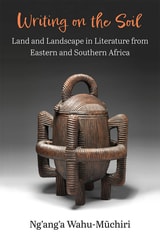
Writing on the Soil
Land and Landscape in Literature from Eastern and Southern AfricaNg’ang’a Wahu-Muchiri
University of Michigan Press, 2023
Across contiguous nation-states in Eastern Africa, the geographic proximity disguises an ideological complexity. Land has meant something fundamental in the sociocultural history of each country. Those concerns, however, have manifested into varied political events, and the range of struggles over land has spawned a multiplicity of literary interventions. While Kenya and Uganda were both British colonies, Kenya's experience of settler land alienation made for a much more violent response against efforts at political independence. Uganda's relatively calm unyoking from the colonial burden, however, led to a tumultuous post-independence. Tanzania, too, like Kenya and Uganda, resisted British colonial administration—after Germany's defeat in World War 1.
In Writing on the Soil, author Ng’ang’a Wahu-Mũchiriargues that representations of land and landscape perform significant metaphorical labor in African literatures, and this argument evolves across several geographical spaces. Each chapter's analysis is grounded in a particular locale: western Kenya, colonial Tanganyika, post-independence Tanzania, Zimbabwe, Nairobi, Dar es Salaam, Anam Ka'alakol (Lake Turkana), Kampala, and Kitgum in Northern Uganda. Moreover, each section contributes to a deeper understanding of the aesthetic choices that authors make when deploying tropes revolving around land, landscape, and the environment. Mũchiri disentangles the numerous connections between geography and geopolitical space on the one hand, and ideology and cultural analysis on the other. This book embodies a multi-layered argument in the sphere of African critical scholarship, while adding to the growing field of African land rights scholarship—an approach that foregrounds the close reading of Africa’s literary canon.
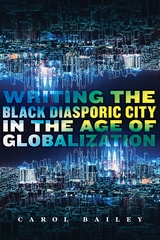
Writing the Black Diasporic City in the Age of Globalization
Carol Bailey
Rutgers University Press, 2023
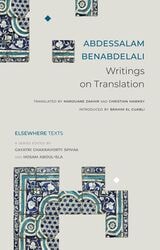
Writings on Translation
Abdessalam Benabdelali
Seagull Books, 2025
Abdessalam Benabdelali is a revered Moroccan philosopher and translator whose work maps an invaluable history of the status of translation in contemporary Arabic thought and language. Bringing together essays from two linked Arabic works by Benabdelali—On Translation and Hosting the Stranger—this volume represents one of the first extended philosophical explorations of translation by a contemporary Arab philosopher. These works reframe Arabic and European cultural histories around translation to counter hegemonic discourses and celebrate translation as a form of philosophical thought and practice, one that both preserves and proliferates difference.
Whether discussing eighteenth-century European perceptions of Arabic culture, classical Arabic literature and its express intent to resist all translation, or contemporary Arabic authors who write in anticipation of translation, Writings on Translation nimbly outlines the key philosophical questions at stake in translation. It concludes with an impassioned argument for translations that “host the stranger” and allow texts to “lift off and migrate.”