210 books match the query 'African Studies' and 5 start with w
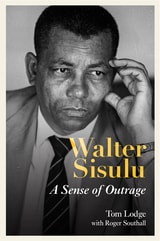
cover of Walter Sisulu: A Sense of Outrage

Walter Sisulu

A Sense of Outrage

Tom Lodge with Roger Southall

Ohio University Press, 0

Although hailed, alongside Nelson Mandela and Oliver Tambo, as one of the African National Congress’s holy trinity, Walter Sisulu has remained a relatively neglected figure in the historiography of the struggle for liberation in South Africa. Modest and unassuming, Sisulu was always content to stay in the background in a way that has long belied his importance. This nuanced and highly original biography, drafted by political historian Tom Lodge before his untimely death, provides a powerful corrective. Lodge describes Sisulu as an exceptional organizer, the most influential planner of the ANC’s mass campaigning during the 1950s, a principled but undoctrinaire communist, and like Mandela, an advocate of the necessity of armed struggle. He also served as the careful navigator of the ambiguous relationship between the ANC and Umkhonto we Sizwe, and Lodge details how Sisulu, with his exceptional grasp of the subtleties of fact and law, confounded the prosecution as he sat in the dock in the Rivonia trial. Sentenced to life imprisonment with his fellow defendants, Sisulu became a calming influence amid the divisive ideological debates that took place on Robben Island, as well as a constant source of strength and support to Mandela. After his 1989 release from jail—ahead of Mandela—he again demonstrated his prowess as the chief organizer of the ANC as it reestablished itself ahead of the 1994 elections. Sociologist Roger Southall stepped in to complete Lodge’s detailed analysis of Sisulu’s commitment and contribution to South African freedom, an encomium that Walter Sisulu richly deserves.
[more]
cover of Wanasema: Conversations with African Writers

Wanasema

Conversations with African Writers

Don Burness

Ohio University Press, 1985
There is a tendency to regard African literature as a homogenous product. Certainly it is true that African writers have created a vibrant, modern literature. Nevertheless, they come from specific societies and reflect vastly differing worlds. Wanasema attempts to show some of the many faces of African literature. Dramatists, poets and novelists speak in these pages. They write in French, English, Portuguese, Arabic and indigenous languages. Some are Christian; others are Muslim. A variety of subjects are discussed, including the status of women, history, religion, politics, dress and education. Taken together, the interviews in Wanasema suggest that Western students of Africa would do well to learn the languages of Africa. They suggest, too, taht there is a need to investigate further the relationship between Islamic North Africa and Sub-Saharan Africa, and finally, that oral literature continues to be a vast marketplace for scholars. This book should interest African Studies specialists, of course, but also those whose concerns include literature, history and contemporary events in the non-Western world generally.
[more]
cover of We Are Not Starving: The Struggle for Food Sovereignty in Ghana

We Are Not Starving

The Struggle for Food Sovereignty in Ghana

Joeva Sean Rock

Michigan State University Press, 2022
This critical text is a timely ethnography of how global powers, local resistance, and capital flows are shaping contemporary African foodways. Ghana was one of the first countries targeted by a group of US donors and agribusiness corporations that funded an ambitious plan to develop genetically modified (GM) crops for African farmers. The collective believed that GM crops would help farmers increase their yields and help spark a “new” Green Revolution on the continent. Soon after the project began in Ghana, a nationwide food sovereignty movement emerged in opposition to GM crops. Today, in spite of impressive efforts and investments by proponents, only two GM crops remain in the pipeline. Why, after years of preparation, millions of dollars of funding, and multiple policy reforms, did these megaprojects effectively come to a halt? One of the first ethnographies to take on the question of GM crops in the African context, We Are Not Starving: The Struggle for Food Sovereignty in Ghana blends archival analysis, interviews, and participant observation with Ghanaian scientists, farmers, activists, and officials. Ultimately the text aims to illuminate why GM crops have animated the country and to highlight how their introduction has opened an opportunity to air grievances about the systematic de-valuing and exploitation of African land, labor, and knowledge that have been centuries in the making.
[more]
cover of Welcome to Our Hillbrow: A Novel of Postapartheid South Africa

Welcome to Our Hillbrow

A Novel of Postapartheid South Africa

Phaswane Mpe

Ohio University Press, 2011
Welcome to Our Hillbrow is an exhilarating and disturbingride through the chaotic and hyper-real zone of Hillbrow—microcosm of all that is contradictory, alluring, and painful in the postapartheid South African psyche. Everythingis there: the shattered dreams of youth, sexuality and its unpredictable costs, AIDS, xenophobia, suicide, the omnipotent violence that often cuts short the promise of young people’s lives, and the Africanist understanding of the life continuum that does not end with death but flows on into an ancestral realm. Infused with the rhythms of the inner-city pulsebeat, this courageous novel is compelling in its honesty and its broad vision, which links Hillbrow, rural Tiragalong, and Oxford. It spills out the guts of Hillbrow—living with the same energy and intimate knowledge with which the Drum writers wrote Sophiatown into being.
[more]
cover of Witchcraft Dialogues: Anthropological and Philosophical Exchanges

Witchcraft Dialogues

Anthropological and Philosophical Exchanges

George Clement Bond

Ohio University Press, 2001

Witchcraft Dialogues analyzes the complex manner in which human beings construct, experience, and think about the occult. It brings together anthropologists, philosophers, and sociologists, from diverse social and cultural backgrounds, to engage the metaphysical properties of witchcraft and sorcery and to explore their manifestations in people’s lived experiences.

While many Africanist scholars shun the analysis of witchcraft as an appropriate domain of investigation, the experiences, thoughts, activities, and powers that witchcraft encompasses have become increasingly the source of interest and debate. Concepts of witchcraft and the phenomena to which they are applied express something fundamental to the human condition and have their equation in the logic of other human practices such as racism and its various crafts. Thus, the focus on witchcraft is not just a concern with the occult, but a manifestation of the convergence of interest in mediating and transcending disciplinary domains.

The contributors to this volume embrace the challenge of exploring witchcraft as a mode of experiencing and explaining human circumstances as well as confronting the limitations of their own intellectual traditions and paradigms. The range of their explorations takes us in new directions, making use not only of their academic training but also of their personal experiences, to reframe the conceptual terrain of the occult and the epistemological orientations of their various academic fields of inquiry.
[more]