Results by title
399 books match the query 'American fiction' and 24 start with w
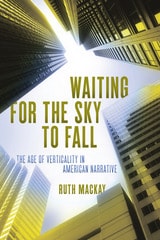
Waiting for the Sky to Fall
The Age of Verticality in American NarrativeRuth Mackay
The Ohio State University Press, 2016
With this study, Mackay asks: In what oblique ways has verticality leaked into American narrative? Why do metaphors of up and down recur across the twentieth century? With close readings of Jonathan Safran Foer’s Extremely Loud and Incredibly Close, Winsor McCay’s comic strip Little Nemo in Slumberland, Upton Sinclair’s Oil! and its film rendering There Will Be Blood, Allen Ginsberg’s poetic dissections of the nuclear bomb, and Leslie Marmon Silko’s imagining of flight in Almanac of the Dead, this interdisciplinary study culminates with a discussion of Philippe Petit’s tightrope walk between the Twin Towers. Waiting for the Sky to Fall examines how vertical representation cleaves to, and often transforms the associations of, specific events that are physically and visually disorienting, disquieting, or even traumatic.
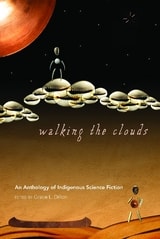
Walking the Clouds
An Anthology of Indigenous Science FictionEdited by Grace L. Dillon
University of Arizona Press, 2012
In this first-ever anthology of Indigenous science fiction Grace Dillon collects some of the finest examples of the craft with contributions by Native American, First Nations, Aboriginal Australian, and New Zealand Maori authors. The collection includes seminal authors such as Gerald Vizenor, historically important contributions often categorized as "magical realism" by authors like Leslie Marmon Silko and Sherman Alexie, and authors more recognizable to science fiction fans like William Sanders and Stephen Graham Jones. Dillon's engaging introduction situates the pieces in the larger context of science fiction and its conventions.
Organized by sub-genre, the book starts with Native slipstream, stories infused with time travel, alternate realities and alternative history like Vizenor's "Custer on the Slipstream." Next up are stories about contact with other beings featuring, among others, an excerpt from Gerry William's The Black Ship. Dillon includes stories that highlight Indigenous science like a piece from Archie Weller's Land of the Golden Clouds, asserting that one of the roles of Native science fiction is to disentangle that science from notions of "primitive" knowledge and myth. The fourth section calls out stories of apocalypse like William Sanders' "When This World Is All on Fire" and a piece from Zainab Amadahy's The Moons of Palmares. The anthology closes with examples of biskaabiiyang, or "returning to ourselves," bringing together stories like Eden Robinson's "Terminal Avenue" and a piece from Robert Sullivan's Star Waka.
An essential book for readers and students of both Native literature and science fiction, Walking the Clouds is an invaluable collection. It brings together not only great examples of Native science fiction from an internationally-known cast of authors, but Dillon's insightful scholarship sheds new light on the traditions of imagining an Indigenous future.
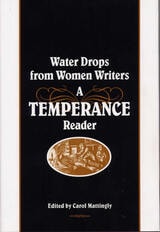
Water Drops from Women Writers
A Temperance ReaderEdited by Carol Mattingly
Southern Illinois University Press, 2001
The temperance movement was the largest single organizing force for women in American history, uniting and empowering women seeking to enact social change. By the end of the century, more than two hundred thousand women had become members of the Woman’s Christian Temperance Union (WCTU), and numerous others belonged to smaller temperance organizations. Despite the impact of the movement, its literature has been largely neglected.
In this collection of nineteen temperance tales, Carol Mattingly has recovered and revalued previously unavailable writing by women. Mattingly’s introduction provides a context for these stories, locating the pieces within the temperance movement as well as within larger issues in women’s studies.
The temperance movement was essential to women’s awareness of and efforts to change gender inequalities in the United States during the nineteenth and early twentieth centuries. In their fiction, temperance writers protested physical and emotional abuse at the hands of men, argued for women’s rights, addressed legal concerns, such as divorce and child custody, and denounced gender-biased decisions affecting the care and rights of children. Temperance fiction by women broadens our understanding of the connections between women’s rights and temperance, while shedding light on women’s thinking and behavior in the nineteenth century.
Water Drops from Women Writers features biographical sketches of each writer as well as thirteen illustrations.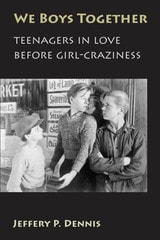
We Boys Together
Teenagers in Love Before Girl-CrazinessJeffery P. Dennis
Vanderbilt University Press, 2007
This book explores romantic relationships between teenage boys as they were portrayed before, during, and immediately after World War II. The author takes the reader through a rich landscape of media -- sci fi pulps, comics, adventure stories, tales of teen sleuths, boys' serial novels, wartime bestsellers, and movies populated by many types of male adolescents: Boys Next Door, Adventure Boys, Jungle Boys, and Lost Boys. In Hollywood movies, Boys Next Door like Jackie Cooper, Ronald Sinclair, and Jimmy Lydon were constantly falling in love, but not with girls. In serial novels, Jungle Boys like Bomba, Sorak, and Og Son of Fire swung through the trees to rescue teenage boys, not teenage girls. In comic strips and on the radio, Adventure Boys like Don Study, Jack Armstrong, and Tim Tyler formed lasting romantic partnerships with other boys or men. Lost Boys like Frankie Darro, Leo Gorcey, and Billy Halop starred in dozens of movies about pairs of poor urban teenagers sticking together, with never a girl in sight.
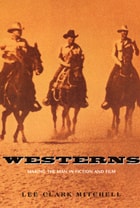
Westerns
Making the Man in Fiction and FilmLee Clark Mitchell
University of Chicago Press, 1996
Few genres are so closely identified with America as the Western. In this wide-ranging examination of the Western and its appeal, Lee Clark Mitchell ranges from the novels of James Fenimore Cooper to Louis L'Amour, and from classic films like Stagecoach to spaghetti Westerns like A Fistful of Dollar to show how Westerns helped assuage a series of crises in American culture. This landmark book shows that the Western owes its perennial appeal not to unchanging conventions but to the deftness with which it responds to the obsessions and fears of its audience. And no obsession, Lee Mitchell argues, has figured more prominently in the Western than what it means to be a man.
White Liberal Identity, Literary Pedagogy, and Classic American Realism
AND CLASSIC AMERICAN REALISMPhillip Barrish
The Ohio State University Press, 2005
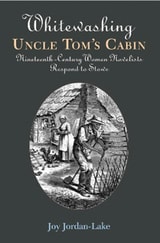
Whitewashing Uncle Tom's Cabin
Nineteenth-Century Women Novelists Respond to StoweJoy Jordan-Lake
Vanderbilt University Press, 2005
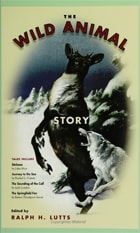
Wild Animal Story
edited by Ralph H. Lutts
Temple University Press, 2001
At the beginning of the twentieth century, the wild animal story emerged in Canadian literature as a distinct genre, in which animals pursue their own interests—survival for themselves, their offspring, and perhaps a mate, or the pure pleasure of their wildness.
Bringing together some of the most celebrated wild animal stories, Ralph H. Lutts places them firmly in the context of heated controversies about animal intelligence and purposeful behavior. Widely regarded as entertaining and educational, the early stories—by Charles G. D. Roberts, Ernest Thompson Seton, John Muir, Jack London and others—had an avid readership among adults and children. But some naturalists and at least one hunter—Theodore Roosevelt—discredited these writers as "nature fakers," accusing them of falsely portraying animal behavior.
The stories and commentaries collected here span the twentieth century. As present day animal behaviorists, psychologists, and the public attempt to sort out the meaning of what animals do and our obligations to them, Ralph Lutts maps some of the prominent features of our cultural landscape.
•
•
•
Other selections include essays by Theodore Roosevelt, John Burroughs, Margaret Atwood, and Ralph H. Lutts.
postamble();
Wingless Flights
Appalachian Women in FictionDanny L. Miller
University of Wisconsin Press, 1996

Winter of Artifice
Three NovelettesAnaïs Nin
Ohio University Press, 2016
Swallow Press first published Winter of Artifice in 1945, following two vastly different versions from other presses. The book opens with a film star, Stella, studying her own, but alien, image on the screen. It ends in the Manhattan office of a psychoanalyst—the Voice—who, as he counsels patients suffering from the maladies of modern life, reveals himself as equally susceptible to them. The middle, title story explores one of Nin’s most controversial themes, that of a woman’s sexual relationship with her father. Elliptical, fragmented prose; unconventional structure; surrealistic psychic landscapes—Nin forged these elements into a style that engaged with the artistic concerns of her time but still registers as strikingly contemporary.
This reissue, accompanied by a new introduction by Laura Frost and the original engravings by Nin’s husband Ian Hugo, presents an important opportunity to consider anew the work of an author who laid the groundwork for later writers. Swallow Press’s Winter of Artifice represents a literary artist coming into her own, with the formal experimentation, thematic daring, and psychological intrigue that became her hallmarks.
Witches, Goddesses, and Angry Spirits
The Politics of Spiritual Liberation in African Diaspora Women's FictionMaha Marouan
The Ohio State University Press, 2013
Woman's Fiction
A Guide to Novels by and about Women in America, 1820-70Nina Baym. With a New Introduction and Supplementary Bibliography
University of Illinois Press, 1993
This reissue of the pioneering and standard book on antebellum women's domestic novels contains a new introduction situating the book in the context of important recent developments in the study of women's writing. Nina Baym considers 130 novels by 48 women, focusing on the works of a dozen especially productive and successful writers.
Woman's Fiction is a major-work in nineteenth-century literature, reexamining changes in the literary canon and the meaning of sentimentalism, while responding to current critical discussions of 'the body' in literary texts.
Women Adapting
Bringing Three Serials of the Roaring Twenties to Stage and ScreenBethany Wood
University of Iowa Press, 2019
Bethany Wood examines three well-known stories that debuted as women’s magazine serials—Gentlemen Prefer Blondes, Edith Wharton’s The Age of Innocence, and Edna Ferber’s Show Boat—and traces how each of these beloved narratives traveled across publishing, theatre, and film through adaptation. She documents the formation of adaptation systems and how they involved women’s voices and labor in modern entertainment in ways that have been previously underappreciated. What emerges is a picture of a unique window of time in the early decades of the twentieth century, when women in entertainment held influential positions in production and management. These days, when filmic adaptations seem endless and perhaps even unoriginal, Women Adapting challenges us to rethink the popular platitude, “The book is always better than the movie.”
Women Times Three
Writers, Detectives, ReadersKathleen Gregory Klein
University of Wisconsin Press, 1995
The eleven essays concentrate new attention on the trio of reader, writer, and text when all three are modified by the terms “woman” and “mystery.”
Women, America, and Movement
Narratives of RelocationEdited & Intro by Susan L. Roberson
University of Missouri Press, 1998
Since the colonial days, American women have traveled, migrated, and relocated, always faced with the challenge of reconstructing their homes for themselves and their families. Women, America, and Movement offers a journey through largely unexplored territory—the experiences of migrating American women. These narratives, both real and imagined, represent a range of personal and critical perspectives; some of the women describe their travels as expansive and freeing, while others relate the dreadful costs and sacrifices of relocating.
Despite the range of essays featured in this study, the writings all coalesce around the issues of politics, poetry, and self- identity described by Adrienne Rich as the elements of the "politics of location," treated here as the politics of relocation. The narratives featured in this book explore the impact of race, class, and sexual economics on migratory women, their self-identity, and their roles in family and social life. These issues demonstrate that in addition to geographic place, ideology is itself a space to be traversed.
By examining the writings of such women as Louise Erdrich, Zora Neale Hurston, and Gertrude Stein, the essayists included in this volume offer a variety of experiences. The book confronts such issues as racist politicking against Native Americans, African Americans, and Asian immigrants; sexist attitudes that limit women to the roles of wife, mother, and sexual object; and exploitation of migrants from Appalachia and of women newly arrived in America.
These essays also delve into the writings themselves by looking at what happens to narrative structure as authors or their characters cross geographic boundaries. The reader sees how women writers negotiate relocation in their texts and how the written word becomes a place where one finds oneself.
Women, Compulsion, Modernity
The Moment of American NaturalismJennifer L. Fleissner
University of Chicago Press, 2004
Fleissner shows that this era's expanding opportunities for women were inseparable from the same modern developments—industrialization, consumerism—typically believed to constrain human freedom. With Women, Compulsion, and Modernity, Fleissner creates a new language for the strange way the writings of the time both broaden and question individual agency.
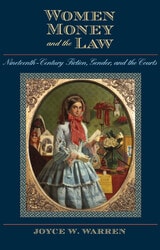
Women, Money, and the Law
Nineteenth-Century Fiction, Gender, and the CourtsJoyce W. Warren
University of Iowa Press, 2005

Word Rides Again
Rereading The Frontier In American FictionJ. David Stevens
Ohio University Press, 2001
With much recent scholarship polarizing frontier novels into “popular” and “literary” camps, The Word Rides Again challenges the critical orthodoxy that such works have little in common, arguing instead that formulaic Western fictions can subtly (and even subversively) share cultural concerns with more highbrow brethren. Each chapter focuses on a writer who has traditionally been classified as either popular or artistic, reading a representative fictional work against prevailing scholarly trends. In this manner, Bret Harte’s sentimental stories become gender-bending experiments in which women assume male roles and even enjoy lesbian relationships. Owen Wister’s The Virginian is transmuted from a misogynistic diatribe into a complex meditation on the peculiarly American relation of violence to male identity. And even Willa Cather’s Death Comes for the Archbishop, rather than the apotheosis of a religious leader, becomes a somewhat standard version of the popular frontier story.
The Word Rides Again represents a significant departure from more traditional studies of frontier literature. It reaffirms the continuum between popular and literary texts and explores the ways that frontier novels have echoed, endorsed, and extended each other from the inception of the genre.
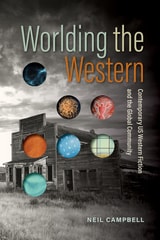
Worlding the Western
Contemporary US Western Fiction and the Global CommunityNeil Campbell
University of Nevada Press, 2022
Diversity, disparity, and opposition are central to the dynamic frictional fiction considered in this book. The American West provides a powerful test case in which these features are present and yet, historically, have often been masked or denied in the rush toward unanimity and nation building. Worlding is, therefore, a positive, critical concept through which to view the notion of a single world under pressure.
Writers of Conviction
The Personal Politics of Zona Gale, Dorothy Canfield Fisher, Rose Wilder Lane, and Josephine HerbstJulia C. Ehrhardt
University of Missouri Press, 2004
Writing Against Reform
Aesthetic Realism in the Progressive EraArielle Zibrak
University of Massachusetts Press, 2024
Throughout the Progressive Era, reform literature became a central feature of the American literary landscape. Works like Upton Sinclair’s The Jungle, Charlotte Perkins Gilman’s “The Yellow Wall-Paper,” and Jacob Riis’s How the Other Half Lives topped bestseller lists and jolted middle-class readers into action.
While realism and social reform have a long-established relationship, prominent writers of the period such as Henry James, Edith Wharton, James Weldon Johnson, Rebecca Harding Davis, and Kate Chopin resisted explicit political rhetoric in their own works and critiqued reform aesthetics, which too often rang hollow. Arielle Zibrak reveals that while these writers were often seen as indifferent to the political currents of their time, their work is a part of a little explored debate on the relationship between literature and politics at the heart of Progressive Era publishing. Examining the critique of reform aesthetics within the tradition of American realist literature of the late nineteenth and early twentieth centuries, Writing Against Reform promises to change the way we think about the fiction of this period and many of America’s leading writers.
Writing Through Writer's Block
Lessons from Modern American FictionAaron Colton
University of Iowa Press, 2025
Writing Wars
Authorship and American War Fiction, WWI to PresentDavid F. Eisler
University of Iowa Press, 2022
2024 Senators Bob and Elizabeth Dole Biennial Award for Distinguished Book in Veterans Studies, winner
Who writes novels about war? For nearly a century after World War I, the answer was simple: soldiers who had been there. The assumption that a person must have experienced war in the flesh in order to write about it in fiction was taken for granted by writers, reviewers, critics, and even scholars.
Contemporary American fiction tells a different story. Less than half of the authors of contemporary war novels are veterans. And that’s hardly the only change. Today’s war novelists focus on the psychological and moral challenges of soldiers coming home rather than the physical danger of combat overseas. They also imagine the consequences of the wars from non-American perspectives in a way that defies the genre’s conventions. To understand why these changes have occurred, David Eisler argues that we must go back nearly fifty years, to the political decision to abolish the draft. The ramifications rippled into the field of cultural production, transforming the foundational characteristics— authorship, content, and form—of the American war fiction genre.
Writing the Polish American Woman in Postwar Ethnic Fiction
Grazyna J. Kozaczka
Ohio University Press, 2019
Winner of the 2019 Oskar Halecki Prize (Polish American Historical Association)
Though often unnoticed by scholars of literature and history, Polish American women have for decades been fighting back against the patriarchy they encountered in America and the patriarchy that followed them from Poland. Through close readings of several Polish American and Polish Canadian novels and short stories published over the last seven decades, Writing the Polish American Woman in Postwar Ethnic Fiction traces the evolution of this struggle and women’s efforts to construct gendered and classed ethnicity.
Focusing predominantly on work by North American born and immigrant authors that represents the Polish American Catholic tradition, Grażyna J. Kozaczka puts texts in conversation with other American ethnic literatures. She positions ethnic gender construction and performance at an intersection of social class, race, and sex. She explores the marginalization of ethnic female characters in terms of migration studies, theories of whiteness, and the history of feminist discourse. Writing the Polish American Woman in Postwar Ethnic Fiction tells the complex story of how Polish American women writers have shown a strong awareness of their oppression and sought empowerment through resistive and transgressive behaviors.