Results by title
133 books match the query 'Artists' and 4 start with w
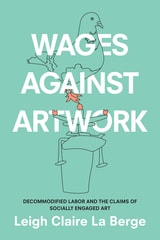
Wages Against Artwork
Decommodified Labor and the Claims of Socially Engaged ArtLeigh Claire La Berge
Duke University Press, 2019

Western Voices in Canadian Art
Patricia Bovey
University of Manitoba Press, 2023
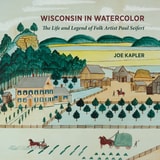
Wisconsin in Watercolor
The Life and Legend of Folk Artist Paul SeifertJoe Kapler
Wisconsin Historical Society Press, 2018
In 1867, German immigrant Paul Seifert settled in the Driftless Area of southwestern Wisconsin and began capturing the distinctive farms and landscapes of his new home in vivid, detailed watercolors. Today, these paintings are coveted by American folk art collectors across the country, but Seifert’s life remains shrouded in mystery.
In this first book written about Paul Seifert, author Joe Kapler examines the life of this enigmatic artist and provides context for his extraordinary art. The book features high-quality reproductions of twenty-two Seifert watercolors (more than half of which have never been published) and many close-ups of his characteristic details, from horses and hay wagons to dogs and dinner bells. Part art history treatment, part coffee table book, part research memoir, and part love letter to the Driftless Area, Wisconsin in Watercolor shines a long-awaited light on Seifert and the land he so carefully rendered over a hundred years ago.
Women Artists, Women Exiles
"Miss Grief" and Other Stories by Constance Fenimore WoolsonEdited by Joan Myers Weimar
Rutgers University Press, 1988
Woolson's early stories are witty and incisive critiques of those conventions of literary Romanticism that encode women's marginality. Set in the wilderness that surrounded the Great Lakes, these stories revise male literary texts to clear a space where women's voices can be heard.
In a group of stories set in the post-Civil War south, women artists are shown as exiles both away from their homes and from themselves. One superb tale, "Felipa," pairs a repressed woman artist with a wild child who rejects both patriarchal religion and approved heterosexual behavior. Woolson here explores the possibility of a collaboration between female wildness and female form of control.
Stories written during Woolson's years in Europe confront woman artists with successful male writers and critics who resemble Henry James. These carefully crafted stories reflect James's mixed impact on women artists: as a model literary realist and as a subtle denigrator of women's talent.
Joan Weimar's introduction uses unpublished letters to reconstruct and interpret Wool's life and her probable suicide. It places Woolson in the male and female literary traditions of her time and offers extended analysis of the stories.