Results by title
169 books match the query 'Auto-narrator' and 8 start with w
W. E. B. DuBois on Sociology and the Black Community
W. E. B. DuBois
University of Chicago Press, 1978
Historian, journalist, educator, and civil rights advocate W. E. B. Du Bois was perhaps most accomplished as a sociologist of race relations and of the black community in the United States. This volume collects his most important sociological writings from 1898 to 1910. The eighteen selections include five on Du Bois's conception of sociology and sociological research, especially as a tool in the struggle for racial justice; excerpts from studies of black communities in the South and the North, including The Philadelphia Negro; writings on black culture and social life, with a selection from The Negro American Family; and later works on race relations in the United States and elsewhere after World War II. This section includes a powerful fiftieth-anniversary reassessment of his classic 1901 article in the Atlantic in which he predicted that "the problem of the twentieth century is the problem of the color line."
The editors provide an annotated bibliography, a lengthy overview of Du Bois's life and work, and detailed introductions to the selections.
"The most significant contribution of this book is its inclusive look at Du Bois as both academic and activist. . . . Individuals interested in the study of social issues and political sociology would benefit from reading and discussing this book."—Paul Kriese, Sociology: Reviews of New Books
"Green and Driver, informing this volume with a 48-page essay that summarizes Du Bois' career and places him in the context of the profession, have intelligently organized his writings. . . . A welcome contribution that should have wide use."—Elliott Rudwick, Contemporary Sociology
Wasted Education
How We Fail Our Graduates in Science, Technology, Engineering, and MathJohn D. Skrentny
University of Chicago Press, 2023
This is an auto-narrated audiobook version of this book.
An urgent reality check for America’s blinkered fixation on STEM education.
We live in an era of STEM obsession. Not only do tech companies dominate American enterprise and economic growth while complaining of STEM shortages, but we also need scientific solutions to impending crises. As a society, we have poured enormous resources—including billions of dollars—into cultivating young minds for well-paid STEM careers. Yet despite it all, we are facing a worker exodus, with as many as 70% of STEM graduates opting out of STEM work. Sociologist John D. Skrentny investigates why, and the answer, he shows, is simple: the failure of STEM jobs.
Wasted Education reveals how STEM work drives away bright graduates as a result of “burn and churn” management practices, lack of job security, constant training for a neverending stream of new—and often socially harmful—technologies, and the exclusion of women, people of color, and older workers. Wasted Education shows that if we have any hope of improving the return on our STEM education investments, we have to change the way we’re treating the workers on whom our future depends.
What the Anti-Federalists Were For
The Political Thought of the Opponents of the ConstitutionHerbert J. Storing
University of Chicago Press, 1981
The Anti-Federalists, in Herbert J. Storing's view, are somewhat paradoxically entitled to be counted among the Founding Fathers and to share in the honor and study devoted to the founding. "If the foundations of the American polity was laid by the Federalists," he writes, "the Anti-Federalist reservations echo through American history; and it is in the dialogue, not merely in the Federalist victory, that the country's principles are to be discovered." It was largely through their efforts, he reminds us, that the Constitution was so quickly amended to include a bill of rights.
Storing here offers a brilliant introduction to the thought and principles of the Anti-Federalists as they were understood by themselves and by other men and women of their time. His comprehensive exposition restores to our understanding the Anti-Federalist share in the founding its effect on some of the enduring themes and tensions of American political life. The concern with big government and infringement of personal liberty one finds in the writings of these neglected Founders strikes a remarkably timely note.
When Bad Things Happen to Privileged People
Race, Gender, and What Makes a Crisis in AmericaDara Z. Strolovitch
University of Chicago Press, 2023
A deep and thought-provoking examination of crisis politics and their implications for power and marginalization in the United States.
From the climate crisis to the opioid crisis to the Coronavirus crisis, the language of crisis is everywhere around us and ubiquitous in contemporary American politics and policymaking. But for every problem that political actors describe as a crisis, there are myriad other equally serious ones that are not described in this way. Why has the term crisis been associated with some problems but not others? What has crisis come to mean, and what work does it do?
In When Bad Things Happen to Privileged People, Dara Z. Strolovitch brings a critical eye to the taken-for-granted political vernacular of crisis. Using systematic analyses to trace the evolution of the use of the term crisis by both political elites and outsiders, Strolovitch unpacks the idea of “crisis” in contemporary politics and demonstrates that crisis is itself an operation of politics. She shows that racial justice activists innovated the language of crisis in an effort to transform racism from something understood as natural and intractable and to cast it instead as a policy problem that could be remedied. Dominant political actors later seized on the language of crisis to compel the use of state power, but often in ways that compounded rather than alleviated inequality and injustice. In this eye-opening and important book, Strolovitch demonstrates that understanding crisis politics is key to understanding the politics of racial, gender, and class inequalities in the early twenty-first century.
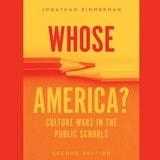
Whose America?
Culture Wars in the Public SchoolsJonathan Zimmerman
University of Chicago Press, 2022
In this expanded edition of his 2002 book, Zimmerman surveys how battles over public education have become conflicts at the heart of American national identity.
Critical Race Theory. The 1619 Project. Mask mandates. As the headlines remind us, American public education is still wracked by culture wars. But these conflicts have shifted sharply over the past two decades, marking larger changes in the ways that Americans imagine themselves. In his 2002 book, Whose America?, Zimmerman predicted that religious differences would continue to dominate the culture wars. Twenty years after that seminal work, Zimmerman has reconsidered: arguments over what American history is, what it means, and how it is taught have exploded with special force in recent years. In this substantially expanded new edition, Zimmerman meditates on the history of the culture wars in the classroom—and on what our inability to find common ground might mean for our future.
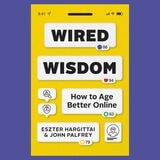
Wired Wisdom
How to Age Better OnlineEszter Hargittai and John Palfrey
University of Chicago Press, 2025
A surprising window into the online lives of people sixty and over—offering essential insights, no matter your age.
Many popular accounts say the older you are, the greater your tech struggles. And it’s worrying to think of loved ones emailing cringe-worthy misinformation, falling for phishing attacks, or becoming lonelier with increasing time spent online.
But in their eye-opening book on the internet’s fastest-growing demographic, researchers Eszter Hargittai and John Palfrey offer a more nuanced picture—debunking common myths about older adults’ internet use to offer hope and a necessary call to action. Incorporating original interviews and survey results from thousands of people sixty and over, Wired Wisdom shows that many, in fact, use technology in ways that put younger peers to shame. Over-sixties are often nimble online and quicker to abandon social media platforms that don’t meet their needs. Despite being targeted more often, they also may be less likely to fall for scams than younger peers. And fake news actually fools fewer people over sixty, who have far more experience evaluating sources and detecting propaganda. Still, there are unseen risks and missed opportunities for this group. Hargittai and Palfrey offer practical advice and show that our stereotypes can be hurdles that keep us from building intergenerational support communities, helping loved ones adopt new technology that may improve their lives, and thriving together online.
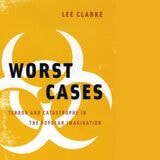
Worst Cases
Terror and Catastrophe in the Popular ImaginationLee Clarke
University of Chicago Press, 2005
Al Qaeda detonates a nuclear weapon in Times Square during rush hour, wiping out half of Manhattan and killing 500,000 people. A virulent strain of bird flu jumps to humans in Thailand, sweeps across Asia, and claims more than fifty million lives. A single freight car of chlorine derails on the outskirts of Los Angeles, spilling its contents and killing seven million. An asteroid ten kilometers wide slams into the Atlantic Ocean, unleashing a tsunami that renders life on the planet as we know it extinct.
We consider the few who live in fear of such scenarios to be alarmist or even paranoid. But Worst Cases shows that such individuals—like Cassandra foreseeing the fall of Troy—are more reasonable and prescient than you might think. In this book, Lee Clarke surveys the full range of possible catastrophes that animate and dominate the popular imagination, from toxic spills and terrorism to plane crashes and pandemics. Along the way, he explores how the ubiquity of worst cases in everyday life has rendered them ordinary and mundane. Fear and dread, Clarke argues, have actually become too rare: only when the public has more substantial information and more credible warnings will it take worst cases as seriously as it should.
A timely and necessary look into how we think about the unthinkable, Worst Cases will be must reading for anyone attuned to our current climate of threat and fear.
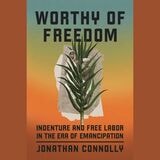
Worthy of Freedom
Indenture and Free Labor in the Era of EmancipationJonathan Connolly
University of Chicago Press, 2024
A study of Indian indentured labor in Mauritius, British Guiana, and Trinidad that explores the history of indenture’s normalization.
In this book, historian Jonathan Connolly traces the normalization of indenture from its controversial beginnings to its widespread adoption across the British Empire during the nineteenth century. Initially viewed as a covert revival of slavery, indenture caused a scandal in Britain and India. But over time, economic conflict in the colonies altered public perceptions of indenture, now increasingly viewed as a legitimate form of free labor and a means of preserving the promise of abolition. Connolly explains how the large-scale, state-sponsored migration of Indian subjects to work on sugar plantations across Mauritius, British Guiana, and Trinidad transformed both the notion of post-slavery free labor and the political economy of emancipation.
Excavating legal and public debates and tracing practical applications of the law, Connolly carefully reconstructs how the categories of free and unfree labor were made and remade to suit the interests of capital and empire, showing that emancipation was not simply a triumphal event but, rather, a deeply contested process. In so doing, he advances an original interpretation of how indenture changed the meaning of “freedom” in a post-abolition world.