Results by title
56 books match the query 'Aviation & Space' and 6 start with w
Warplane 04
Brewster BuffaloNico Braas
Amsterdam University Press, 2017
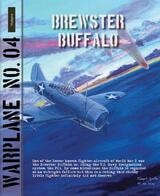
One of the lesser-known fighter aircraft of World War II was the Brewster Buffalo, or, using the U.S. Navy designation system, the F2A. By some historians the Buffalo is regarded as an outright failure, but this is a rating this stubby little fighter did not deserve.
This book presents an overview of the development and operational use of the Buffalo with many photos including a number not published before.
This book presents an overview of the development and operational use of the Buffalo with many photos including a number not published before.
[more]
Warplane 05
Fokker C.XEdwin Hoogschagen
Amsterdam University Press, 2017
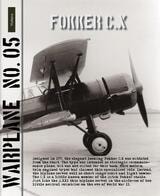
Designed in 1933, the elegant looking Fokker C.X was outdated from the start. The type was intended as strategic reconnaissance plane but was not suited for this task. More modern, twin-engine types had claimed this specialized role. Instead, the biplane served well as short range scout and light bomber.
The C.X is a little-known member of the Dutch Fokker stable. Just like the D.XXI this biplane served in the air forces of two little neutral countries on the eve of World War II. Both fought gallantly in a war of David versus Goliath proportions, and the complete operational history of the type spans a total of 25 years. In retrospect, the C.X was the last fighting biplane type built by Fokker and the company's last pre-war military type to survive.
The C.X is a little-known member of the Dutch Fokker stable. Just like the D.XXI this biplane served in the air forces of two little neutral countries on the eve of World War II. Both fought gallantly in a war of David versus Goliath proportions, and the complete operational history of the type spans a total of 25 years. In retrospect, the C.X was the last fighting biplane type built by Fokker and the company's last pre-war military type to survive.
[more]
Warplane 06
Convair B-58 HustlerNico Braas
Amsterdam University Press, 2017
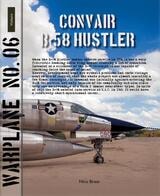
When the B-58 Hustler bomber entered service in 1958 it was a very futuristic looking delta wing bomber, creating a lot of sensation. Intended as a successor of the B-47 Stratojet it could reach twice the speed of sound.
However, problems occurred during the development process and costs risings went so out of control that the whole project was almost cancelled a few times. Strategic Air Command was initially against ordering the B-58 for service, not only because of its complexity but also since they saw no advantage of a Mach 2 bomber over other types. Despite this the B-58 entered service at S.A.C. in 1960. It would have a relatively short operational career.
However, problems occurred during the development process and costs risings went so out of control that the whole project was almost cancelled a few times. Strategic Air Command was initially against ordering the B-58 for service, not only because of its complexity but also since they saw no advantage of a Mach 2 bomber over other types. Despite this the B-58 entered service at S.A.C. in 1960. It would have a relatively short operational career.
[more]
Warplane 07
Weis WM.21 SólyomEdwin Hoogschagen
Amsterdam University Press, 2017
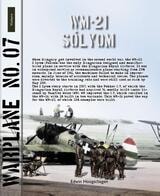
When Hungary got involved in World War II, the WM-21 Sólyom (Falcon) was the only Hungarian designed and manufactured plane in service with the Hungarian Royal Airforce. It was in widespread service as reconnaissance plane starting from 1938 onwards. In June of 1941, the machines failed to make an impression, mainly because of accidents and technical issues. The planes were diverted to the training role and were still used as such by May 1945.
The Sólyom story starts in 1927, with the Fokker C.V, of which the Hungarian Royal Airforce had acquired 76, mostly built under license by Manfred Weiss (WM). WM improved the C.V, which resulted in the WM-16, with 18 built in two variants. This WM-16 paved the way for the WM-21, of which 128 examples were built.
The Sólyom story starts in 1927, with the Fokker C.V, of which the Hungarian Royal Airforce had acquired 76, mostly built under license by Manfred Weiss (WM). WM improved the C.V, which resulted in the WM-16, with 18 built in two variants. This WM-16 paved the way for the WM-21, of which 128 examples were built.
[more]
Warplane Plus 01
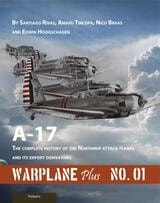
A17 - The Complete History of the Northrop Attack Planes and Its Export DerivativesSantiago Rivas
Amsterdam University Press, 2023
The Northrop Corporation offered the single engined Gamma 2F attack plane to the US Army Air Corps in October 1934. After modification work this type evolved into the highly innovative A-17 attack aircraft of which 110 aircraft were ordered. Northrop integrated all modern aircraft technologies of the day, such as all metal monocoque construction, two pitch propeller, flaps and dive brakes into the design, combined with forward firing machine guns fitted in the wings, a respectable bomb load, high speeds and admirable flying range. It eclipsed all other attack types then in service.
This book offers an overview of an iconic aeroplane. The authors, all specialists in their field, have compiled a comprehensive story and gathered more than 350 photographs, colour profiles and maps, thus offering a fascinating view at an aircraft type linking the ‘Golden Age of aviation’ days with the dark years of World War Two.
This book offers an overview of an iconic aeroplane. The authors, all specialists in their field, have compiled a comprehensive story and gathered more than 350 photographs, colour profiles and maps, thus offering a fascinating view at an aircraft type linking the ‘Golden Age of aviation’ days with the dark years of World War Two.
[more]
Weis WM.21 Sólyom
Edwin Hoogschagen
Amsterdam University Press, 2023
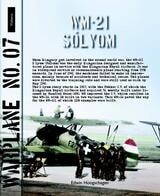
When Hungary got involved in World War II, the WM-21 Sólyom (Falcon) was the only Hungarian designed and manufactured plane in service with the Hungarian Royal Airforce. It was in widespread service as reconnaissance plane starting from 1938 onwards. In June of 1941, the machines failed to make an impression, mainly because of accidents and technical issues. The planes were diverted to the training role and were still used as such by May 1945.
The Sólyom story starts in 1927, with the Fokker C.V, of which the Hungarian Royal Airforce had acquired 76, mostly built under license by Manfred Weiss (WM). WM improved the C.V, which resulted in the WM-16, with 18 built in two variants. This WM-16 paved the way for the WM-21, of which 128 examples were built.
The Sólyom story starts in 1927, with the Fokker C.V, of which the Hungarian Royal Airforce had acquired 76, mostly built under license by Manfred Weiss (WM). WM improved the C.V, which resulted in the WM-16, with 18 built in two variants. This WM-16 paved the way for the WM-21, of which 128 examples were built.
[more]