Results by title
101 books match the query 'Behavior' and 8 start with w
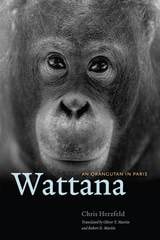
Wattana
An Orangutan in ParisChris Herzfeld
University of Chicago Press, 2016
Offering a uniquely intimate look at the daily lives of captive great apes, Herzfeld uses Wattana’s life to trace the history of orangutans from their first arrival in Europe in 1776 to the inhabitants of the Zoo of Paris and other zoos today. She provides a close look at the habits, technical know-how, and skills of Wattana, who, remarkably, uses strings, paper rolls, rope, and even pieces of wood to make things. And she thoughtfully explores how apes individually—and often with ingenuity—come to terms with and adapt to their captive environments and caretakers. Through these stories, Wattana sympathetically reveals the extraordinary psychology and distinctive personalities of great apes as well as the interconnections between animal and human lives, especially in zoos.
Scientists predict that orangutans will disappear from the wild by 2030, and captive animals like Wattana may, as a result, provide our best chance to understand and appreciate their astonishing intelligence and abilities. Wattana, the accomplished maker of knots, is the hero of this poignant book, which will enthrall anyone curious about the lives of our primate cousins.
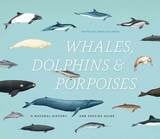
Whales, Dolphins, and Porpoises
A Natural History and Species GuideEdited by Annalisa Berta
University of Chicago Press, 2015
Opening with an accessible rundown of cetacean biology—including the most recent science on feeding, mating, and communication—Whales, Dolphins, and Porpoises then presents species-specific natural history on a range of topics, from anatomy and diet to distribution and conservation status. Each entry also includes original drawings of the species and its key identifiers, such as fin shape and color, tooth shape, and characteristic markings as they would appear both above and below water—a feature unique to this book.
Figures of myth and—as the debate over hunting rages on—figures of conflict since long before the days of Moby-Dick, whales, dolphins, and porpoises are also ecologically important and, in many cases, threatened. Written for general enthusiasts, emergent cetacean fans, and biologists alike, this stunning, urgently needed book will serve as the definitive guide for years to come.
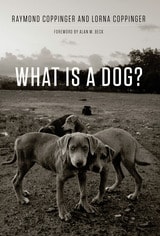
What Is a Dog?
Raymond Coppinger and Lorna Coppinger
University of Chicago Press, 2016
Exploring the natural history of these animals, the Coppingers explain how the village dogs of Vietnam, India, Africa, and Mexico are strikingly similar. These feral dogs, argue the Coppingers, are in fact the truly archetypal dogs, nearly uniform in size and shape and incredibly self-sufficient. Drawing on nearly five decades of research, they show how dogs actually domesticated themselves in order to become such efficient scavengers of human refuse. The Coppingers also examine the behavioral characteristics that enable dogs to live successfully and to reproduce, unconstrained by humans, in environments that we ordinarily do not think of as dog friendly.
Providing a fascinating exploration of what it actually means—genetically and behaviorally—to be a dog, What Is a Dog? will undoubtedly change the way any beagle or bulldog owner will reflect on their four-legged friend.
Who's a Good Human?
Practical Exercises for Living Mindfully with DogsJessica Pierce
University of Chicago Press, 2026
Most dog books focus on how to change our companion’s behavior; very few ask how we might change our own.
This workbook and journal, created by ethicist, celebrated author, and dog guardian Jessica Pierce, helps readers learn to live more mindfully with their dogs. Across ten chapters filled with exercises grounded in behavioral science and contemplative practice, Pierce invites readers to mirror their dog’s movements, savor shared silence, examine the impulse to command, reflect on past relationships with dogs, and prepare for the inevitabilities of aging and loss. She teaches readers how to view their dogs with the care of a field biologist—keeping notes, mapping relationships, and generally observing to better understand the dog’s world. She also challenges long-held assumptions about traditional dog training and asks whether our methods truly serve our dogs or simply reassure us as humans.
Many readers of Pierce’s acclaimed earlier books asked for a practical guide to help them put ideas into daily practice. For both those readers and those new to her work, this workbook is her response: a human-training manual informed by science, ethics, and lived experience. Each chapter begins with a short introduction to orient the reader, followed by self-directed exercises, reflection prompts, and shared experiences from living with her dog, Bella. Annotated further-reading sections point to both accessible books and peer-reviewed research. With its blend of gentle guidance and intellectual rigor, this workbook helps readers cultivate a more curious, collaborative, and compassionate relationship with the dogs they love.

Wolf Island
L. David Mech
University of Minnesota Press, 2020
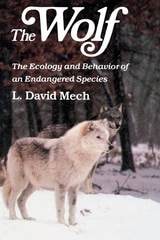
Wolf
The Ecology and Behavior of an Endangered SpeciesDavid Mech
University of Minnesota Press, 1981
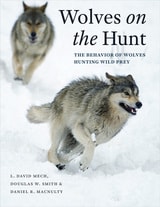
Wolves on the Hunt
The Behavior of Wolves Hunting Wild PreyL. David Mech, Douglas W. Smith, and Daniel R. MacNulty
University of Chicago Press, 2015
Combining behavioral data, thousands of hours of original field observations, research in the literature, a wealth of illustrations, and—in the e-book edition and online—video segments from cinematographer Robert K. Landis, the authors create a compelling and complex picture of these hunters. The wolf is indeed an adept killer, able to take down prey much larger than itself. While adapted to hunt primarily hoofed animals, a wolf—or especially a pack of wolves—can kill individuals of just about any species. But even as wolves help drive the underlying rhythms of the ecosystems they inhabit, their evolutionary prowess comes at a cost: wolves spend one-third of their time hunting—the most time consuming of all wolf activities—and success at the hunt only comes through traveling long distances, persisting in the face of regular failure, detecting and taking advantage of deficiencies in the physical condition of individual prey, and through ceaseless trial and error, all while risking injury or death.
By describing and analyzing the behaviors wolves use to hunt and kill various wild prey—including deer, moose, caribou, elk, Dall sheep, mountain goats, bison, musk oxen, arctic hares, beavers, and others—Wolves on the Hunt provides a revelatory portrait of one of nature’s greatest hunters.
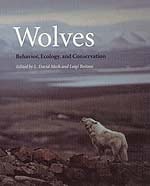
Wolves
Behavior, Ecology, and ConservationEdited by L. David Mech and Luigi Boitani
University of Chicago Press, 2003
As wolf populations have rebounded, scientific studies of them have also flourished. But there hasn't been a systematic, comprehensive overview of wolf biology since 1970. In Wolves, many of the world's leading wolf experts provide state-of-the-art coverage of just about everything you could want to know about these fascinating creatures. Individual chapters cover wolf social ecology, behavior, communication, feeding habits and hunting techniques, population dynamics, physiology and pathology, molecular genetics, evolution and taxonomy, interactions with nonhuman animals such as bears and coyotes, reintroduction, interactions with humans, and conservation and recovery efforts. The book discusses both gray and red wolves in detail and includes information about wolves around the world, from the United States and Canada to Italy, Romania, Saudi Arabia, Israel, India, and Mongolia. Wolves is also extensively illustrated with black and white photos, line drawings, maps, and fifty color plates.
Unrivalled in scope and comprehensiveness, Wolves will become the definitive resource on these extraordinary animals for scientists and amateurs alike.