Results by title
5159 books match the query 'Biography' and 263 start with w
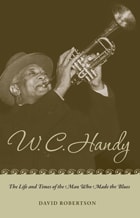
W. C. Handy
The Life and Times of the Man Who Made the BluesDavid Robertson
University of Alabama Press, 2011
Normal0falsefalsefalseEN-USX-NONEX-NONEMicrosoftInternetExplorer4

W. E. B. Du Bois
Revolutionary Across the Color LineBill V. Mullen
Pluto Press, 2016
Du Bois was born in Massachusetts in 1868, just three years after formal emancipation of America’s slaves. In his extraordinarily long and active political life, he would emerge as the first black man to earn a PhD from Harvard; surpass Booker T. Washington as the leading advocate for African American rights; co-found the NAACP, and involve himself in anti-imperialist and anti-colonial struggles across Asia and Africa. Beyond his Civil Rights work, Mullen also examines Du Bois's attitudes towards socialism, the USSR, China’s Communist Revolution, and the intersectional relationship between capitalism, poverty and racism.
An accessible introduction to a towering figure of American Civil Rights, perfect for anyone wanting to engage with Du Bois’s life and work.

WERNER VON SIEMENS
INVENTOR AND INTERNATIONAL ENTREPRENEURWILFRIED FELDENKIRCHEN
The Ohio State University Press, 1994
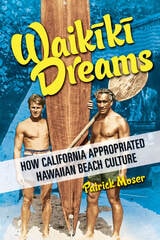
Waikiki Dreams
How California Appropriated Hawaiian Beach CulturePatrick Moser
University of Illinois Press, 2024
Despite a genuine admiration for Native Hawaiian culture, white Californians of the 1930s ignored authentic relationships with Native Hawaiians. Surfing became a central part of what emerged instead: a beach culture of dressing, dancing, and acting like an Indigenous people whites idealized.
Patrick Moser uses surfing to open a door on the cultural appropriation practiced by Depression-era Californians against a backdrop of settler colonialism and white nationalism. Recreating the imagined leisure and romance of life in Waikīkī attracted people buffeted by economic crisis and dislocation. California-manufactured objects like surfboards became a physical manifestation of a dream that, for all its charms, emerged from a white impulse to both remove and replace Indigenous peoples. Moser traces the rise of beach culture through the lives of trendsetters Tom Blake, John “Doc” Ball, Preston “Pete” Peterson, Mary Ann Hawkins, and Lorrin “Whitey” Harrison while also delving into California’s control over images of Native Hawaiians via movies, tourism, and the surfboard industry.
Compelling and innovative, Waikīkī Dreams opens up the origins of a defining California subculture.
Waiting On The Bounty
Dust Bowl Diary Mary DyckPamela Riney-Kehrberg
University of Iowa Press, 1999
Though she had only a fifth-grade education, Mary Knackstedt Dyck faithfully kept a diary. Written with pencil on lined notebook paper, her daily notations tell the story of farm life on the far western border of Kansas during the grim Dust Bowl years. Manuscript diaries from this era and region are extremely rare, and those written by farm women are even more so. From the point of view of a wife, mother, and partner in the farming enterprise, Dyck recorded the everyday events as well as the frustrations of living with drought and dust storms and the sadness of watching one's children leave the farm.
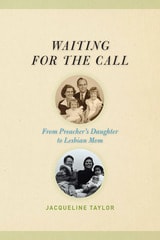
Waiting for the Call
From Preacher's Daughter to Lesbian MomJacqueline Taylor
University of Michigan Press, 2007
“Well-written, absorbing, and a great pleasure to read . . . will appeal to Christians struggling to square their traditional beliefs with acceptance of homosexuality as well as to all those interested in adoption, lesbian marriage, and the changing shape of America’s families.”
—Elizabeth C. Fine, Virginia Tech University
Waiting for the Call takes readers from the foothills of the Appalachians—where Jacqueline Taylor was brought up in a strict evangelical household—to contemporary Chicago, where she and her lesbian partner are raising a family. In a voice by turns comic and loving, Taylor recounts the amazing journey that took her in profoundly different directions from those she or her parents could have ever envisioned.
Taylor’s father was a Southern Baptist preacher, and she struggled to deal with his strictures as well as her mother’s manic-depressive episodes. After leaving for college, Taylor finds herself questioning her faith and identity, questions that continue to mount when—after two divorces, a doctoral degree, and her first kiss with a woman—she discovers her own lesbianism and begins a most untraditional family that grows to include two adopted children from Peru.
Even as she celebrates and cherishes this new family, Taylor insists on the possibility of maintaining a loving connection to her religious roots. While she and her partner search for the best way to explain adoption to their children and answer the inevitable question, “Which one is your mom?” they also seek out a church that will unite their love of family and their faith. Told in the great storytelling tradition of the American South, full of deep feeling and wry humor, Waiting for the Call engagingly demonstrates how one woman bridged the gulf between faith and sexual identity without abandoning her principles.
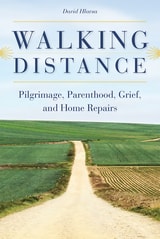
Walking Distance
Pilgrimage, Parenthood, Grief, and Home RepairsDavid Hlavsa
Michigan State University Press, 2015
Though walking more than 400 miles across the north of Spain turned out to be more difficult than they had anticipated, after a series of misadventures, including a brief stay in a Spanish hospital, they arrived in Santiago. Shortly after their return to Seattle, Lisa became pregnant, and the hardships of the Camino were no comparison to what followed: the stillbirth of their first son and Lisa’s harrowing second pregnancy.
Walking Distance is a moving and disarmingly funny book, a good story with a happy ending—the safe arrival of David and Lisa’s second son, Benjamin. David and Lisa get more than they bargained for, but they also get exactly what they wanted: a child, a solid marriage, and a richer life.

Walking George
The Life of George John Beto and the Rise of the Modern Texas Prison SystemDavid M. Horton
University of North Texas Press, 2005
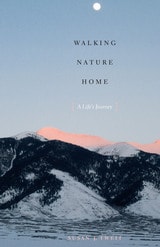
Walking Nature Home
A Life's JourneyBy Susan J. Tweit
University of Texas Press, 2009
Without a map, navigate by the stars. Susan Tweit began learning this lesson as a young woman diagnosed with an autoimmune disease that was predicted to take her life in two to five years. Offered no clear direction for getting well through conventional medicine, Tweit turned to the natural world that was both her solace and her field of study as a plant ecologist. Drawing intuitive connections between the natural processes and cycles she observed and the functions of her body, Tweit not only learned healthier ways of living but also discovered a great truth—love can heal. In this beautifully written, moving memoir, she describes how love of the natural world, of her husband and family, and of life itself literally transformed and saved her own life.
In tracing the arc of her life from young womanhood to middle age, Tweit tells stories about what silence and sagebrush, bird bones and sheep dogs, comets, death, and one crazy Englishman have to teach us about living. She celebrates making healthy choices, the inner voices she learned to hear on days alone in the wilderness, the joys of growing and eating an organic kitchen garden, and the surprising redemption in restoring a once-blighted neighborhood creek. Linking her life lessons to the stories she learned in childhood about the constellations, Tweit shows how qualities such as courage, compassion, and inspiration draw us together and bind us into the community of the land and of all living things.
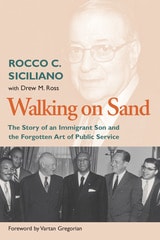
Walking On Sand
The Story of an Immigrant Son and the Forgotten Art of Public ServiceRocco C Siciliano
University of Utah Press, 2004
Rocco C. Siciliano broke new ground as the first Italian-American to serve in the White House as an assistant to the president, Dwight D. Eisenhower. At 31, "Ike’s Youngest" attained a prominence not suggested in his humble beginnings in Salt Lake City, Utah. But his upbringing in the Mormon-dominated community, where he balanced the heritage of his striving immigrant parents with his own aspirations for success, prepared him for a wide variety of service. This service includes leading a special weapons platoon in the 10th Mountain Division in World War II, bringing Martin Luther King Jr. to meet with President Eisenhower, and becoming a recognized business leader in California.
Siciliano used his expertise in labor, personnel management, and business to contribute substantively to the J. Paul Getty Center, the Los Angeles Philharmonic Association, the Committee for Economic Development, and the "Volcker" Commission on Public Service, among others.
The variety of Siciliano’s experiences reinvigorates our understanding of the forgotten art of public service. Walking on Sand emphasizes the role that public service can play for corporations, communities, states, and the nation. This story is a gift from the Greatest Generation to the many people who serve America today and will serve her tomorrow.
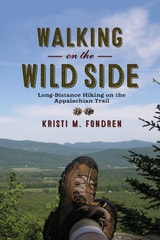
Walking on the Wild Side
Long-Distance Hiking on the Appalachian TrailFondren, Kristi M
Rutgers University Press, 2015
The most famous long-distance hiking trail in North America, the 2,181-mile Appalachian Trail—the longest hiking-only footpath in the world—runs along the Appalachian mountain range from Georgia to Maine. Every year about 2,000 individuals attempt to “thru-hike” the entire trail, a feat equivalent to hiking Mount Everest sixteen times. In Walking on the Wild Side, sociologist Kristi M. Fondren traces the stories of forty-six men and women who, for their own personal reasons, set out to conquer America’s most well known, and arguably most social, long-distance hiking trail.
In this fascinating in-depth study, Fondren shows how, once out on the trail, this unique subculture of hikers lives mostly in isolation, with their own way of acting, talking, and thinking; their own vocabulary; their own activities and interests; and their own conception of what is significant in life. They tend to be self-disciplined, have an unwavering trust in complete strangers, embrace a life of poverty, and reject modern-day institutions. The volume illuminates the intense social intimacy and bonding that forms among long-distance hikers as they collectively construct a long-distance hiker identity. Fondren describes how long-distance hikers develop a trail persona, underscoring how important a sense of place can be to our identity, and to our sense of who we are. Indeed, the author adds a new dimension to our understanding of the nature of identity in general.
Anyone who has hiked—or has ever dreamed of hiking—the Appalachian Trail will find this volume fascinating. Walking on the Wild Side captures a community for whom the trail is a sacred place, a place to which they have become attached, socially, emotionally, and spiritually.
Walking the Forest with Chico Mendes
Struggle for Justice in the AmazonBy Gomercindo Rodrigues, Edited and translated by Linda Rabben
University of Texas Press, 2007
A close associate of Chico Mendes, Gomercindo Rodrigues witnessed the struggle between Brazil's rubber tappers and local ranchers—a struggle that led to the murder of Mendes. Rodrigues's memoir of his years with Mendes has never before been translated into English from the Portuguese. Now, Walking the Forest with Chico Mendes makes this important work available to new audiences, capturing the events and trends that shaped the lives of both men and the fragile system of public security and justice within which they lived and worked.
In a rare primary account of the celebrated labor organizer, Rodrigues chronicles Mendes's innovative proposals as the Amazon faced wholesale deforestation. As a labor unionist and an environmentalist, Mendes believed that rain forests could be preserved without ruining the lives of workers, and that destroying forests to make way for cattle pastures threatened humanity in the long run. Walking the Forest with Chico Mendes also brings to light the unexplained and uninvestigated events surrounding Mendes's murder.
Although many historians have written about the plantation systems of nineteenth-century Brazil, few eyewitnesses have captured the rich rural history of the twentieth century with such an intricate knowledge of history and folklore as Rodrigues.
Wallace Stegners Salt Lake City
Robert C. Steensma
University of Utah Press, 2007
As he was later to say in his essay 'At Home in the Fields of the Lord,' he eventually realized that, if he had to have a hometown, it was Salt Lake City. He came to use the 'City of the Saints' for settings in three novels: The Big Rock Candy Mountain, Recapitulation, and The Preacher and the Slave (later retitled Joe Hill). His years in Utah helped develop the environmental ethic he espoused so eloquently in his famous 'Wilderness Letter.'
Robert Steensma has meticulously searched through archival photographs, quotations from Stegner’s writings, and interpretive essays in order to recreate the Salt Lake City of the 1920s and 1930s, the city of Stegner’s youth and young adulthood. This is a book that will appeal to all who have been moved by Stegner’s novels, nonfiction, or his urgent appeals for conservation.
Walls That Speak
The Murals of John Thomas BiggersOlive Jensen Theisen
University of North Texas Press, 2010
Walls of Prophecy and Protest
William Walker and the Roots of a Revolutionary Public Art MovementJeff W. Huebner
Northwestern University Press, 2019
Though his art could not have been more public, Walker maintained a low profile during his working life and virtually withdrew from the public eye after his retirement in 1989. Author Jeff W. Huebner met Walker in 1990 and embarked on a series of insightful interviews that stretched over the next two decades. Those meetings and years of research form the basis of Walls of Prophecy and Protest, the story of Walker’s remarkable life and the movement that he inspired.
Featuring forty-three color images of Walker’s work, most long since destroyed or painted over, this handsome edition reveals the artist who was the primary figure behind Chicago’s famed Wall of Respect and who created numerous murals that depicted African American historical figures, protested social injustice, and promoted love, respect, racial unity, and community change.
Walter Benjamin’s Ark
A Departure in BiographyJohn Schad
University College London, 2025
Walter Benjamin’s Ark rereads the life and work of the German philosopher and critic through the life of his estranged son. With this innovative biography, John Schad not only brings to light the intriguing figure that is Stefan Rafael Benjamin, but also identifies him as that most crucial of Benjaminian specters, namely, the secret “you” or addressee of his father’s writings. In the process, he brings Walter Benjamin into a series of unlikely dramatic dialogues with Virginia Woolf, Rosa Luxemburg, Ludwig Wittgenstein, Gertrud Kolmar, Oscar Wilde, Franz Kafka, and Hamlet.
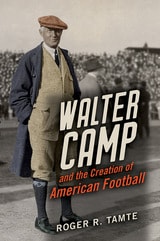
Walter Camp and the Creation of American Football
Roger R Tamte
University of Illinois Press, 2018
Roger R. Tamte tells the engrossing but forgotten life story of Walter Camp, the man contemporaries called "the father of American football." He charts Camp's leadership as American players moved away from rugby and for the first time tells the story behind the remarkably inventive rule change that, in Camp's own words, was "more important than all the rest of the legislation combined." Trials also emerged, as when disputes over forward passing, the ten-yard first down, and other rules became so public that President Theodore Roosevelt took sides. The resulting political process produced losses for Camp as well as successes, but soon a consensus grew that football needed no new major changes. American football was on its way, but as time passed, Camp's name and defining influence became lost to history.
Entertaining and exhaustively researched, Walter Camp and the Creation of American Football weaves the life story of an important sports pioneer with a long-overdue history of the dramatic events that produced the nation's most popular game.
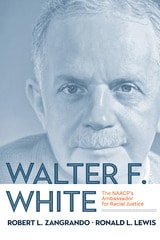
Walter F. White
The NAACP's Ambassador for Racial JusticeRONALD L. LEWIS
West Virginia University Press, 2018
Walter F. White of Atlanta, Georgia, joined the National Association for the Advancement of Colored People (NAACP) in 1918 as an assistant to Executive Secretary James Weldon Johnson. When Johnson retired in 1929, White replaced him as head of the NAACP, a position he maintained until his death in 1955. During his long tenure, White was in the vanguard of the struggle for interracial justice. His reputation went into decline, however, in the era of grassroots activism that followed his death. White’s disagreements with the US Left, and his ambiguous racial background—he was of mixed heritage, could “pass” as white, and divorced a black woman to marry a white woman—fueled ambivalence about his legacy.
In this comprehensive biography, Zangrando and Lewis seek to provide a reassessment of White within the context of his own time, revising critical interpretations of his career. White was a promoter of and a participant in the Harlem Renaissance, a daily fixture in the halls of Congress lobbying for civil rights legislation, and a powerful figure with access to the administrations of Roosevelt (via Eleanor) and Truman. As executive secretary of the NAACP, White fought incessantly to desegregate the American military and pushed to ensure equal employment opportunities. On the international stage, White advocated for people of color in a decolonized world, and for economic development aid to nations like India and Haiti, bridging the civil rights struggles at home and abroad.
Walter Netsch
A Critical Appreciation and SourcebookRussell T. Northwestern University Library
Northwestern University Press, 2008
Northwestern University Library presents the first monograph devoted to the architect Walter Netsch, an early partner in Skidmore, Owings & Merrill and chief designer of prestigious commissions, including the U.S. Air Force Academy and Cadet Chapel. This illustrated book includes a detailed chronology, biography, essays about his work and field theory design aesthetics, statements by Netsch from 1954 to 2006, and a comprehensive, annotated bibliography of more than four hundred primary and secondary sources.

Walter Reuther
THE MOST DANGEROUS MAN IN DETROITNelson Lichtenstein
University of Illinois Press, 1995
Previously published by Basic Books as The Most Dangerous Man in Detroit: Walter Reuther and the Fate of American Labor
Walter Van Tilburg Clark
CritiquesCharlton Laird
University of Nevada Press, 1983
Beginning in 1849, Alfred Doten recorded his life in minute detail for more than 54 years. His revealing daily accounts of the West's lusty mining frontier included tales of lynching, vigilante justice, shootings in the street, grand opera and theatre, stock manipulations, seances, musical soirees, and general "jollifications." Clark selected and edited the most valuable portions of Doten's massive diaries. He said he knew of no other account, fact or fiction, that so graphically presented the tragic course of a single representative life through the violent transformations brought about by the California Gold Rush and the Nevada Silver Boom.

Walter's Perspective
A Memoir of Fifty Years in Chicago TV NewsWalter Jacobson, Foreword by Bill Kurtis
Southern Illinois University Press, 2012
This highly readable book provides a unique glimpse into the rough-and-tumble Chicago news business as seen through the eyes of one of its legendary players. From his first news job working as a legman for Daily News columnist Jack Mabley in the 1950s to his later role as a news anchor and political commentator at CBS-owned WBBM, Walter Jacobson battled along the front lines of an industry undergoing dramatic changes. While it is ultimately Jacobson’s story, a memoir of a long and distinguished (and sometimes highly controversial) career, it is also an insider’s account of the inner workings of Chicago television news, including the ratings games, the process of defining news and choosing stories, the media’s power and its failures, and the meddling by corporate and network executives.
As a reporter, Jacobson was regularly contentious and confrontational. He was fired on a number of occasions and was convicted of libeling tobacco company Brown and Williamson, resulting in a multimillion-dollar federal court judgment against him and CBS. Yet it was this gutsy attitude that put him at the top of the news game. With an engaging writing style, Jacobson recollects his interactions with Chicago mayors Richard J. and Richard M. Daley, Jane Byrne, Harold Washington, and Rahm Emanuel; recounts his coverage of such fascinating news stories as the violent 1968 Democratic National Convention and the execution of convicted mass murderer John Wayne Gacy; and recalls his reporting on and interviews with Louis Farrakhan, governors George Ryan and Rod Blagojevich, and Barack Obama. More than a memoir, Walter’s Perspective is the extraordinary journey of one reporter whose distinctive career followed the changing face of Chicago’s local news.
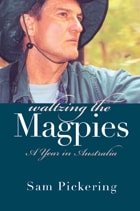
Waltzing the Magpies
A Year in AustraliaSam Pickering
University of Michigan Press, 2004
"The art of the essay as delivered by Mr. Pickering is the art of the front porch ramble."
---The New York Times Book Review
"Reading Pickering . . . is like taking a walk with your oldest, wittiest friend."
---Smithsonian
"What a joy it is to 'mess around' with Professor Sam Pickering!"
---The Chattanooga Times
"Pickering is a barefoot observer of the quotidian who revels in the spectacle and its gift for surprise, prefers the rumpled to the starched, has raised puttering and messing about to an art form, and wrings from it more than a pennyworth of happiness and a life well lived."
---Kirkus Reviews
The movie Dead Poets Society is where most Americans first met Sam Pickering, the University of Connecticut English professor. Robin Williams plays the lead character (loosely based on Pickering), an idiosyncratic instructor who employs some over-the-top teaching methods to keep his subjects fresh and his students learning.
Fewer know that Pickering is the author of more than 16 books and nearly 200 articles, or that he's inspired thousands of university students to think in new ways. And, while Williams may have captured Pickering's madcap classroom antics, he didn't uncover the other side of the author-Sam Pickering as one of our great American men of letters. Like the music of Mozart, the painting of Picasso, or the poetry of Emily Dickinson, you can spot Pickering's writing a mile away; there's no mistaking the Pickering pen. As an ample demonstration of the author's literary gifts, Waltzing the Magpies is his unabashedly lush and Technicolor travelogue from Down Under.
On the face of it, Waltzing is the chronicle of a sabbatical year spent with family in Australia. Yet beneath the surface Pickering's big themes-family, nature, seizing the moment-move in a powerful current that frequently bursts out in moments of ecstatic revelation and intense sensual flourish. Through it all Pickering weaves stories from his fictional Southern town of Carthage, Tennessee, especially when the goings of the outside world get rough.
Waltzing the Magpies is classic Pickering at the height of his literary powers, and places him in the company of such great American essayists as E. B. White and James Thurber, but with an irony and observational prowess that is pure Pickering.
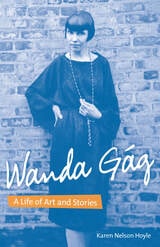
Wanda Gág
A Life of Art and StoriesKaren Nelson Hoyle
University of Minnesota Press, 2009
Now in paper.
At the young age of just 15, Wanda Gág received her dying father's last wish that she take up his dream of becoming a successful artist: "What papa couldn't do, Wanda would have to finish." Wanda assumed the role of head of the household and became the sole means of support for her sick mother and six siblings. Although times were tough, Wanda persevered and eventually became a celebrated artist and author living in New York City.
Karen Nelson Hoyle tells the story of Wanda Gág's eccentric life as a children's book author and traces the significant contributions she made to the genre. Drawn from extensive research of the artist's personal and professional papers and correspondence with friends and contemporaries, Hoyle presents a rich portrait of a gifted artist.
Wandering Time
Western NotebooksLuis Alberto Urrea
University of Arizona Press, 1999
Fleeing a failed marriage and haunted by ghosts of his past, Luis Alberto Urrea jumped into his car and headed west. Driving cross-country with a cat named Rest Stop, Urrea wandered the West from one year’s spring through the next.
Hiking into aspen forests where leaves “shiver and tinkle like bells” and poking alongside creeks in the Rockies, he sought solace and wisdom. In the forested mountains he learned not only the names of trees—he learned how to live. As nature opened Urrea’s eyes, writing opened his heart. In journal entries that sparkle with discovery, Urrea ruminates on music, poetry, and the landscape. With wonder and spontaneity, he relates tales of marmots, geese, bears, and fellow travelers. He makes readers feel mountain air “so crisp you feel you could crunch it in your mouth” and reminds us all to experience the magic and healing of small gestures, ordinary people, and common creatures.
Urrea has been heralded as one of the most talented writers of his generation. In poems, novels, and nonfiction, he has explored issues of family, race, language, and poverty with candor, compassion, and often astonishing power. Wandering Time offers his most intimate work to date, a luminous account of his own search for healing and redemption.
Wanderlust
The Amazing Ida Pfeiffer, the First Female TouristJohn van Wyhe
National University of Singapore Press, 2019
In 1797 in Vienna, Ida Pfeiffer was born into a world that should have been too small for her dreams. The daughter of an Austrian merchant, she made clear from an early age that she would not be bound by convention, dressing in boys’ clothing and playing sports. After her tutor introduced her to stories of faraway lands, she became determined to see the world first-hand. This determination led to a lifetime of travel—much of it alone—and made her one of the most famous women of the nineteenth century.
Pfeiffer faced many obstacles, not least expectations of her gender. She was a typical nineteenth century housewife with a husband and two sons. She was not wealthy nor well connected. Yet after the death of her husband, and once her sons were grown and settled, at the age of forty-one she set off on her first journey, not telling anyone the true extent of her travel plans. Between that trip and her death in 1858, she would barely pause for breath, circling the globe twice—the first woman to do so—and publishing numerous popular books about her travels. Usually traveling solo, Pfeiffer faced storms at sea, trackless deserts, plague, malaria, earthquakes, robbers, murderers, and other risks.
In Wanderlust, John Van Wyhe tells Pfeiffer’s story, with generous excerpts from her published accounts, tell of her involvement with spies, international intrigue, and more. The result is a compelling portrait of the remarkable life of a pioneer unjustly forgotten.
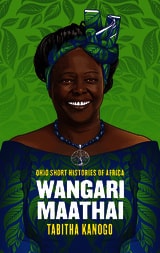
Wangari Maathai
Tabitha Kanogo
Ohio University Press, 2020
Wangari Muta Maathai is one of Africa’s most celebrated female activists. Originally trained as a scientist in Kenya and abroad, Professor Maathai returned to her home country of Kenya with a renewed political consciousness. There, she began her long career as an activist, campaigning for environmental and social justice while speaking out against government corruption. In 2004, Maathai was awarded the Nobel Peace Prize for her leadership of the Green Belt Movement, a conservation effort that resulted in the restoration of African forests decimated during the colonial era.
In this biography, Tabitha Kanogo follows Wangari Maathai from her modest, rural Kenyan upbringing to her rise as a national figure campaigning for environmental and ecological conservation, sustainable development, democracy, human rights, gender equality, and the eradication of poverty until her death in 2011.
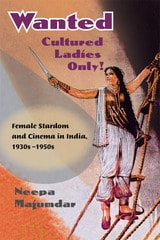
Wanted Cultured Ladies Only!
Female Stardom and Cinema in India, 1930s-1950sNeepa Majumdar
University of Illinois Press, 2008
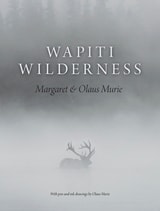
Wapiti Wilderness
Margaret Murie
University Press of Colorado, 1987
For over 37 years, Margaret and Olaus Murie made their home in the mountainous wilderness of the Tetons, where Olaus Murie conducted his famous studies of the American elk: the wapiti. Through these years their home was almost a nature-conservation shrine to thousands of Americans interested in outdoors, animals, and nature. Wapiti Wilderness, begun by Mrs. Murie as a sequel to her book Two in the Far North, which told of the Muries' life and expeditions in Alaska, became a collaborative effort by both the Muries.
In alternate chapters, Olaus tells of his work as a field biologist for the old U.S. Bureau of Biological Survey and recounts stories of his studies of not only elk but also other great animals. And Mrs. Murie, from her side, describes their life together on the trail and in the various camps and nature adventures in that wilderness during all four seasons. The book is replete with stories of Jackson Hole residents, “pioneer poets,” and the wild creatures that made their way into the Murie household. Olaus Murie's evocative pen-and-ink drawings illuminate each chapter, and four pages of photographs help complete the picture of what life was like in the wapiti wilderness.
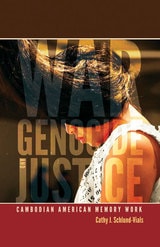
War, Genocide, and Justice
Cambodian American Memory WorkCathy J. Schlund-Vials
University of Minnesota Press, 2012
In the three years, eight months, and twenty days of the Khmer Rouge’s deadly reign over Cambodia, an estimated 1.7 million Cambodians perished as a result of forced labor, execution, starvation, and disease. Despite the passage of more than thirty years, two regime shifts, and a contested U.N. intervention, only one former Khmer Rouge official has been successfully tried and sentenced for crimes against humanity in an international court of law to date. It is against this background of war, genocide, and denied justice that Cathy J. Schlund-Vials explores the work of 1.5-generation Cambodian American artists and writers.
Drawing on what James Young labels “memory work”—the collected articulation of large-scale human loss—War, Genocide, and Justice investigates the remembrance work of Cambodian American cultural producers through film, memoir, and music. Schlund-Vials includes interviews with artists such as Anida Yoeu Ali, praCh Ly, Sambath Hy, and Socheata Poeuv. Alongside the enduring legacy of the Killing Fields and post-9/11 deportations of Cambodian American youth, artists potently reimagine alternative sites for memorialization, reclamation, and justice. Traversing borders, these artists generate forms of genocidal remembrance that combat amnesic politics and revise citizenship practices in the United States and Cambodia.
Engaged in politicized acts of resistance, individually produced and communally consumed, Cambodian American memory work represents a significant and previously unexamined site of Asian American critique.
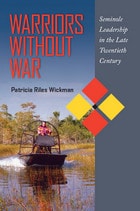
Warriors Without War
Seminole Leadership in the Late Twentieth CenturyPatricia Riles Wickman
University of Alabama Press, 2012
Warriors Without War takes readers beneath the placid waters of the Seminole’s public image and into the fascinating depths of Seminole society and politics.
Warriors for Social Justice and Equality
Maria Jimenez of Houston and Mexican American ActivismLinda J. Quintanilla
University of North Texas Press, 2025
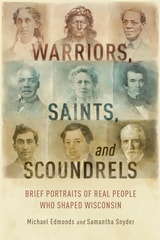
Warriors, Saints, and Scoundrels
Brief Portraits of Real People Who Shaped WisconsinMichael Edmonds
Wisconsin Historical Society Press, 2017
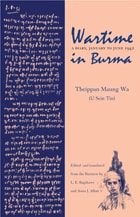
Wartime in Burma
A Diary, January to June 1942Theippan Maung Wa
Ohio University Press, 2009
This diary, begun after the Japanese attack on Pearl Harbor and covering the invasion of Burma up to June 1942, is a moving account of the dilemmas faced by the well-loved and prolific Burmese author Theippan Maung Wa (a pseudonym of U Sein Tin) and his family. At the time of the Japanese invasion, U Sein Tin was deputy secretary in the Ministry of Home and Defense Affairs. An Oxford-trained member of the Indian Civil Service, working for the British administration on the eve of the invasion, he lived with his wife and three small children in Rangoon.
Wartime in Burma is a stirring memoir that presents a personal account of U Sein Tin’s feelings about the war, his anxiety for the safety of his family, the bombing of Rangoon, and what happened to them during the next six chaotic months of the British retreat. The author and his family leave Rangoon to live in a remote forest in Upper Burma with several other Burmese civil servants, their staff, and valuable possessions—rich pickings for robbers. His diary ends abruptly on June 5, his forty-second birthday; U Sein Tin was murdered on June 6 by a gang of Burmese bandits. The diary pages, scattered on the floor of the house, were rescued by his wife and eventually published in Burma in 1966. What survives is a unique account that shines new light on the military retreat from Burma.
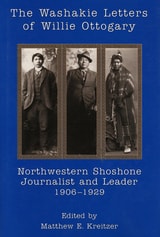
Washakie Letters Of Willie Ottogary
Matthew Kreitzer
Utah State University Press, 2000
Writings by American Indians from the early twentieth century or earlier are rare. Willie Ottogary's letters have the distinction of being firsthand reports of an Indian community's ongoing social life by a community member and leader. The Northwestern Shoshone residing at the Washakie colony in northern Utah descended from survivors of the Bear River Massacre. Most had converted to the Mormon Church and remained in northern Utah rather than moving to a federal Indian reservation. For over twenty years, local newspapers in Utah and southern Idaho regularly published letters from Ottogary reporting happenings-personal milestones and health crises, comings and goings, social events, economic conditions and activities, efforts at political redress-at Washakie and other Shoshone communities in the intermountain West.
Matthew Kreitzer compiled and edited the letters of Ottogary and added historical commentary and appendices, biographical data on individuals Ottogary mentioned, and eighty-five rare historical photographs. Written in a vernacular English and printed unedited in the newspapers, the letters describe a society in cultural transition and present Ottogary's distinctively Shoshone point of view on anything affecting his people. Thus, they provide an unusual picture of Shoshone life through a critical period, a time when many Indian communities reached a historical nadir. While the letters unflinchingly report the many difficulties and challenges the Shoshone faced, they portray a vital and dynamic society, whose members led full lives and actively pursued their own interests. Ottogary lobbied constantly for Shoshone rights, forging alliances with Shoshone throughout the region, visiting Washington D.C., advocating legislation, and participating in Goshute-Western Shoshone draft resistance during World War I.
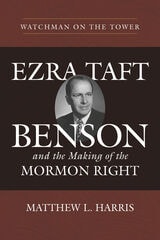
Watchman on the Tower
Ezra Taft Benson and the Making of the Mormon RightMatthew L. Harris
University of Utah Press, 2020
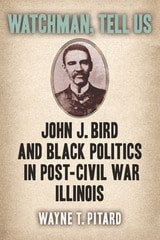
Watchman, Tell Us
John J. Bird and Black Politics in Post-Civil War IllinoisWayne T. Pitard
Southern Illinois University Press, 2024
The most influential Black leader in 19th century southern Illinois
This key biography of John J. Bird unveils the forgotten story of a remarkable Black political figure in post-Civil War Illinois. Emerging as a leader in Cairo, the city with Illinois’ second-largest Black community, Bird played a pivotal role in advancing civil rights within the state, also becoming Illinois’ first Black elected judge and first Black trustee of the University of Illinois. Watchman, Tell Us deftly examines Bird’s lifetime of service and advocacy for a vulnerable community and the ways in which he successfully advocated for and protected voting rights, educational opportunity, and public access for the Black residents of southern Illinois.
Bird arrived in Cairo at age twenty during the Civil War to aid the 2,000 Black refugees from the South living there. By 1870, he had established the city’s substantial Black Republican wing, providing the Black community with unprecedented political influence in this hostile, majority white, Democratic town. Under Bird’s leadership, the Black Republicans pressed for policies that improved the well-being of the African American population, including the early establishment of a Black public school, the rise of an integrated judicial system, and the ability to access public and private businesses. Bird became influential across Illinois as a judge and university trustee, a leader in the Black convention movement, and a significant newspaper editor in Cairo and Springfield. When Bird died in 1912, the nation he loved had once again betrayed its Black citizens, and it appeared that most of the achievements he had fought for had collapsed. But the work of Bird and the other civil rights workers of the nineteenth century created the foundation upon which the movements of the twentieth century could stand.
Water Mask
Monica Devine
University of Alaska Press, 2019
Water Thicker Than Blood
A Memoir of a Post-Internment ChildhoodGeorge Uba
Temple University Press, 2022
“I thought my life began in Chicago. I was mistaken. That is where my body first made its appearance, but the contours of my life…had their start much sooner.”
In Water Thicker Than Blood, poet and professor George Uba traces his life as a Japanese American born in the late 1940s, a period of insidious anti-Japanese racism. His beautiful, impressionist memoir chronicles how he, like many Sansei (and Nisei) across the United States, grappled with dislocation and trauma while seeking acceptance and belonging.
Uba’s personal account of his efforts to achieve normality and assuage guilt unfolds as racial demographics in America are shifting. He struggled with inherently violent midcentury educational and childrearing practices and a family health crisis, along with bullying. Uba describes boy scouts and yogore (community rebels and castoffs) with vivid detail, using these vignettes to show how margins were blurred and how both sets of youth experienced injury through the same ideological pressures.
Water Thicker Than Blood is not a conventional story about recovery or family reconciliation. But itoffers an intimate look at the lasting—in some ways irreversible—damage caused by post-internment ideologies of “being accepted” and “fitting in inconspicuously.” It speaks volumes for the greater Sansei post-internment experience.
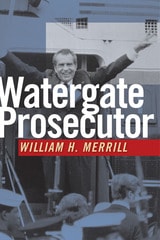
Watergate Prosecutor
William H. Merrill
Michigan State University Press, 2008
DC. Both of these crimes were eventually traced back to the "plumbers unit," which was directed by John Ehrlichman, President Nixon's top domestic aide. As he convincingly recounts, Merrill sought the job as Assistant Special Prosecutor for one reason: to bring these criminals to justice. In addition, as this revelatory account makes clear, he pursued that goal tenaciously.

Waters of the World
The Story of the Scientists Who Unraveled the Mysteries of Our Oceans, Atmosphere, and Ice Sheets and Made the Planet WholeSarah Dry
University of Chicago Press, 2019
From the glaciers of the Alps to the towering cumulonimbus clouds of the Caribbean and the unexpectedly chaotic flows of the North Atlantic, Waters of the World is a tour through 150 years of the history of a significant but underappreciated idea: that the Earth has a global climate system made up of interconnected parts, constantly changing on all scales of both time and space. A prerequisite for the discovery of global warming and climate change, this idea was forged by scientists studying water in its myriad forms. This is their story.
Linking the history of the planet with the lives of those who studied it, Sarah Dry follows the remarkable scientists who summited volcanic peaks to peer through an atmosphere’s worth of water vapor, cored mile-thick ice sheets to uncover the Earth’s ancient climate history, and flew inside storm clouds to understand how small changes in energy can produce both massive storms and the general circulation of the Earth’s atmosphere. Each toiled on his or her own corner of the planetary puzzle. Gradually, their cumulative discoveries coalesced into a unified working theory of our planet’s climate.
We now call this field climate science, and in recent years it has provoked great passions, anxieties, and warnings. But no less than the object of its study, the science of water and climate is—and always has been—evolving. By revealing the complexity of this history, Waters of the World delivers a better understanding of our planet’s climate at a time when we need it the most.
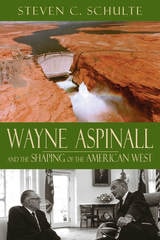
Wayne Aspinall and the Shaping of the American West
Steven C. Schulte
University Press of Colorado, 2002
In Wayne Aspinall and the Shaping of the American West, Steven C. Schulte details a political career that encompassed some of the most crucial years in the development of the twentieth-century West. As chairman of the House Interior and Insular Affairs Committee from 1959 to 1973, Aspinall shaped the nation's reclamation, land, wilderness, and natural resource policies. His crusty and dtermined personality was at the enter of some of the key environmental battles of the twentieth century, including the Echo Park Dam fight, the struggle for the Wilderness Act, and the long controversy over the Central Arizona Project.
Wayward Threads
Robert Goldmann
Northwestern University Press, 1998
We Are All Armenian
Voices from the DiasporaEdited by Aram Mrjoian
University of Texas Press, 2023
A collection of essays about Armenian identity and belonging in the diaspora.
In the century since the Armenian Genocide, Armenian survivors and their descendants have written of a vast range of experiences using storytelling and activism, two important aspects of Armenian culture. Wrestling with questions of home and self, diasporan Armenian writers bear the burden of repeatedly telling their history, as it remains widely erased and obfuscated. Telling this history requires a tangled balance of contextualizing the past and reporting on the present, of respecting a culture even while feeling lost within it.
We Are All Armenian brings together established and emerging Armenian authors to reflect on the complications of Armenian ethnic identity today. These personal essays elevate diasporic voices that have been historically silenced inside and outside of their communities, including queer, multiracial, and multiethnic writers. The eighteen contributors to this contemporary anthology explore issues of displacement, assimilation, inheritance, and broader definitions of home. Through engaging creative nonfiction, many of them question what it is to be Armenian enough inside an often unacknowledged community.
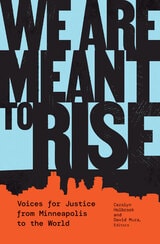
We Are Meant to Rise
Voices for Justice from Minneapolis to the WorldCarolyn Holbrook
University of Minnesota Press, 2021
A brilliant and rich gathering of voices on the American experience of this past year and beyond, from Indigenous writers and writers of color from Minnesota
In this significant collection, Indigenous writers and writers of color bear witness to one of the most unsettling years in the history of the United States. Essays and poems vividly reflect and comment on the traumas we endured in 2020, beginning with the arrival of the COVID-19 pandemic crisis, deepened by the blatant murder of George Floyd by Minneapolis police officers and the uprisings that immersed our city into the epicenter of passionate, worldwide demands for justice. In inspired and incisive writing these contributors speak unvarnished truths not only to the original and pernicious racism threaded through the American experience but also to the deeply personal, in essays about family, loss, food culture, economic security, and mental health. Their call and response is united here to rise and be heard.
We Are Meant to Rise lifts up the astonishing variety of BIPOC writers in Minnesota. From authors with international reputations to newly emerging voices, it features people from many cultures, including Indigenous Dakota and Anishinaabe, African American, Hmong, Somali, Afghani, Lebanese, Korean, Vietnamese, Japanese, Puerto Rican, Colombian, Mexican, transracial adoptees, mixed race, and LGBTQ+ perspectives. Most of the contributors have participated in More Than a Single Story, a popular and insightful conversation series in Minneapolis that features Indigenous and people of color speaking on what most concerns their communities.
We Are Meant to Rise meets the events of the day, the year, the centuries before, again and again, with powerful testament to the intrinsic and unique value of the human voice.
Contributors: Suleiman Adan, Mary Moore Easter, Louise Erdrich, Anika Fajardo, Safy-Hallan Farah, Said Farah, Sherrie Fernandez-Williams, Pamela R. Fletcher Bush, Shannon Gibney, Kathryn Haddad, Tish Jones, Ezekiel Joubert III, Douglas Kearney, Ed Bok Lee, Ricardo Levins Morales, Arleta Little, Resmaa Menakem, Tess Montgomery, Ahmad Qais Munhazim, Melissa Olson, Alexs Pate, Bao Phi, Mona Susan Power, Samantha Sencer-Mura, Said Shaiye, Erin Sharkey, Sun Yung Shin, Michael Torres, Diane Wilson, Kao Kalia Yang, and Kevin Yang.
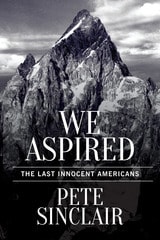
We Aspired
The Last Innocent AmericansPete Sinclair
University of Utah Press, 2017
Imbued with a sense of place, Pete Sinclair climbed mountains and rescued others trying the same. He thrived on the risky business of ascending sheer rock, of moving from one adrenaline-boosting moment to another. In this book he recounts his mountain-climbing and park ranger days from 1959 to 1970, a time some people call a golden era of climbing in America, a time when climbers knew one another and frequently gathered in Grand Teton National Park. There, Sinclair was the ranger in charge of mountain rescue, a job that, especially when it involved the North Face of Grand Teton, drew on all his young team’s climbing skills. Mixing adventure with personal reflection, Sinclair recounts expeditions taken with friends to scale mountains in Alaska, Mexico, and other parts of North America, as well as his work rescuing injured climbers in the Tetons. The book serves as a history of a past era in mountaineering as well as a meditation on what it all meant. Throughout the book, he challenges readers to consider their relationship with the western landscape. Originally published in 1993, We Aspired was a finalist for the Boardman-Tasker Award for Mountain Literature. The account of one famous rescue on the North Face of the Grand Teton is retold in The Grand Rescue, a film by independent Utah producer Jenny Wilson.
We Carry Smoke and Paper
Essays on the Grief and Hope of ConversionMelody S. Gee
University of Iowa Press, 2024
In essays that explore the parallels between conversion and language acquisition, isolated liturgies, cultural inheritances, stalled initiations, disrupted storytelling, and adoption, Gee examines conversion’s grief and hope, losses and gains, hauntings and promises. We Carry Smoke and Paper is a memoir about what we owe to those who sacrifice everything for us, and it is about the many conversions in a lifetime that turn our heads via whispers and shouts, calling us to ourselves.
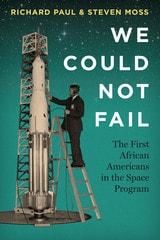
We Could Not Fail
The First African Americans in the Space ProgramBy Richard Paul and Steven Moss
University of Texas Press, 2015
The Space Age began just as the struggle for civil rights forced Americans to confront the long and bitter legacy of slavery, discrimination, and violence against African Americans. Presidents John F. Kennedy and Lyndon Johnson utilized the space program as an agent for social change, using federal equal employment opportunity laws to open workplaces at NASA and NASA contractors to African Americans while creating thousands of research and technology jobs in the Deep South to ameliorate poverty. We Could Not Fail tells the inspiring, largely unknown story of how shooting for the stars helped to overcome segregation on earth.
Richard Paul and Steven Moss profile ten pioneer African American space workers whose stories illustrate the role NASA and the space program played in promoting civil rights. They recount how these technicians, mathematicians, engineers, and an astronaut candidate surmounted barriers to move, in some cases literally, from the cotton fields to the launching pad. The authors vividly describe what it was like to be the sole African American in a NASA work group and how these brave and determined men also helped to transform Southern society by integrating colleges, patenting new inventions, holding elective office, and reviving and governing defunct towns. Adding new names to the roster of civil rights heroes and a new chapter to the story of space exploration, We Could Not Fail demonstrates how African Americans broke the color barrier by competing successfully at the highest level of American intellectual and technological achievement.
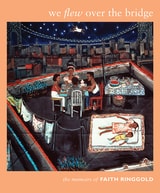
We Flew over the Bridge
The Memoirs of Faith RinggoldFaith Ringgold
Duke University Press, 2005
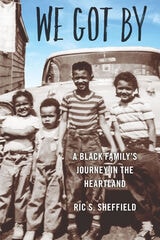
We Got By
A Black Family’s Journey in the HeartlandRic S. Sheffield
The Ohio State University Press, 2022
Spanning four generations and assessing the legacies of traumatic events (arrests, murders, suicide) that are inextricable from the racial dynamics of the small community his family called home, this gripping memoir is a heartfelt, clear-eyed, and rare chronicle of Black life in the rural Midwest. Experiencing the burden of racism among people who refused to accept that such a thing existed only made the isolation feel that much worse to Sheffield and his relatives. And yet, they overcame the obstacles and managed to persist: they got by.