Results by title
72 books match the query 'Blues' and 4 start with w
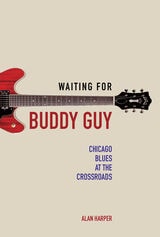
Waiting for Buddy Guy
Chicago Blues at the CrossroadsAlan Harper
University of Illinois Press, 2016
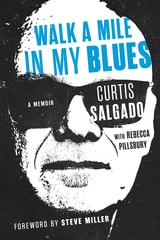
Walk a Mile in My Blues
A MemoirCurtis Salgado with Rebecca Pillsbury; Foreword by Steve Miller
University of Illinois Press, 2027
In this memoir, Salgado shares stories of his career against the backdrop of encounters with music legends, the Oregon scene’s cultural heyday, and his journey to overcome addiction and life-threatening health challenges. His poignant and at times humorous stories of touring and playing with artists like Robert Cray, Muddy Waters, Cab Calloway, and Stevie Ray Vaughan fuse with an invitation to embrace the blues and soul music that shaped his life and help define America.
Walk a Mile in My Blues shares the hidden and heartfelt story of a musical legend, living and loving the blues.
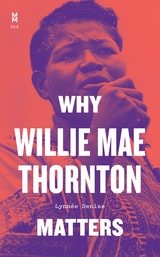
Why Willie Mae Thornton Matters
Lynnée Denise
University of Texas Press, 2023
Finalist, 2024 Lesbian Memoir/Biography, Lambda Literary Award for Arts and Culture
Winner — Walter & Lillian Lowenfels Criticism Award, 45th Annual American Book Awards, Before Columbus Foundation
A queer, Black “biography in essays” about the performer who gave us “Hound Dog,” “Ball and Chain,” and other songs that changed the course of American music.
Born in Alabama in 1926, raised in the church, appropriated by white performers, buried in an indigent’s grave—Willie Mae “Big Mama” Thornton's life events epitomize the blues—but Lynnée Denise pushes past the stereotypes to read Thornton’s life through a Black, queer, feminist lens and reveal an artist who was an innovator across her four-decade-long career.
Why Willie Mae Thornton Matters “samples” elements of Thornton’s art—and, occasionally, the author’s own story—to create “a biography in essays” that explores the life of its subject as a DJ might dig through a crate of records. Denise connects Thornton’s vaudevillesque performances in Sammy Green’s Hot Harlem Revue to the vocal improvisations that made “Hound Dog” a hit for Peacock Records (and later for Elvis Presley), injecting music criticism into what’s often framed as a cautionary tale of record-industry racism. She interprets Thornton’s performing in men’s suits as both a sly, Little Richard–like queering of the Chitlin Circuit and a simple preference for pants over dresses that didn’t have a pocket for her harmonica. Most radical of all, she refers to her subject by her given name rather than "Big Mama," a nickname bestowed upon her by a white man. It's a deliberate and crucial act of reclamation, because in the name of Willie Mae Thornton is the sound of Black musical resilience.

Write Me a Few of Your Lines
A Blues ReaderSteven C. Tracy
University of Massachusetts Press, 1999
Among the signal achievements of African American culture is the style of music known as the blues, an art form evolved from southern black songs of the late nineteenth century. From the field hollers and steel-bodied guitar of its early days to the electric amplification of today's performers, the visceral power of the blues has long been celebrated for its creativity, spontaneity, and ingenuity. It has served as a wellspring for other forms of music, including gospel, jazz, rhythm and blues, soul, rock, and rap, and has exerted an influence on literature and the visual arts as well.
This book brings together some of the most significant writings about the blues published between 1911 and 1998. Included are selections by folklorists, anthropologists, sociologists, literary artists, musicians, critics, and aficionados. The extraordinary appeal of the blues is reflected in the range of contributors to this volume, among them Howard W. Odum, Alan Lomax, Richard Alan Waterman, Langston Hughes, Paul Oliver, Sam Charters, Janheinz Jahn, James Baldwin, Leroi Jones, Charles Keil, Jeff Todd Titon, Houston Baker, Hazel Carby, and Angela Davis. From these various perspectives emerges a new understanding of the blues: its origins in African aesthetics; the impact of slavery and Reconstruction; its early folk manifestations; and the importance of religion, style, gender, audience, protest, and the record business in its development as an art form. Further context is provided by a comprehensive introduction, section overviews, and an extensive bibliography, discography, and videography of blues materials.