Results by title
171 books match the query 'Books & Reading' and 12 start with w
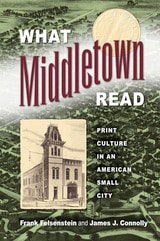
What Middletown Read
Print Culture in an American Small CityFrank Felsenstein
University of Massachusetts Press, 2015
The discovery of a large cache of circulation records from the Muncie, Indiana, Public Library in 2003 offers unprecedented detail about American reading behavior at the turn of the twentieth century. Frank Felsenstein and James J. Connolly have mined these records to produce an in-depth account of print culture in Muncie, the city featured in the famed “Middletown” studies conducted by Robert and Helen Lynd almost a century ago. Using the data assembled and made public through the What Middletown Read Database (www.bsu.edu/libraries/wmr), a celebrated new resource the authors helped launch, Felsenstein and Connolly analyze the borrowing choices and reading culture of social groups and individuals.
What Middletown Read is much more than a statistical study. Felsenstein and Connolly dig into diaries, meeting minutes, newspaper reports, and local histories to trace the library's development in relation to the city's cosmopolitan aspirations, to profile individual readers, and to explore such topics as the relationship between children's reading and their schooling and what books were discussed by local women's clubs. The authors situate borrowing patterns and reading behavior within the contexts of a rapidly growing, culturally ambitious small city, an evolving public library, an expanding market for print, and the broad social changes that accompanied industrialization in the United States. The result is a rich, revealing portrait of the place of reading in an emblematic American community.
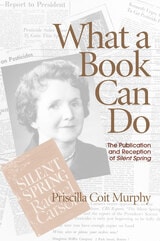
What a Book Can Do
The Publication and Reception of "Silent Spring"Priscilla Coit Murphy
University of Massachusetts Press, 2005
Murphy reviews the publishing history of the Houghton Mifflin edition and the prior New Yorker serialization, describing Carson's approach to her project as well as the views and expectations of her editors. She also documents the response of opponents to Carson's message, notably the powerful chemical industry, including efforts to undermine, delay, or stop publication altogether.
Murphy then investigates the media's role, showing that it went well beyond providing a forum for debate. In addition, she analyzes the perceptions and expectations of the public at large regarding the book, the debate, and the media. By probing all of these perspectives, Murphy sheds new light on the dynamic between newsmaking books, the media, and the public. In the process, she addresses a host of broader questions about the place of books in American culture, past, present, and future.
Where the Muses Still Haunt
The Second ReadingAnne Drury Hall
St. Augustine's Press, 2022
After leaving school and becoming lost in adulthood, can one return to these books and revive the quest to be great? For this is why we call such books "great". Yet as Hall says, "few people use the phrase 'great books' any more except ironically, because there is an odd view in the current intellectual fog that there is no such thing as 'greatness'". She is compelled, then, to reexamine the so-called great books and make the case for their eternal importance. It is a task that requires not only swimming against the disenchanted march of the post-modern reader into adulthood, but also asserting the unthinkable––namely, that great books were written by great men who achieved this status through their own labor and endurance.
Hall reintroduces the reader to Plato, Homer, Chaucer, Shakespeare, Milton and Melville and hopes this will expose the fraud of most of contemporary literature, and encourage taste and stamina for the works that promise to exhilarate. And Hall argues well that the thrill of these books draws from one shared feature: "The heart of these books is the drama of choice." If Roger Scruton is famous for showing us that ideas have consequences, Hall provides the reader the vision of himself as standing on the brink and the urgency of taking life seriously again. For many this means taking books seriously again.
This book is an important companion to the works treated therein, for teachers and students alike. Both need encouragement in the laboring of instruction or reading the impressive classics. Particularly apt is Hall's treatment of the difficulty of teaching Shakespeare. For the not-so-recent university graduate, perhaps this book will bring him once again to wander where the Muses still haunt. Indeed, even the well-read will enjoy Hall's keen interpretation of the glory of these stories. This is a book written by a true teacher.
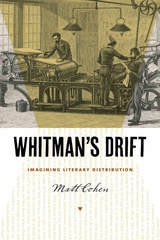
Whitman's Drift
Imagining Literary DistributionMatt Cohen
University of Iowa Press, 2017
Still, as the budding poet learned, books neither sell themselves nor move themselves: without an efficient set of connections to get books to readers, the democratic media-saturated future Whitman imagined would have remained warehoused. Whitman’s works sometimes ran through the “many-cylinder’d steam printing press” and were carried in bulk on “the strong and quick locomotive.” Yet during his career, his publications did not follow a progressive path toward mass production and distribution. Even at the end of his life, in the 1890s as his fame was growing, the poet was selling copies of his latest works by hand to visitors at his small house in Camden, New Jersey. Mass media and centralization were only one part of the rich media world that Whitman embraced.
Whitman’s Drift asks how the many options for distributing books and newspapers shaped the way writers wrote and readers read. Writers like Whitman spoke to the imagination inspired by media transformations by calling attention to connectedness, to how literature not only moves us emotionally, but moves around in the world among people and places. Studying that literature and how it circulated can help us understand not just how to read Whitman’s works and times, but how to understand what is happening to our imaginations now, in the midst of the twenty-first century media explosion.
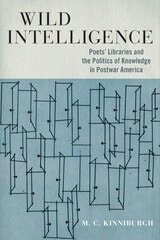
Wild Intelligence
Poets' Libraries and the Politics of Knowledge in Postwar AmericaM. C. Kinniburgh
University of Massachusetts Press, 2022
Information science was a burgeoning field in the early years of the Cold War, and while public and academic libraries acted as significant sites for the information boom, it is unsurprising that McCarthyism and censorship would shape what they granted readers access to and acquired. Wild Intelligence traces a different history of information management, examining the privately assembled collections of poets and their knowledge-building practices at midcentury.
Taking up case studies of four poets who began writing during the 1950s and 1960s, including Charles Olson (1910–1970), Diane di Prima (1934–2020), Gerrit Lansing (1928–2018), and Audre Lorde (1934–1992), M. C. Kinniburgh shows that the postwar American poet’s library should not just be understood according to individual books within their collection but rather as an archival resource that reveals how poets managed knowledge in a growing era of information overload. Exploring traditions and systems that had been overlooked, buried, occulted, or censored, these poets sought to recover a sense of history and chart a way forward.
William March
An Annotated ChecklistRoy S. Simmonds
University of Alabama Press, 1988
This deeply researched reference includes both primary materials, an exhaustive checklist of the forms and editions of each of March’s works, and secondary materials, which include plays and films adapted from March’s writing, biographical and critical articles, doctoral dissertations, and contemporary reviews of March’s work.
The reissue in 2015 of the novels in his Pearl County series—Come in at the Door, The Tallons, and The Looking-Glass—is part of a fresh wave of interest in March, one of the most influential American writers from the mid-1930s until his death in 1954.
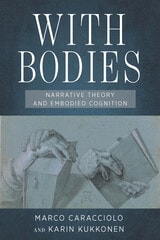
With Bodies
Narrative Theory and Embodied CognitionMarco Caracciolo and Karin Kukkonen
The Ohio State University Press, 2021

Women Rethinking Genres in Early Modern Europe
Simona Lorenzini
University of Delaware Press, 2027
Women Rethinking Genres in Early Modern Europe brings together research rooted in both gender and genre as categories of analysis to illustrate how the two frameworks are inextricably linked in how we understand the experiences of European women who wrote between the fifteenth and seventeenth centuries. Rather than considering genres as prescriptive, in this collection we emphasize that genres can take different forms and are central to the ways in which authors and readers understand and perceive the world. Together, these essays in this volume demonstrate that women authors not only experimented with genres in different ways but also contributed significantly to the development and circulation of ideas in early modern Europe. This volume includes a variety of case studies from different geographical areas within Western Europe that explore the role of gender in the dissemination of genres such as dialogue, poetry, pastoral, novellas, devotional literature, epic poems, account books, scientific treatises, and fictional romances. In doing so, the essays here contribute to scholarship on marginalized and less studied aspects of early modern female culture.
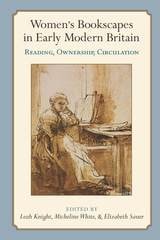
Women’s Bookscapes in Early Modern Britain
Reading, Ownership, CirculationLeah Knight, Micheline White, and Elizabeth Sauer, Editors
University of Michigan Press, 2018
Women in 16th- and 17th-century Britain read, annotated, circulated, inventoried, cherished, criticized, prescribed, and proscribed books in various historically distinctive ways. Yet, unlike that of their male counterparts, the study of women’s reading practices and book ownership has been an elusive and largely overlooked field.
In thirteen probing essays, Women’s Bookscapesin Early Modern Britain brings together the work of internationally renowned scholars investigating key questions about early modern British women’s figurative, material, and cultural relationships with books. What constitutes evidence of women’s readerly engagement? How did women use books to achieve personal, political, religious, literary, economic, social, familial, or communal goals? How does new evidence of women’s libraries and book usage challenge received ideas about gender in relation to knowledge, education, confessional affiliations, family ties, and sociability? How do digital tools offer new possibilities for the recovery of information on early modern women readers?
The volume’s three-part structure highlights case studies of individual readers and their libraries; analyses of readers and readership in the context of their interpretive communities; and new types of scholarly evidence—lists of confiscated books and convent rules, for example—as well as new methodologies and technologies for ongoing research. These essays dismantle binaries of private and public; reading and writing; female and male literary engagement and production; and ownership and authorship.
Interdisciplinary, timely, cohesive, and concise, this collection’s fresh, revisionary approaches represent substantial contributions to scholarship in early modern material culture; book history and print culture; women’s literary and cultural history; library studies; and reading and collecting practices more generally.
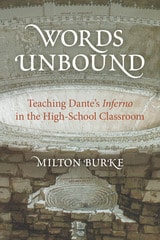
Words Unbound
Teaching Dante's Inferno in the High School ClassroomMilton Burke
University of Arkansas Press, 2017
Words Unbound draws on Milton Burke’s thirty years of teaching experience to help educators bring Inferno alive for today’s young reader. In a conversational, “colleague-to-colleague” style, Burke shares the interpretations, questions, and exercises he found effective in his high-school classroom, emphasizing group discussion to help students, no matter their religious or philosophical moorings, engage meaningfully with the notoriously difficult text.

Wordsworth and the Green Romantics
Affect and Ecology in the Nineteenth CenturyLisa Ottum
University of New Hampshire Press, 2016
Writing in America
Fischer, John
Rutgers University Press, 2018
In this newly reissued volume in the Rutgers University Press Classics Imprint, Writing in America proves to be as stimulating as it was in 1960. Here, writers including Robert Brustein, Stanley Kunitz, and C.P. Snow examine the state of writing in American novels, films, and television candidly and critically. The result is a collection of essays that showcase a first-rate and highly entertaining piece of reporting on the American literary scene that resonate in 2017.