Results by title
379 books match the query 'Botany' and 16 start with w
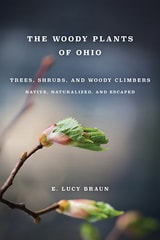
WOODY PLANTS OF OHIO
Trees, Shrubs, and Woody Climbers: Native, Naturalized, and EscapedE. Lucy Braun
The Ohio State University Press, 1989
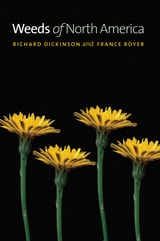
Weeds of North America
Richard Dickinson and France Royer
University of Chicago Press, 2014
Encyclopedic in scope, the book is the first to cover North American weeds at every stage of growth. The book is organized by plant family, and more than five hundred species are featured. Each receives a two-page spread with images and text identification keys. Species are arranged within family alphabetically by scientific name, and entries include vital information on seed viability and germination requirements.
Whether you believe, like Donald Culross Peattie, that “a weed is a plant out of place,” or align with Elizabeth Wheeler Wilcox’s “weeds are but unloved flowers,” Dickinson and Royer provide much-needed background on these intrusive organisms. In the battle with weeds, knowledge truly is power. Weeds of North America is the perfect tool for gardeners, as well as anyone working in the business of weed ecology and control.

Wild Plants for a Sustainable Future
Edited by Tiziana Ulian, César Flores, Rafael Lira, Avhatakali Mamatsharaga, Kebadire K. Mogotsi, Patrick Muthoka, Samodimo Ngwako, Desterio O. Nyamongo, William Omondi, Abdoul K. Sanogo, Sidi Sanogo, and Efisio Mattana
Royal Botanic Gardens, Kew, 2018
The publication forms one of the main dissemination achievements of The MGU–Useful Plants Project, developed under Kew’s Millennium Seed Bank partnership, to conserve and use sustainably wild plants important for rural communities in Botswana, Kenya, Mali, South Africa, and Mexico. Institutional partners led the project in each country, involving rural communities, local authorities, and schools. A scientific approach was applied throughout.
The core of this book presents detailed species profiles of 110 plants selected for their importance to communities and livelihoods. The profiles are structured in a clear and consistent format, providing information on taxonomy and nomenclature, plant descriptions, fruit and seed structures, distribution, habitat, uses, known hazards and safety, conservation status, seed conservation, propagation, and trading, along with key references from the literature.
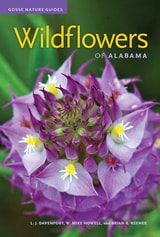
Wildflowers of Alabama
L. J. Davenport, W. Mike Howell, and Brian R. Keener
University of Alabama Press, 2027
A modern, beautifully illustrated guide revealing the hidden relationships, stories, and dazzling diversity of Alabama’s wildflowers across every corner of the state’s landscapes
Wildflowers of Alabama is a comprehensive, visually rich field guide to the state’s naturally occurring flowering plants, showcasing both familiar favorites and remarkable discoveries. Covering 125 plant families and more than 400 species, the book pairs clear, authoritative text with more than 500 color photographs that highlight the beauty, structure, and fine details of each plant across Alabama’s diverse ecosystems.
Organized using a modern, genetics-based classification system, this guide presents flowering plants according to their evolutionary relationships. Each family opens with an accessible overview, followed by detailed species accounts featuring botanical descriptions, insightful photographs, and contextual notes on names, natural history, and plant-human connections when available. A separate color key and native species list offer additional pathways for identification and discovery.
Building on decades of botanical expertise, authors L. J. Davenport, W. Mike Howell, and Brian R. Keener deliver an up-to-date, engaging resource that reflects the current state of plant science. More than a simple identification manual, Wildflowers of Alabama is an educational and inspiring celebration of the state’s extraordinary botanical diversity, designed for enthusiasts, students, and educators alike.

Wildflowers of Wisconsin and the Great Lakes Region
A Comprehensive Field GuideMerel R. Black and Emmet J. Judziewicz
University of Wisconsin Press, 2009
• more than 1,100 species from 459 genera in 100 families
• many rare and previously overlooked species
• 2,100 color photographs and 300 drawings
• Wisconsin distribution maps for almost all plants
• brief descriptions including distinguishing characteristics of the species
• Wisconsin status levels for each species of wildflower (native, invasive, endangered, etc.)
• derivation of Latin names.
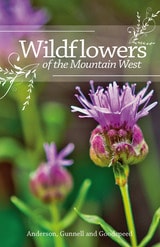
Wildflowers of the Mountain West
Richard M. Anderson, Jay Dee Gunnell, Jerry L. Goodspeed
Utah State University Press, 2012
Many recreational hikers have stopped along the trail to admire a wildflower only to wonder what, exactly, they are looking at. Wildflowers of the Mountain West is a useful field guide that makes flower identification easy for the general outdoor enthusiast.
Many available plant guides are too technical or cumbersome for non-specialists to embrace. Covering New Mexico, Colorado, Wyoming, Idaho, Utah, Nevada and Oregon, this book is perfect for the enthusiasts who has little botanical knowledge but would like to know more about the wildflowers they are seeing. Organized by flower color for easy reference, plant records include the common and scientific names, a description of typical characteristics, habitat information and distribution maps, look-alike species, color photographs, and informative commentary. In addition, the book provides a useful introduction to the Mountain West region, along with line drawings to illustrate basic flower parts, shapes, and arrangements; a glossary of common botanical terms; a quick search key; and an index.
The book is spiral-bound, making it easy to bring along while hiking, backpacking, or biking, and stunning full color photographs make visual confirmation of flower type simple and straightforward.

Wilson's China
A Century OnMark Flanagan and Tony Kirkham
Royal Botanic Gardens, Kew, 2009
Wilson’s China draws on Wilson’s writings and the authors’ own travels in the wild areas of China today to deliver a fascinating account of the pioneering botanist’s travels and adventures. Armed with copies of Wilson’s own glass-plate photos of turn-of-the-century Sichuan Province, Mark Flanagan and Tony Kirkham set out to retrace Wilson’s footsteps—and with the help of Chinese guides and local knowledge, they have created new versions of Wilson’s photos. The resulting then-and-now presentation offers fascinating insight into the widespread change—and remarkable continuity—in China over a century, and serves as an informative, appreciative homage to one of history’s greatest plant hunters.

Wily Violets and Underground Orchids
Revelations of a BotanistPeter Bernhardt
University of Chicago Press, 2003
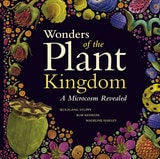
Wonders of the Plant Kingdom
A Microcosm RevealedWolfgang Stuppy, Rob Kesseler, and Madeline Harley
University of Chicago Press, 2015
With Wonders of the Plant Kingdom, the naked eye gets an unforgettable boost. A stunning collaboration between science and art, this gorgeous book presents hundreds of images of plants taken with a scanning electron microscope and hand-colored by artist Rob Kesseler to reveal the awe-inspiring adaptations all around us. The surface of a peach—with its hairs, or trichomes, and sunken stomata, or breathing pores—emerges from these pages in microscopic detail. The dust-like seeds of the smallest cactus species in the world, the Blossfeldia liliputana—which measures just twelve millimeters fully grown—explode here with form, color, and character, while the flower bud of a kaffir lime, cross-sectioned, reveals the complex of a flower bud with the all-important pistil in the center.
Accompanying these extraordinary images are up-to-date explanations of the myriad ways that these plants have ensured their own survival—and, by proxy, our own. Gardeners and science buffs alike will marvel at this wholly new perspective on the world of plant diversity.
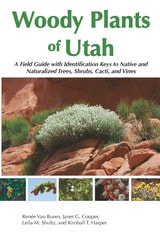
Woody Plants of Utah
A Field Guide with Identification Keys to Native and Naturalized Trees, Shrubs, Cacti, and VinesRenée Van Buren, Janet G. Cooper, Leila M. Shultz, and Kimball T. Harper
Utah State University Press, 2011
A comprehensive guide that includes a vast range of species and plant communities and employs thorough, original keys. Based primarily on vegetative characteristics, the keys don't require that flowers or other reproductive features be present, like many plant guides. And this guide's attention to woody plants as a whole allows one to identify a much greater variety of plants. That especially suits an arid region such as Utah with less diverse native trees. Woody plants are those that have stems that persist above ground even through seasons that don't favor growth, due to low precipitation or temperatures.
Woody Plants of Utah employs dichotomous identification keys that are comparable to a game of twenty questions. They work through a process of elimination by choosing sequential alternatives.
Detailed, illustrated plant descriptions complement the keys and provide additional botanical and environmental information in relation to a useful introductory categorization of Utah plant communities. Supplementary tools include photos, distribution maps, and an illustrated glossary.
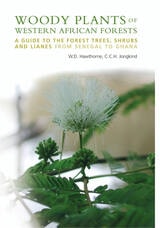
Woody Plants of Western African Forests
A Guide to the Forest Trees, Shrubs and Lianes from Senegal to GhanaWilliam Hawthorne, and Carel Jongkin
Royal Botanic Gardens, Kew, 2006
Laid out as keys and with short descriptions of each species, it contains over 5,600 photographs, line drawings and maps. And, while many guides only offer hints to naming plants when they are not in flower, here the authors have based identification on leaves, bark, shoots, scent ,taste and other characters easily observed at most times.
Funded by the European Union, through its ECOSYN project (based at Wageningen University), which supports forest biodiversity and management in Upper Guinea, this magnificent, beautiful book is an indispensable reference for everyone committed to the conservation and sustainable development of Africa’s forest.
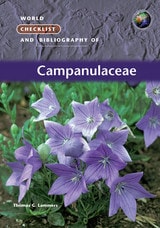
World Checklist and Bibliography of Campanulaceae
Thomas G. Lammers
Royal Botanic Gardens, Kew, 2007
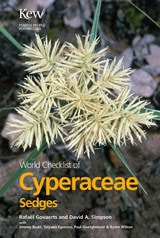
World Checklist of Cyperaceae
Rafael Govaerts and Simpon David
Royal Botanic Gardens, Kew, 2007
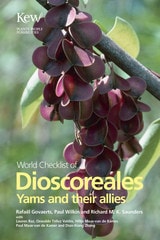
World Checklist of Dioscoreales
Rafael Govaerts, Paul Wilkin, and Richard M. K. Saunders
Royal Botanic Gardens, Kew, 2000
The World Checklist of Dioscoreales lists all validly published names of yams and their allies, providing the source of their publication and indication of which names are currently accepted and which are synonyms, making it a standard nomenclatural reference for further research into this important family.
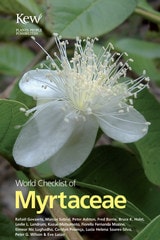
World Checklist of Myrtaceae
Rafael Govaerts, Marcos Sobral, Peter Ashton, and Fred Barrie
Royal Botanic Gardens, Kew, 2008
The World Checklist of Myrtaceae is a much needed work that lists all validly published names in the family, providing the source of their publication and indicating which names are currently accepted and which are synonyms. It will be respected as the standard nomenclatural reference for further research into this important family.

World Checklist of Palms
Rafaël Govaerts and John Dransfield
Royal Botanic Gardens, Kew, 2005