Results by title
198 books match the query 'Campaigns' and 12 start with w
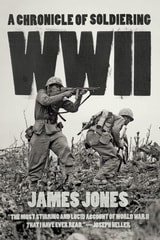
WWII
A Chronicle of SoldieringJames Jones
University of Chicago Press, 1975
Moving chronologically and thematically through the complex history of the conflict, Jones interweaves his own vivid memories of soldiering in the Pacific—from the look on a Japanese fighter pilot’s face as he bombed Pearl Harbor, so close that Jones could see him smile and wave, to hitting the beach under fire in Guadalcanal—while always returning to resounding larger themes. Much of WWII can be read as a tribute to the commitment of American soldiers, but Jones also pulls no punches, bluntly chronicling resentment at the privilege of the officers, questionable strategic choices, wartime suffering, disorganization, the needless loss of life, and the brutal realization that a single soldier is ultimately nothing but a replaceable cog in a heartless machine. As the generation that fought and won World War II leaves the stage, James Jones’s book reminds us of what they accomplished—and what they sacrificed to do so.
War Like the Thunderbolt
The Battle and Burning of AtlantaRussell S. Bonds
Westholme Publishing, 2009
A masterpiece of prose and research, the definitive history of the struggle for Atlanta during the Civil War, an episode immortalized by the novel Gone with the Wind
Called “the greatest event of the Civil War” by New York diarist George Templeton Strong, the epic struggle for the city of Atlanta in the bloody summer of 1864 was a pivotal moment in American history. Union commander William Tecumseh Sherman’s relentless fight for the city secured the reelection of Abraham Lincoln, sealed the fate of the Southern Confederacy, and set a precedent for military campaigns that endures today. Its depiction in the novel and motion picture Gone with the Wind established the fight for Atlanta as an iconic episode in our nation’s most terrible war. In War Like the Thunderbolt: The Battle and Burning of Atlanta, award-winning author Russell S. Bonds takes the reader behind the lines and across the smoky battlefields of Peachtree Creek, Atlanta, Ezra Church, and Jonesboro, and into the lives of fascinating characters, both the famous and the forgotten, including the fiery and brilliant Sherman; General John Bell Hood, the Confederacy’s last hope to defend Atlanta; Benjamin Harrison, the diminutive young Indiana colonel who would rise to become President of the United States; Patrick Cleburne, the Irishmanturned- Southern officer; and ten-year-old diarist Carrie Berry, who bravely withstood and bore witness to the fall of the city. Here also is the dramatic story of the ordeal of Atlanta itself—the five-week artillery bombardment, the expulsion of its civilian population, and the infamous fire that followed. Based on new research in diaries, newspapers, previously unpublished letters, and other archival sources, War Like the Thunderbolt is a combination of captivating narrative and insightful military analysis—a stirring account of the battle and burning of the “Gate City of the South.”
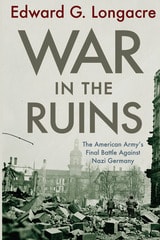
War in the Ruins
The American Army's Final Battle Against Nazi GermanyEdward G. Longacre
Westholme Publishing, 2010
The Last Major Combat for American Troops in Germany During the Final Days of World War II
By April 1945, the last German counteroffensive in the west had been defeated, the vaunted Siegfried Line was no more, the Rhine River had been crossed, and major German cities were being bombed relentlessly. The war in Europe appeared to be in its final stages. As American and British armies overran central Germany, the Russians were smashing their way from the east toward Berlin. Optimism reigned up and down the Allied lines. But as the American Army’s 100th Infantry Division pushed along the west bank of the Neckar River across from bomb-shattered Heilbronn, resistance unexpectedly stiffened. In that 700-year-old city, a major industrial and communications center still operating for the benefit of the Nazi war machine, Hitler’s subordinates had battened down for a last-ditch stand. For sheer ferocity, it would exceed anything the now-battle-hardened Americans had experienced. Here, American troops faced a grueling campaign of house-to-house fighting, with Hitler Youth, Volkssturm militia, and an SS division attempting to stop the American advance at this critical sector of the European theater. Having been repeatedly targeted by Alllied aircraft, the city resembled a vast, Hellish ruin, and as American soldiers inched their way forward, they encountered booby traps, withering sniper fire, deadly Panzerfaust rounds, and a fanatical enemy. The nine-day battle for Heilbronn would be the last major combat for American troops in Europe. Within three weeks of their securing the city, Hitler would be dead and Germany defeated.
In War in the Ruins: The American Army’s Final Battle Against Nazi Germany, Edward G. Longacre recounts this neglected but essential chapter in the history of World War II, describing the 100th Division’s swift but grueling advance through the Vosges Mountains, their Rhine River crossing, the assault on the historic Maginot Line, and the ominous approach to Heilbronn. The author then describes the entire bitter battle and its aftermath, using private letters, journals, German and American action reports, and other primary source material, to establish War in the Ruins as an essential volume in the history of World War II in Europe.
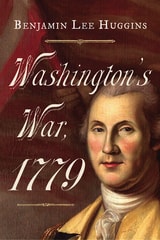
Washington's War 1779
Benjamin Lee Huggins
Westholme Publishing, 2018
Despite great limits of money and manpower, George Washington sought to wage an aggressive war in 1779. He launched the Sullivan–Clinton campaign against Britain’s Iroquois allies in upstate New York, and in response to British attacks up the Hudson River and against coastal Connecticut, he authorized raids on British outposts at Stony Point and Paulus Hook. But given power by Congress to plan and execute operations with the French on a continental scale, Washington planned his boldest campaign. When it appeared that the French would bring a fleet and an army to America, and supported by intelligence from his famed “Culper” spy network, the American commander proposed a joint Franco-American attack on the bastion of British power in North America—New York City—to capture its garrison. Such a blow, he hoped, would end the war in 1779.
Based on extensive primary source material, Washington’s War 1779, by historian Benjamin Lee Huggins, describes Washington’s highly detailed plans and extensive preparations for his potentially decisive Franco-American campaign to defeat the British at New York in the fall of 1779. With an emphasis on Washington's generalship in that year—from strategic and operational planning to logistics to diplomacy—and how it had evolved since the early years of the war, the book also details the other offensive operations in 1779, including the attacks in upstate New York, Stony Point, and Paulus Hook. Although the American and French defeat at Savannah, Georgia, prevented Washington from carrying out his New York offensive, Washington gained valuable experience in planning for joint operations that would help him win at Yorktown two years later.
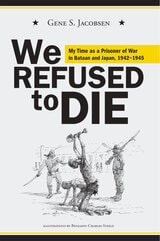
We Refused to Die
My time as a prisoner of war in Bataan and Japan, 1942-1945Gene S Jacobsen
University of Utah Press, 2004
In engaging, direct prose, Jacobsen’s three-and-a-half year experience as a prisoner of war takes the reader on a brutal and harrowing march through hatred and forgiveness, fortitude and freedom. We Refused to Die is an honest memoir that shines light on one of history’s darkest moments.
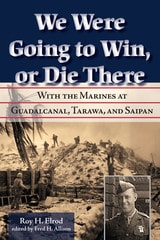
We Were Going to Win, or Die There
Roy H. Elrod
University of North Texas Press, 2017
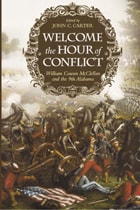
Welcome the Hour of Conflict
William Cowan McClellan and the 9th AlabamaWilliam Cowan McClellan, edited by John C. Carter
University of Alabama Press, 2007
In the Spring of 1861, a 22-year-old Alabamian did what many of his friends and colleagues were doing—he joined the Confederate Army as a volunteer. The first of his family to enlist, William Cowan McClellan, who served as a private in the 9th Alabama Infantry regiment, wrote hundreds of letters throughout the war, often penning for friends who could not write home for themselves. In the letters collected in John C. Carter’s volume, this young soldier comments on his feelings toward his commanding officers, his attitude toward military discipline and camp life, his disdain for the western Confederate armies, and his hopes and fears for the future of the Confederacy.
McClellan’s letters also contain vivid descriptions of camp life, battles, marches, picket duty, and sickness and disease in the army. The correspondence between McClellan and his family dealt with separation due to war as well as with other wartime difficulties such as food shortages, invasion, and occupation. The letters also show the rise and fall of morale on both the home front and on the battlefield, and how they were closely intertwined.
Remarkable for their humor, literacy, and matter-of-fact banter, the letters reveal the attitude a common soldier in the Army of Northern Virginia had toward the day-to-day activity and progression of the war. John C. Carter includes helpful appendixes that list the letters chronologically and offer the regimental roster, casualty/enlistment totals, assignments, and McClellan’s personal military record.
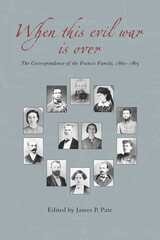
When This Evil War is Over
The Correspondence of the Francis FamilyJames P. Pate
University of Alabama Press, 2006
Six of the seven Francis brothers served in the Confederate army, as did their uncle, four servants, and other kinsmen, and all twelve members of the immediate family of Dr. James Carrington Francis and Amy Ingram Francis—as well as several members of their extended family—are represented in this volume. While the letters refer to the war and the brothers’ military service, they also shed light on this family’s struggle to survive the profound cultural, economic, and political upheaval that ensued.
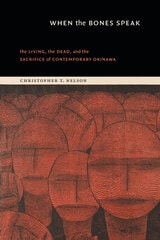
When the Bones Speak
The Living, the Dead, and the Sacrifice of Contemporary OkinawaChristopher T. Nelson
Duke University Press, 2025
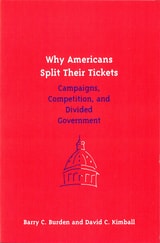
Why Americans Split Their Tickets
Campaigns, Competition, and Divided GovernmentBarry C. Burden and David C. Kimball
University of Michigan Press, 2004
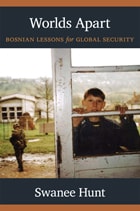
Worlds Apart
Bosnian Lessons for Global SecuritySwanee Hunt
Duke University Press, 2011
Wounded I Am More Awake
Finding Meaning after TerrorJulia Lieblich
Vanderbilt University Press, 2012
This gripping account raises questions for healers, survivors, and readers striving to understand the reality of war and the aftermath of terror. Is it possible to find meaning after enduring crimes against humanity? Can people heal after trauma?
Human rights journalist Julia Lieblich takes the reader through Boskailo's early years under Tito to the wars when friends turned on friends. She documents his harrowing experiences in the camps, where the men he once joined for coffee murder his best friend from childhood.
But the story does not end there. Boskailo moves to the United States and decides to become a psychiatrist so he can guide survivors through the long-term process of restoring hope. Today, inspired by the late psychiatrist and Holocaust survivor Viktor Frankl, Boskailo uses his own experience to help patients mourn their losses and find meaning in the aftermath of terror.