Results by title
332 books match the query 'Canada' and 10 start with w

Whoop-up Country
The Canadian-American West, 1865-1885Paul F. Sharp
University of Minnesota Press, 1955
Whoop-up Country was first published in 1955. Minnesota Archive Editions uses digital technology to make long-unavailable books once again accessible, and are published unaltered from the original University of Minnesota Press editions.
In the frontier days before the railroads penetrated the western plains, the Whoop-Up Trail was a high road of adventure and commerce. It led Indians, traders, and cattlemen into a great interior market stretching northward from the Missouri River in Montana to the Bow River valley in the Canadian province of Alberta. From Fort Benton on the Great Muddy to Fort Macleod on the Oldman, the trail with the rowdy name wrote its history in whisky, guns, furs, and pioneer enterprise.
But, as the Whoop-Up Trail faded away with the passing of the western frontier, people forgot about its existence and its part in the building of the West. Historians have largely overlooked this colorful chapter in the story of westward migration.
Now Paul Sharp tells about the Whoop-Up country in vivid detail. By first describing the region geographically, he demonstrates an important point—that there was no natural boundary in this area between Canada and the United States. He then relates the economic, social, and political events that ultimately divided the territory between the two nations in fact as well as in name.
The volume contains an excellent account of the beginnings of the Northwest Mounted Police. It provides a fresh viewpoint on the Indian problem by considering it impartially and as a whole, without the restricting and artificial limitations of national boundaries. Told by a perceptive and forceful writer, this is the story of the creation of two societies—Canadian and American—formed under similar circumstances yet developing very different political and cultural identities.

Wild Mother Dancing
Maternal Narrative in Canadian LiteratureDi Brandt
University of Manitoba Press, 1993
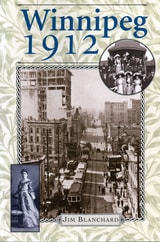
Winnipeg 1912
Jim Blanchard
University of Manitoba Press, 2005
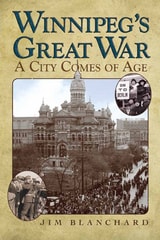
Winnipeg's Great War
A City Comes of AgeJim Blanchard
University of Manitoba Press, 2010
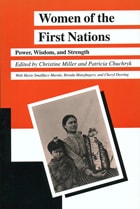
Women of the First Nations
Power, Wisdom, and StrengthChristine Miller
University of Manitoba Press, 1996

Word Rides Again
Rereading The Frontier In American FictionJ. David Stevens
Ohio University Press, 2001
With much recent scholarship polarizing frontier novels into “popular” and “literary” camps, The Word Rides Again challenges the critical orthodoxy that such works have little in common, arguing instead that formulaic Western fictions can subtly (and even subversively) share cultural concerns with more highbrow brethren. Each chapter focuses on a writer who has traditionally been classified as either popular or artistic, reading a representative fictional work against prevailing scholarly trends. In this manner, Bret Harte’s sentimental stories become gender-bending experiments in which women assume male roles and even enjoy lesbian relationships. Owen Wister’s The Virginian is transmuted from a misogynistic diatribe into a complex meditation on the peculiarly American relation of violence to male identity. And even Willa Cather’s Death Comes for the Archbishop, rather than the apotheosis of a religious leader, becomes a somewhat standard version of the popular frontier story.
The Word Rides Again represents a significant departure from more traditional studies of frontier literature. It reaffirms the continuum between popular and literary texts and explores the ways that frontier novels have echoed, endorsed, and extended each other from the inception of the genre.
Words of the Inuit
A Semantic Stroll through a Northern CultureLouis-Jacques Dorais
University of Manitoba Press, 2020
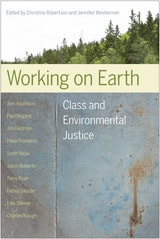
Working on Earth
Class and Environmental JusticeChristina Robertson
University of Nevada Press, 2015
The authors challenge prevailing cultural narratives that separate ecological and human health from the impacts of modern industrial capitalism. Essay themes range from how human survival is linked to nature to how the use and abuse of nature benefit the wealthy elite at the expense of working-class people and the working poor as well as how climate change will affect cultures deeply rooted in the land.
Ultimately, Working on Earth calls for a working-class ecology as an integral part of achieving just and sustainable human development.
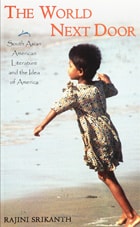
World Next Door
South Asian American LiteratureRajini Srikanth
Temple University Press, 2004
South Asian American literature, with its focus on the multiple geographies and histories of the global dispersal of South Asians, pulls back from a close-up view of the United States to reveal a wider landscape of many nations and peoples.
South Asian American poets, novelists, and playwrights depict the nation as simultaneously discrete and entwined with the urgencies of places as diverse as Bangladesh, Sri Lanka, India, Burma, Pakistan, and Trinidad. Drawing on the cosmopolitan sensibility of scholars like Anthony Appiah, Vinay Dharwadker, Martha Nussbaum, Bruce Robbins, and Amartya Sen, this book exhorts North American residents to envision connectedness with inhabitants of other lands. The world out there arrives next door.
Writings by Western Icelandic Women
Kirsten Wolf
University of Manitoba Press, 1997