Results by title
51 books match the query 'Children's & Young Adult Literature' and 2 start with w
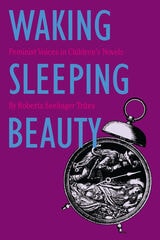
Waking Sleeping Beauty
Feminist Voices in Children's NovelsRoberta S. Trites
University of Iowa Press, 1997
The Sleeping Beauty in Roberta Seelinger Trites' intriguing text is no silent snoozer passively waiting for Prince Charming to energize her life. Instead she wakes up all by herself and sets out to redefine the meaning of “happily ever after.” Trites investigates the many ways that Sleeping Beauty's newfound voice has joined other strong female voices in feminist children's novels to generate equal potentials for all children.
Waking Sleeping Beauty explores issues of voice in a wide range of children's novels, including books by Virginia Hamilton, Patricia MacLachlan, and Cynthia Voight as well as many multicultural and international books. Far from being a limiting genre that praises females at the expense of males, the feminist children's novel seeks to communicate an inclusive vision of politics, gender, age, race, and class. By revising former stereotypes of children's literature and replacing them with more complete images of females in children's books, Trites encourages those involved with children's literature—teachers, students, writers, publishers, critics, librarian, booksellers, and parents—to be aware of the myriad possibilities of feminist expression.
Roberta Trites focuses on the positive aspects of feminism: on the ways females interact through family and community relationships, on the ways females have revised patriarchal images, and on the ways female writers use fictional constructs to transmit their ideologies to readers. She thus provides a framework that allows everyone who enters a classroom with a children's book in hand to recognize and communicate—with an optimistic, reality-based sense of “happily ever after”—the politics and the potential of that book.
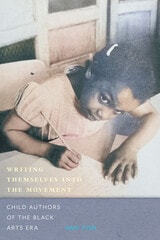
Writing Themselves into the Movement
Child Authors of the Black Arts EraAmy Fish
University of Massachusetts Press, 2024
Between 1967 and 1972, a previously obscure group of authors entered the US cultural spotlight. During this five-year period, at least thirty anthologies of poetry and prose by African American, Latinx, Asian American, and Native American children came out of adult-led workshops, classrooms, and sites of juvenile incarceration. Mass-market publishers, independent imprinters, and local mimeograph machines produced volumes with titles such as I Am Somebody! and The Me Nobody Knows: Children’s Voices from the Ghetto. These young writers actively participated in the Black Arts Movement, and some collaborated with well-known adult authors, most prominently June Jordan. Their anthologies gained national media coverage, occasionally became bestsellers, were quoted by James Baldwin, and even inspired a hit Broadway musical. While writings by children had long attracted adult attention, this flurry of youth writing and publishing was distinguished by the widespread belief that children of color from poor and working-class neighborhoods were uniquely able to speak truth about American racism and inequality.
Focusing on Black and Latinx youth authorship within New York City, and using deep archival research and elegant close readings, Amy Fish examines child-authored texts of this era within the context of their literary production and reception. These young writers were often supervised and edited by white adults, raising concerns about the authenticity and agency of their voices. Fish contends that young authors themselves shared these concerns and that they employed savvy rhetorical strategies of address, temporality, and trope to self-consciously interrogate the perils and possibilities of their adult-influenced work. Young writers thus contributed to the era’s important debates about the nature of authorship and readership within a racist society, while also using their writing as an intimate occasion of self-discovery.