Results by title
662 books match the query 'China' and 19 start with w
Washington's China
The National Security World, the Cold War, and the Origins of GlobalismJames L. Peck
University of Massachusetts Press, 2006
This book addresses a central question about the Cold War that has never been adequately resolved. Why did the United States go to such lengths not merely to “contain” the People's Republic of China but to isolate it from all diplomatic, cultural, and economic ties to other nations? Why, in other words, was American policy more hostile to China than to the Soviet Union, at least until President Nixon visited China in 1972?
The answer, as set out here, lies in the fear of China's emergence as a power capable of challenging the new Asian order the United States sought to shape in the wake of World War II. To meet this threat, American policymakers fashioned an ideology that was not simply or exclusively anticommunist, but one that aimed at creating an integrated, cooperative world capitalism under U.S. leadership—an ideology, in short, designed to outlive the Cold War.
In building his argument, James Peck draws on a wide variety of little-known documents from the archives of the National Security Council and the CIA. He shows how American officials initially viewed China as a “puppet” of the Soviet Union, then as “independent junior partner” in a Sino-Soviet bloc, and finally as “revolutionary model” and sponsor of social upheaval in the Third World. Each of these constructs revealed more about U.S. perceptions and strategic priorities than about actual shifts in Chinese thought and conduct. All were based on the assumption that China posed a direct threat not just to specific U.S. interests and objectives abroad but to the larger vision of a new global order dominated by American economic and military power. Although the nature of “Washington's China” may have changed over the years, Peck contends that the ideology behind it remains unchanged, even today.
Water Management in the Yellow River Basin of China
By Charles Greer
University of Texas Press, 1979
Throughout history the Yellow River, or Huang Ho, has repeatedly broken through its levees to rampage over the densely populated North China Plain. In spite of its importance as the major river of China, little has been written on the Yellow River and its management. Charles Greer fills this gap with his comprehensive and thoroughly researched book.
This work deals with the technological problems faced by the Chinese in taming the destructive river and also focuses on cultural attitudes that have governed the Chinese response to nature. For example, water control was not highly regarded by the Taoists, who preferred to let nature take its course; but the Buddhists sought to harness the river against devastating floods and also to benefit their crops.
Greer traces water use and management in the Yellow River Basin through Chinese history and discusses early Western interest in the flood problem and Soviet assistance in Yellow River development. He analyzes traditional methods of control as well as newer strategies and their implications.
The author of this book is one of a small number of social scientists able to master the original Chinese-language historical materials necessary to this undertaking. He has also examined Chinese water management methods first-hand as part of a delegation of water management specialists in 1976.
In addition to geographers and conservationists, China scholars will find this book valuable because of the axial role the control of the Yellow River plays in the fundamental economic health of the People’s Republic of China. Water management engineers will find much useful comparative material.

Weapons of the People
The Culture and Politics of Guns in Modern ChinaLei Duan
University of Michigan Press, 2027
Why did a country that once mobilized millions of armed civilians become one of the most tightly regulated gun societies in the world? Weapons of the People traces the history of private gun ownership in modern China, from the late Qing dynasty to the early People’s Republic of China. Far from being rare, firearms were once embedded in everyday life, used for self-defense, social status, and political struggle. At the same time, government policies toward civilian arms were often inconsistent. These inconsistencies extended beyond uneven enforcement to include shifting official attitudes toward unsanctioned armed groups. The Chinese Communist Party’s treatment of armed individuals and groups repeatedly adapted to changing political conditions and strategic needs.
Drawing on extensive archival research, as well as published documents, legal cases, and personal accounts, Lei Duan reconstructs the social life of firearms and their shifting political meanings across different regimes. By uncovering these patterns of diversity in firearm ownership and inconsistency in government policy, this book highlights the complex interplay between firearms, society, and the state in modern Chinese history. This study invites readers to reconsider the role of firearms in shaping China’s modern trajectory and to challenge conventional understandings of the nation’s sociopolitical landscape. Duan offers a new prism through which to examine state-society relations in modern China.
Wellington Koo
ChinaJonathan Clements
Haus Publishing, 2010
Whampoa and the Canton Trade
Life and Death in a Chinese Port, 1700–1842Paul A. Van Dyke
Hong Kong University Press, 2020
What Is Taoism?
and Other Studies in Chinese Cultural HistoryHerrlee Glessner Creel
University of Chicago Press, 1982
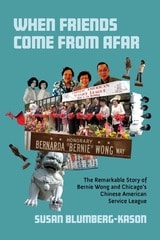
When Friends Come From Afar
The Remarkable Story of Bernie Wong and Chicago's Chinese American Service LeagueSusan Blumberg-Kason
University of Illinois Press, 2024
At once intimate and broad in scope, When Friends Come from Afar uses one woman’s life to illuminate a bedrock Chicago institution.
When the Yellow River Floods
Water, Technology, and Nation-Building in Early Twentieth-Century Chinese LiteratureHui-Lin Hsu
Hong Kong University Press, 2024
When the Yellow River Floods explores the relationship between environmental degradation, hydraulic engineering, and nation-building in the context of Liu E’s The Travels of Lao Can. This book provides a unique perspective on modern Chinese literary history that goes beyond conventional narratives that focus solely on political and cultural factors. The main areas covered include the role of water management in literary nation-building and the connections between the novel’s various themes, such as river engineering, medical and political discourses, national sentiment, and landscape description.
By offering a comprehensive analysis of The Travels of Lao Can, this book broadens the understanding of nation-building in early twentieth-century China, highlighting the impact of environmental crises and hydraulics on the formation of national literature and consciousness. When the Yellow River Floods provides a new perspective on the environmental roots of modern Chinese literature, making it an essential read for those seeking to understand the complex interplay between literature, the environment, and national identity in China. This book will be of interest to scholars and students of Chinese literature, history, and environmental studies.
When “I” Was Born
Women’s Autobiography in Modern ChinaJing M. Wang
University of Wisconsin Press, 2008
When “I” Was Born: Women’s Autobiography in Modern China reclaims the voices of these particular writers, voices that have been misinterpreted and overlooked for decades. Tracing women writers as they move from autobiographical fiction, often self-revelatory and personal, to explicit autobiographies that focused on women’s roles in public life, Jing M. Wang reveals the factors that propelled this literary movement, the roles that liberal translators and their renditions of Western life stories played, and the way in which these women writers redefined writing and gender in the stories they told. But Wang reveals another story as well: the evolving history and identity of women in modern Chinese society. When “I” Was Born adds to a growing body of important work in Chinese history and culture, women’s studies, and autobiography in a global context.
Writers discussed include Xie Bingying, Zhang Ailing, Yu Yinzi, Fei Pu, Lu Meiyen, Feng Heyi, Ye Qian, Bai Wei, Shi Wen, Fan Xiulin, Su Xuelin, and Lu Yin.
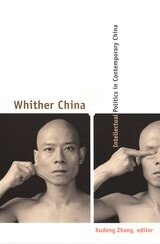
Whither China?
Intellectual Politics in Contemporary ChinaXudong Zhang, ed.
Duke University Press, 2001
The contributors to Whither China? describe how, instead of spearheading the popular-mandated and state-sanctioned project of modernization, intellectuals now find themselves caught amid rapidly changing structures of economic, social, political, and cultural relations that are both global in nature and local in an irreducibly political sense. Individual essays interrogate the space of Chinese intellectual production today, lay out the issues at stake, and cover major debates and discursive interventions from the 1990s. Those who write within the Chinese context are joined by Western observers of contemporary Chinese cultural and intellectual life. Together, these two groups undertake a truly international intellectual struggle not only to interpret but to change the world.
Contributors. Rey Chow, Zhiyuan Cui, Michael Dutton, Gan Yang, Harry Harootunian, Peter Hitchcock, Rebecca Karl, Louisa Schein, Wang Hui, Wang Shaoguang, Xudong Zhang
Why Fiction Matters in Contemporary China
David Der-wei Wang
Brandeis University Press, 2020
Contemporary discussions of China tend to focus on politics and economics, giving Chinese culture little if any attention. Why Fiction Matters in Contemporary China offers a corrective, revealing the crucial role that fiction plays in helping contemporary Chinese citizens understand themselves and their nation. Where history fails to address the consequences of man-made and natural atrocities, David Der-Wei Wang argues, fiction arises to bear witness to the immemorial and unforeseeable.
Beginning by examining President Xi Jinping’s call in 2013 to “tell the good China story,” Wang illuminates how contemporary Chinese cultural politics have taken a “fictional turn,” which can trace its genealogy to early modern times. He does so by addressing a series of discourses by critics within China, including Liang Qichao, Lu Xun, and Shen Congwen, as well as critics from the West such as Arendt, Benjamin, and Deleuze. Wang highlights the variety and vitality of fictional works from China as well as the larger Sinophone world, ranging from science fiction to political allegory, erotic escapade to utopia and dystopia. The result is an insightful account of contemporary China, one that affords countless new insights and avenues for understanding.
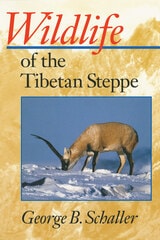
Wildlife of the Tibetan Steppe
George B. Schaller
University of Chicago Press, 1998
The plains ungulates are the main focus of this book—especially the Tibetan antelope, or chiru, whose migrations define this ecosystem much as those of the wildebeest define the Serengeti. Schaller's descriptions of mammal numbers and distribution, behavior, and ecology provide baseline information that may allow wildlife, grasslands, and pastoralists to continue to coexist harmoniously in this region.
This project led to the creation of the 130,000-square-mile Chang Tang Reserve by the Tibetan government in 1993, and Wildlife of the Tibetan Steppe should help promote future studies as well as conservation and management efforts.
"Schaller makes significant contributions to an understanding of the origins and ecology of Tibetan wildlife that will thrill specialists. . . . Schaller's book is much more than an ecological synthesis. It is a quest for conservation, a case history by a very brave and capable man, driven by no small passion to prevent the tragedy of extinction that looms over Tibet's fauna. His book touches not only the mind but also the heart, and in the context of conservation and the future it raises questions to torture the soul. . . . Wildlife of the Tibetan Steppe will long remain a unique, important source of biological, but also sociological, insights and challenges. I found it well written and difficult to put down."—Valerius Geist, Nature
"The topics in Wildlife of the Tibetan Steppe are at least as diverse as the topography; they range from geology and paleoecology to descriptions of ungulates and carnivores unknown to most of the non-Chinese speaking world. Individual chapters focus on kiangs, Bactrian camels, yaks, chirus, blue sheep, and Tibetan argalis and gazelles. Not only is much of the biological information new, but subsumed within these chapters are current and past estimates of population sizes both in the Chang Tang Reserve and in protected and nonprotected areas of 'the' plateau. Insights are provided into social structure, and speculations about the evolution and adaptive bases of behavior are carefully offered. Subsequent chapters involve discussions of carnivore communities and interactions between people and wildlife, including the localized but devastating effects of poachers. . . . This book has something for all audiences. . . . [A]n exciting testimony to the past and present status of a biologically spectacular region."—Joel Berger, Conservation Biology
Woman and Chinese Modernity
The Politics of Reading between West and EastRey Chow
University of Minnesota Press, 1991
Examines the relationship of “woman” to issues of non-western culture.
Examines the relationship of "woman" to issues of non-Western culture: ethnic spectatorship, popular literature, the construction of literary history, and the revolutionary production and emotional reception of national literature.
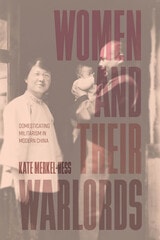
Women and Their Warlords
Domesticating Militarism in Modern ChinaKate Merkel-Hess
University of Chicago Press, 2024
In Women and Their Warlords, historian Kate Merkel-Hess examines the lives and personalities of the female relatives of the military rulers who governed regions of China from 1916 to 1949. Posing for candid photographs and sitting for interviews, these women did not merely advance male rulers’ agendas. They advocated for social and political changes, gave voice to feminist ideas, and shaped how the public perceived them. As the first publicly political partners in modern China, the wives and concubines of Republican-era warlords changed how people viewed elite women’s engagement in politics. Drawing on popular media sources, including magazine profiles and gossip column items, Merkel-Hess draws unexpected connections between militarism, domestic life, and state power in this insightful new account of gender and authority in twentieth-century China.
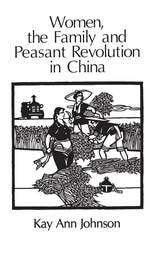
Women, the Family, and Peasant Revolution in China
Kay Ann Johnson
University of Chicago Press, 1983
Johnson's primary focus is on reforms of marriage and family because traditional marriage, family, and kinship practices have had the greatest influence in defining and shaping women's place in Chinese society. Conversant with current theory in political science, anthropology, and Marxist and feminist analysis, Johnson writes with clarity and discernment free of dogma. Her discussions of family reform ultimately provide insights into the Chinese government's concern with decreasing the national birth rate, which has become a top priority. Johnson's predictions of a coming crisis in population control are borne out by the recent increase in female infanticide and the government abortion campaign.
Words like Water
Queer Mobilization and Social Change in ChinaFugazzola, Caterina
Temple University Press, 2023
Words like Water explores the nonconfrontational strategies the tongzhi movement uses in contemporary China. Caterina Fugazzola analyzes tongzhi organizers’ conceptualizations of, and approaches to, social change, explaining how they avoid the backlash that meets Western tactics, such as protests, confrontation, and language about individual freedoms. In contrast, the groups’ intentional use of community and family-oriented narratives, discourses, and understandings of sexual identity are more effective, especially in situations where direct political engagement is not possible.
Providing on-the-ground stories that examine the social, cultural, and political constraints and opportunities, Words like Water emphasizes the value of discursive flexibility that allows activists to adapt to changing social and political conditions.
Writing Beijing
History and Knowledge of the CapitalNaixi Feng
University of Michigan Press, 2027
Writing Beijing offers a comprehensive study of the textual representations of the city from the late Ming dynasty through the Republican era, interrogating how urban narratives were actively constructed, adapted, and repurposed across periods of political transformation. Scholars, officials, and travelers reshaped the capital’s identity by rewriting older texts, borrowing new surveys, and even inserting critiques into guidebooks.. This study reveals how the crises brought by intense social transformation, including dynastic collapse and foreign invasion, forced writers to reinvent Beijing on paper. Some turned the city into a monument to lost glory; others documented everyday life to resist imperialism. These narratives served to critique contemporary sociopolitical conditions, assert cultural legitimacy during times of crisis, and ultimately shape Beijing’s enduring cultural image as China’s symbolic capital.
Naixi Feng bridges literary studies, urban history, and critical historiography by examining a wide range of genres—including literary miscellanies, local gazetteers, Qing imperial compilations, Republican textbooks, social reports, and travel guides—to demonstrate how writing about Beijing was never merely descriptive but always a site of cultural and political contestation.
Writing in the Devil's Tongue
A History of English Composition in ChinaXiaoye You
Southern Illinois University Press, 2010
Winner, CCCC Outstanding Book Award
Until recently, American composition scholars have studied writing instruction mainly within the borders of their own nation, rarely considering English composition in the global context in which writing in English is increasingly taught. Writing in the Devil’s Tongue challenges this anachronistic approach by examining the history of English composition instruction in an East Asian country. Author Xiaoye You offers scholars a chance to observe how a nation changed from monolingual writing practices to bilingual writing instruction in a school setting.
You makes extensive use of archival sources to help trace bilingual writing instruction in China back to 1862, when English was first taught in government schools. Treating the Chinese pursuit of modernity as the overarching theme, he explores how the entry of Anglo-American rhetoric and composition challenged and altered the traditional monolithic practice of teaching Chinese writing in the Confucian spirit. The author focuses on four aspects of this history: the Chinese negotiation with Anglo-American rhetoric, their search for innovative approaches to instruction, students’ situated use of English writing, and local scholarship in English composition.
Unlike previous composition histories, which have tended to focus on institutional, disciplinary, and pedagogical issues, Writing in the Devil’s Tongue brings students back to center stage by featuring several passages written by them in each chapter. These passages not only showcase rhetorical and linguistic features of their writings but also serve as representative anecdotes that reveal the complex ways in which students, responding to their situations, performed multivalent, intercultural discourses. In addition, You moves out of the classroom and into the historical, cultural, and political contexts that shaped both Chinese writing and composing practices and the pedagogies that were adopted to teach English to Chinese in China. Teachers, students, and scholars reading this book will learn a great deal about the political and cultural impact that teaching English composition has had in China and about the ways in which Chinese writing and composition continues to be shaped by rich and diverse cultural traditions and political discourses.
In showcasing the Chinese struggle with teaching and practicing bilingual composition, Writing in the Devil’s Tongue alerts American writing scholars and teachers to an outdated English monolingual mentality and urges them to modify their rhetorical assumptions, pedagogical approaches, and writing practices in the age of globalization.
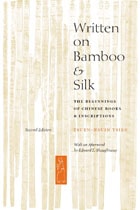
Written on Bamboo and Silk
The Beginnings of Chinese Books and Inscriptions, Second EditionTsuen-Hsuin Tsien
University of Chicago Press, 2004