56 books match the query 'Christian' and 3 start with w
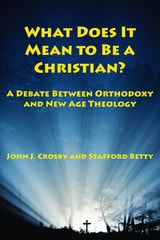
cover of What Does It Mean to be a Christian?: A Debate

What Does It Mean to be a Christian?

A Debate

John F. Crosby

St. Augustine's Press, 2016

This book presents a correspondence between two friends who disagree about how to answer the question, “What does it mean to be a Christian?” Crosby argues that Christians understand themselves as hearing a definitive word of revelation spoken by God and intended for all human beings. But Betty sees Christianity as one of several options, usually the preferred way for those born in the faith, but no more unique or special than Hinduism or Buddhism. It is a debate over the kind of initiative the Christian God takes, or does not take, toward human beings. Throughout the debate Crosby alleges that Betty’s God is a very finite god, an all-too-human god, and for that very reason is something different from the God venerated by Christians, while Betty maintains that his theism remains within the Christian orbit and is a much needed corrective to a religion with exclusivist tendencies.

The debate between the two friends is presented here in the form of a correspondence they conducted over a period of two years (and did not originally intend for publication). It has undergone very little editing and revision; the authors have wanted to preserve the spontaneous give and take of their exchange. Together they have produced a work of philosophical dialogue that is unusually fruitful in its ability to clarify some fundamental issues of religion.
[more]
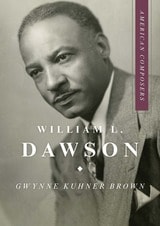
cover of William L. Dawson

William L. Dawson

Gwynne Kuhner Brown

University of Illinois Press, 2024

William L. Dawson is recognized for his genre-defining choral spirituals and for his Negro Folk Symphony, a masterpiece enjoying a twenty-first-century renaissance. Gwynne Kuhner Brown’s engaging and tirelessly researched biography reintroduces a musical leader whose legacy is more important today than ever.

Born in 1899, Dawson studied at the Tuskegee Institute in Alabama. He worked as a church, jazz, and orchestral musician in Kansas City and Chicago in the 1920s while continuing his education as a composer. He then joined the Tuskegee faculty, where for 25 years he led the Tuskegee Institute Choir to national prominence through performances of spirituals at the opening of Radio City Music Hall, on radio and television, and at the White House. The Philadelphia Orchestra conducted by Leopold Stokowski premiered Dawson’s Negro Folk Symphony in 1934.

Engaging and long overdue, William L. Dawson celebrates a pioneering Black composer whose contributions to African American music, history, and education inspire performers and audiences to this day.
[more]
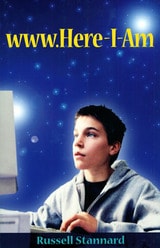
cover of Www.Here I Am

Www.Here I Am

Russell Stannard

Templeton Press, 2002

Sam didn't think much of religion. What with science being able to explain almost everything about us and about the world we live in, there didn't seem much point to believing in God any more. But then came the day Sam was exploring the Internet, and stumbled across God's website! At least, that was what it claimed to be.
Sam decides to investigate, and becomes engrossed in conversations with the mysterious person on the other end. Together they explore the great questions arising out of evolution, astronomy, cosmology, the laws of nature, and the possibility of miracles. Not that Sam knew much science. Fortunately the stranger was able to explain the science from scratch in a way that Sam could understand. They also tackled the problems of evil, suffering, and death; that really set Sam thinking.
Readers will be challenged to form their own personal responses to the issues raised based on a listing of forty questions at the back of the book. Sample questions include:
•What do you hope to achieve in your lifetime?
•Does belief in God play a part in that?
•Do you believe in evolution—that you came from animals?
•Do you think there is life on other planets?
•If so, does that make human beings less important?
•Do the world religions contradict each other, or are they simply talking about the same God in somewhat different ways?
•How should belief in an afterlife affect the way you live this life?
[more]