Results by title
208 books match the query 'Christian Church' and 4 start with w
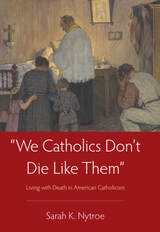
We Catholics Don't Die Like Them
Living with Death Before Vatican IISarah Nytroe
Catholic University of America Press, 2026
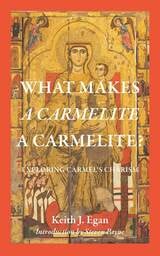
What Makes a Carmelite a Carmelite
Exploring Carmel's CharismKeith J. Egan
Catholic University of America Press, 2022
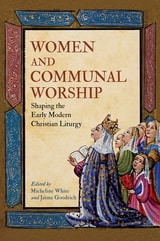
Women and Communal Worship
Shaping the Early Modern Christian LiturgyMicheline White
University of Delaware Press, 2027
Women and Communal Worship advances our understanding of early modern women by uncovering and analyzing Christian women’s engagement with liturgical and communal worship between 1500 and 1750. The Protestant attack on the medieval liturgy was at the heart of the Reformation and Counter-Reformation, but women’s contributions to those momentous changes have been largely overlooked as scholars have focused on women’s private devotional practices and texts. This collection of essays demonstrates that communal worship was vital to women of all confessional stripes. Although they could not generally lead the liturgy, women shaped public devotion in important ways, whether at the level of the local congregation, the household chapel, the convent, the court, or the national church. Communal worship is thus a key site for examining women’s textual, literary, social, and political agency.

Word Rides Again
Rereading The Frontier In American FictionJ. David Stevens
Ohio University Press, 2001
With much recent scholarship polarizing frontier novels into “popular” and “literary” camps, The Word Rides Again challenges the critical orthodoxy that such works have little in common, arguing instead that formulaic Western fictions can subtly (and even subversively) share cultural concerns with more highbrow brethren. Each chapter focuses on a writer who has traditionally been classified as either popular or artistic, reading a representative fictional work against prevailing scholarly trends. In this manner, Bret Harte’s sentimental stories become gender-bending experiments in which women assume male roles and even enjoy lesbian relationships. Owen Wister’s The Virginian is transmuted from a misogynistic diatribe into a complex meditation on the peculiarly American relation of violence to male identity. And even Willa Cather’s Death Comes for the Archbishop, rather than the apotheosis of a religious leader, becomes a somewhat standard version of the popular frontier story.
The Word Rides Again represents a significant departure from more traditional studies of frontier literature. It reaffirms the continuum between popular and literary texts and explores the ways that frontier novels have echoed, endorsed, and extended each other from the inception of the genre.