496 books match the query 'Christian Theology' and 12 start with w

cover of Walk in the Good Way: Classical Natural Law and Civic Friendship

Walk in the Good Way

Classical Natural Law and Civic Friendship

Michael Pakaluk

Catholic University of America Press, 2027
What holds a free society together? Not law alone, and not self-interest — but something older and deeper that the classical tradition called civic friendship: the bonds of genuine goodwill and common purpose that bind citizens to one another and make a republic possible. This book recovers that idea, and argues that without it, neither natural law theory nor political life can be adequately understood. Michael Pakaluk brings together more than two decades of scholarship on Aristotle, Aquinas, and the American Founding to show that the classical conception of natural law is fundamentally different in kind from the modern theories that have displaced it. Where contemporary natural law and liberal political theory — in their best-known versions — begin from abstract principles of practical reason, the classical tradition begins from human nature itself: from our constitution as social beings, equipped by nature and Providence to live together, and oriented toward civic friendship as the proper realization of that nature. The argument moves across three great traditions. In Aristotle, civic friendship is the telos of political life — not an ornament added to justice, but its consummation, the common good understood as a shared form of life. In Aquinas, natural law is the rational creature's participation in divine providence, its precepts providing not a checklist of obligations but starting-points for the cultivation of virtue and the perfection of character. In the American Founders — above all in John Adams, whose Aristotelian convictions Pakaluk examines with care — the ideals of natural sociability were neither decorative nor derivative, but the animating principles of the republican experiment itself. The result is a vision at once ancient and urgently contemporary. At a moment of deepening civic fracture, Walk in the Good Way makes the case that the path to a stable and vigorous free society runs through the recovery of something we have nearly forgotten: that we are, by nature, made for life together — and that nature itself shows us how
[more]
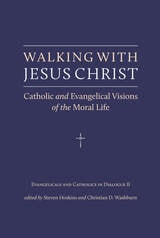
cover of Walking with Jesus Christ: Catholic and Evangelical Visions of the Moral Life

Walking with Jesus Christ

Catholic and Evangelical Visions of the Moral Life

Steven Hoskins

Saint Paul Seminary Press, 2023
Walking with Jesus Christ: Catholic and Evangelical Visions of the Moral Life is the collected essays and consensus statements of the second round of the National Evangelical-Catholic Dialogue. In 2021 the National Evangelical-Catholic Dialogue completed its four-year round of discussion on the moral life, at the University of St. Thomas in St. Paul, MN. Sessions were held each year on the following topics. In 2017, the dialogue discussed the norms governing the moral life. In 2018, the dialogue discussed sexual ethics. In 2019, the dialogue discussed social ethics. Finally, in 2021 the dialogue discussed the relationship of the moral life to eschatology. At each of the annual meetings, members presented background papers that formed the basis of that meeting’s discussion and became starting points for constructing a common statement. These common statements and background papers make up this book. The members of the dialogue hope this book will provide a fruitful starting point for future conversations between evangelicals and Catholics. The Catholic essays begin with the contributions of Catholic theologians Daniel Keating, William Stevenson and Christian Washburn, who examine the various norms for Catholic moral theology including the role of Scripture, tradition, magisterium, and natural law (2017). David Fleischacker, Daniel Keating, and Christian Washburn examine the morality of marriage, contraception, abortion, and homosexual acts (2018). Daniel Keating and William Stevenson discuss social ethics, including Catholic social teaching and socialism (2019). David Fleischacker and Christian Washburn discuss the relationship of the moral life to our final beatific end (2020). The Evangelical essays begin with the contribution of Evangelical theologians Bruce Cromwell and Dennis Jowers who explore the norms of Protestant Ethics (2017). David Van Drunen and Luke Geraty discuss sexual ethics from different ends of the Evangelical perspective (2018). Glen Menzies and Steve Hoskins evaluate approaches to evangelical social ethics from Pentecostal and Wesleyan points of view (2019). Bruce Cromwell and Steve Hoskins discuss the notions of eschatology and ethics from a Wesleyan viewpoint (2020).
[more]
cover of We Gon’ Be Alright: Resistance and Healing in Black Movement Spaces, 2012­–2021

We Gon’ Be Alright

Resistance and Healing in Black Movement Spaces, 2012­–2021

Stephanie M. Crumpton

University of Arizona Press, 2025

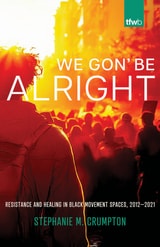
We Gon’ Be Alright: Resistance and Healing in Black Movement Spaces, 2012–2021 is a profound exploration of Black activism and organizing during a pivotal decade in American history. Rev. Dr. Stephanie M. Crumpton explores the practices of care, reflection, and creativity that Black activists employed to heal and resist amidst the sociopolitical turbulence from the Obama era through the first Trump presidency. This period, marked by the myth of a “post-racial” America, saw a resurgence in racial violence and hate crimes, culminating in the 2021 Capitol insurrection. Against this backdrop, Crumpton captures the resilience and ingenuity of Black movement workers as they navigated these challenges.

Drawing on oral histories and personal narratives, Crumpton provides an intimate look at the lived experiences of thirty-seven full-time community organizers. These activists and organizers share their strategies for maintaining an ethic of care that sustains them while fighting against both external oppression and internal community struggles. The book highlights how contemporary Black resisters have leveraged a growing understanding of trauma and healing to enhance their activism. This blend of historical knowledge and modern therapeutic practices has equipped them with a broader array of tools to support their communities.

Rooted in womanist practical theology, We Gon’ Be Alright emphasizes the interconnectedness of white supremacy with other forms of oppression such as sexism, homophobia, and classism. Crumpton’s work underscores the necessity of “deep, deep healing” to address these multifaceted threats to Black life. This book is an essential resource for scholars, activists, and anyone interested in understanding the dynamics of Black resistance and healing in contemporary America. Through its detailed examination of the past decade, it offers valuable insights into the ongoing struggle for Black humanity, dignity, and a thriving future.
[more]
cover of What Binds Marriage Forever?

What Binds Marriage Forever?

Ida Friederike Gorres

Catholic University of America Press, 2025
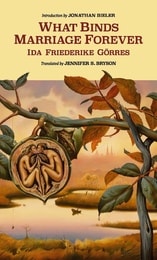
What Binds Marriage Forever is a collection of texts written from 1956 to 1971 by Ida Friederike Görres, herself a married lay woman. Her main focus is the indissolubility of marriage. n the Preface, Görres observes the emergence of a marriage crisis in the West. “Each passing day,” she writes, “the conversation about marriage grows in gravity and urgency.” She wrote this in 1956; she could have written this and the other parts of this book in 2023. The centerpiece of the book is Chapter 1, written in 1971. She argues against Catholics who are trying to reframe marriage a mere love-bond that ceases when love ceases. She mounts a defense of the Catholic teaching on marriage against her counterparts’ calls to allow divorce and remarriage. She exposes the central role modern individualism plays in their arguments. She demon­strates how their arguments are ahistorical, a recipe for relational instability, and harmful to those who suffer when their spouses are adulterous, especially when the adulterous spouse is cheered on for acting out of “love.” Her core argument is that what binds marriage forever is a combination of “covenant, law, and grace, that is, sacrament.” Chapters 2 and 3 explore the topic of marriages between Catholics and bap­tized non-Catholics or non-Christians. Görres discusses the difficulties that such marriages can generate, not least of all the decision of which faith the children should be raised in. Chapter 4 is an overview of the sacramentality of marriage. She explains how marriage relates to the indissoluble bond between God and creation and she explains how the three traditional goods of marriage (fidelity, sacrament, off­spring) are reflected in the marriage liturgy.
[more]
cover of What Does It Mean to be a Christian?: A Debate

What Does It Mean to be a Christian?

A Debate

John F. Crosby

St. Augustine's Press, 2016

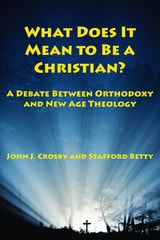
This book presents a correspondence between two friends who disagree about how to answer the question, “What does it mean to be a Christian?” Crosby argues that Christians understand themselves as hearing a definitive word of revelation spoken by God and intended for all human beings. But Betty sees Christianity as one of several options, usually the preferred way for those born in the faith, but no more unique or special than Hinduism or Buddhism. It is a debate over the kind of initiative the Christian God takes, or does not take, toward human beings. Throughout the debate Crosby alleges that Betty’s God is a very finite god, an all-too-human god, and for that very reason is something different from the God venerated by Christians, while Betty maintains that his theism remains within the Christian orbit and is a much needed corrective to a religion with exclusivist tendencies.

The debate between the two friends is presented here in the form of a correspondence they conducted over a period of two years (and did not originally intend for publication). It has undergone very little editing and revision; the authors have wanted to preserve the spontaneous give and take of their exchange. Together they have produced a work of philosophical dialogue that is unusually fruitful in its ability to clarify some fundamental issues of religion.
[more]
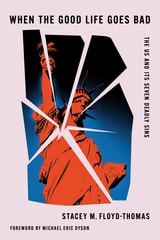
cover of When the Good Life Goes Bad: The US and Its Seven Deadly Sins

When the Good Life Goes Bad

The US and Its Seven Deadly Sins

Stacey M. Floyd-Thomas Foreword by Michael Eric Dyson

University of Illinois Press, 2026

The Seven Deadly Sins have become the seven markers of success in America. Lust, pride, greed, sloth, envy, gluttony, wrath—these once-condemned principles now guide people’s pursuit of the good life.

Stacey M. Floyd-Thomas examines how the Seven Deadly Sins have shaped the moral strivings and sociopolitical condition of American society and culture in the twenty-first century. Drawing on a multidimensional approach, Floyd-Thomas uses race, gender, class, and other lenses to break down the moral crises that define the American Dream. Her critique exposes the harm done by individual and collective practices of sexual objectification, capitalist materialism, wealth inequality, and technological hubris before pivoting to the rise of right-wing populism, white Christian nationalism, and the politics of cruelty. But Floyd-Thomas also proposes an ethic that emphasizes truth-telling, community engagement, and values rooted in humility, justice, and mercy—a new path for the US to overcome systemic oppression and create a more just society.

Evocative and ambitious, When the Good Life Goes Bad takes readers on a wide-ranging journey through US life and culture to explain what corrupted the American dream.
[more]
cover of Wisdom's Watch Upon the Hours

Wisdom's Watch Upon the Hours

Suso Henry

Catholic University of America Press, 1994

Written by Dominican preacher and mystic Bl. Henry Suso (c. 1300-1366), Horologium Sapientiae, or Wisdom's Watch upon the Hours, was one of the most successful religious writings of its time. Now it is offered to the English-speaking world in a new translation based on Pius Knzle's critical Latin edition.
[more]
cover of Witness and Existence: Essays in Honor of Schubert M. Ogden

Witness and Existence

Essays in Honor of Schubert M. Ogden

Edited by Philip E. Devenish and George L. Goodwin

University of Chicago Press, 1989

For over thirty years Schubert Ogden has championed and exemplified a particular understanding of the task and content of Christian theology. The task of theology is to examine the meaning and truth of Christian faith in terms of human experience. All theological claims, therefore, are assessable by two criteria: their appropriateness to the normative Christian witness and their credibility in terms of human existence. The content of Christian theology may be accurately and succinctly stated in two words: radical monotheism. The point of all theological doctrines, from christology to ethics, is to reflect on the gift and demand of God's love. It may be said, then, that Ogden's entire theological project consists in the attempt to show that radical monotheism, which is the essential point of the Christian witness, is also the inclusive end of human existence.

Witness and Existence pays tribute to Ogden by bringing together essays by eminent scholars in New Testament studies and philosophical theology, two fields which directly reflect his methodological concerns and his substantive contributions. The book honors Ogden precisely by engaging the fundamental issues which Ogden himself has taken so seriously.

The first group of essays presents careful analyses of issues basic to the early Christian witness; the second group examines the credibility of the Christian claim about God in terms of human experience. The editors' introductory essay provides the first comprehensive analysis yet to appear of Ogden's theology. A complete bibliography of his published writings is included as an appendix.
[more]
cover of Witnesses to Beatitude: Seven Romanian Greek Catholic Bishops Under Communism

Witnesses to Beatitude

Seven Romanian Greek Catholic Bishops Under Communism

Francisca Băltăceanu

Catholic University of America Press, 2026

Veteran authors Francisca Băltăceanu and Monica Broşteanu render extensive archival research into a readable, stand-alone volume about seven key figures in the outlawed Romanian Greek Catholic Church. Prefaced by the Greek Catholic bishop of Bucharest, the book synthesizes indispensable background information for reading the story of these twentieth-century church leaders from Transylvania where in 1700 an agreement of union was reached between the Romanian Orthodox leadership and the Catholic Church in Rome, forming the Romanian Church United to Rome, Greek Catholic. In 1948 the Soviet-imposed government in Romania determined that the Romanian Greek Catholic Church no longer existed and detained its bishops: Vasile Aftenie, Valeriu Traian Frenţiu, Ioan Suciu, Ioan Bălan, Alexandru Rusu, and Iuliu Hossu. At the same time, it detained numerous priests including Tit Liviu Chinezu who was secretly consecrated bishop at the request of the papal nuncio. I>Witnesses to Beatitude traces the bishops’ various origins and the extensive pressures put on them to cut their ties with the Vatican. For creatively resisting these pressures the seven men were put in the infamous Sighet prison and under house arrest where in 1969 Iuliu Hossu, the last to survive, was made a cardinal in pectore by Pope Paul VI. The book garnered a large bipartisan Catholic and Orthodox readership in Romania where it was a bestseller at the 2019 Bookfest. Drawing from the casefile submitted to the Holy See to recognize the martyrdom of the seven bishops who were beatified in June 2019, the book documents how the Communist government conducted a fierce campaign to ban the Greek Catholic Church and made the Orthodox leadership look responsible. The book includes oral testimonies suggesting the life force and humor that brought the bishops through the storm. It also contains the full bibliography of the casefile and an introduction and updated bibliography for English-language readers.
[more]
cover of Worthy Lamb: An Exegetical-Spiritual Commentary on John's Apocalypse

Worthy Lamb

An Exegetical-Spiritual Commentary on John's Apocalypse

Andreas Hoeck

Saint Paul Seminary Press, 2024
This book is a systematic commentary on the Apocalypse of Saint John, examining each chapter and verse based on the original Greek and Latin texts. The underlying hermeneutic is an idealist or allegorical point of view that does not attempt to identify apocalyptic imagery with concrete historical events. Rather, symbols and metaphors are interpreted, with attention to their intertextuality, as paradigmatic of the epic battle between the forces of light and darkness, good and evil, the dragon and the Lamb, playing out not only in the vicissitudes of the world today, but also and especially in one’s personal life. Rather than focusing on sterile symbolisms, the book attempts to inspire a more radical discipleship of Jesus by applying the eschatological imagery to the realm of spiritual discernment. John’s Apocalypse is certainly considered the grand New Testament Theology of History, but here its ethical dualism is mainly taken as a challenge for the interior life, to enter into the worship before the throne of Christ the Lamb, and to realize that where evil makes war against the principles of good, God will remain in control at all times. The author has drawn on two commentators whose work has not been translated and made widely accessible until now, Rupert of Deutz and Adrienne von Speyr. The book aims to relay Revelation’s message of Christ-centered faithfulness and perseverance, of virtue and holiness, once addressed to the seven churches in Asia, to a contemporary readership.
[more]
cover of Writings on Grace: The Complete <i>Ecrits sur la grace</i>

Writings on Grace

The Complete <i>Ecrits sur la grace</i>

Blaise Pascal

Catholic University of America Press, 2025
A few years before he died in 1662, Blaise Pascal wrote fifteen interconnected essays on grace, which have collectively come to be known as the Écrits sur la grâce. These were not published before his death, and were not polished and revised by him with an eye to publication, which means that they show his mind at work experimentally, trying out lines of argument and engagements with magisterial and patristic texts without resolving them into anything like a final system. The Écrits are replete with experimental formulations and bursts of literary and intellectual energy; taken together, they provide an intense and extreme presentation of Pascal's version of Augustinianism with respect to grace, election, and predestination, the meaning of the Council of Trent, and much else. These essays provide one of the keys to the entirety of Pascal's thought, and they provide a view of grace's workings -- perhaps better, a grammar of grace -- which still warrants serious attention by Catholic theologians. Less than one-fifth of the Écrits has yet been published in English. This book provides a complete translation, made from the French text provided in Michel Le Guern's edition (1998, 2000) of Pascal's Oeuvres complètes, and annotated to provide full information about Pascal's sources and how he used them. The translation is followed by a substantial interpretive essay in which Pascal's positions and approaches are restated and argued with.
[more]
cover of Writings; Writings; Commonitories; Grace and Free Will

Writings; Writings; Commonitories; Grace and Free Will

Catholic University of America Press, 2008

No description available
[more]