Results by title
188 books match the query 'City planning' and 3 start with w

Waste Works
Vital Politics in Urban GhanaBrenda Chalfin
Duke University Press, 2023
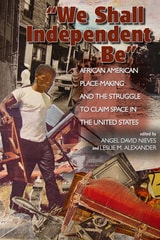
We Shall Independent Be
African American Place-Making and the Struggle to Claim Space in the United StatesAngel David Nieves
University Press of Colorado, 2008
Contributors define space to include physical, social, and intellectual sites throughout the Northern and Southern regions of the United States, ranging from urban milieus to the suburbs and even to swamps and forests. They explore under-represented locations such as burial grounds, courtrooms, schools, and churches. Moreover, contributors demonstrate how Black consciousness and ideology challenged key concepts of American democracy - such as freedom, justice, citizenship, and equality - establishing African American space in social and intellectual areas.
Ultimately, "We Shall Independent Be " recovers the voices of African American men and women from the antebellum United States through the present and chronicles their quest to assert their right to a place in American society. By identifying, examining, and telling the stories of contested sites, this volume demonstrates the power of African American self-definition and agency in the process of staking a physical and ideological claim to public space
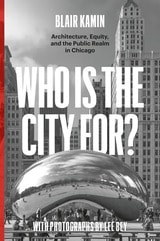
Who Is the City For?
Architecture, Equity, and the Public Realm in ChicagoBlair Kamin
University of Chicago Press, 2022
From his high-profile battles with Donald Trump to his insightful celebrations of Frank Lloyd Wright and front-page takedowns of Chicago mega-projects like Lincoln Yards, Pulitzer Prize–winning architecture critic Blair Kamin has long informed and delighted readers with his illuminating commentary. Kamin’s newest collection, Who Is the City For?, does more than gather fifty-five of his most notable Chicago Tribune columns from the past decade: it pairs his words with striking new images by photographer and architecture critic Lee Bey, Kamin’s former rival at the Chicago Sun-Times. Together, they paint a revealing portrait of Chicago that reaches beyond its glamorous downtown and dramatic buildings by renowned architects like Jeanne Gang to its culturally diverse neighborhoods, including modest structures associated with storied figures from the city’s Black history, such as Emmett Till.
At the book’s heart is its expansive approach to a central concept in contemporary political and architectural discourse: equity. Kamin argues for a broad understanding of the term, one that prioritizes both the shared spaces of the public realm and the urgent need to rebuild Black and brown neighborhoods devastated by decades of discrimination and disinvestment. “At best,” he writes in the book’s introduction, “the public realm can serve as an equalizing force, a democratizing force. It can spread life’s pleasures and confer dignity, irrespective of a person’s race, income, creed, or gender. In doing so, the public realm can promote the social contract — the notion that we are more than our individual selves, that our common humanity is made manifest in common ground.” Yet the reality in Chicago, as Who Is the City For? powerfully demonstrates, often falls painfully short of that ideal.