Results by title
52 books match the query 'Cognitive Science' and 2 start with w
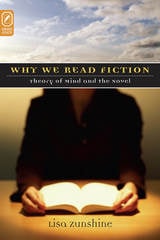
WHY WE READ FICTION
Theory of Mind and the NovelLisa Zunshine
The Ohio State University Press, 2006
Why We Read Fiction offers a lucid overview of the most exciting area of research in contemporary cognitive psychology known as “Theory of Mind” and discusses its implications for literary studies. It covers a broad range of fictional narratives, from Richardson’s Clarissa, Dostoyevski’s Crime and Punishment, and Austen’s Pride and Prejudice to Woolf’s Mrs. Dalloway, Nabokov’s Lolita, and Hammett’s The Maltese Falcon. Zunshine’s surprising new interpretations of well-known literary texts and popular cultural representations constantly prod her readers to rethink their own interest in fictional narrative. Written for a general audience, this study provides a jargon-free introduction to the rapidly growing interdisciplinary field known as cognitive approaches to literature and culture.
[more]
We All Feel
Understanding Animal Grief and LoveBarbara J. King
University of Chicago Press, 2013
From the time of our earliest childhood encounters with animals, we casually ascribe familiar emotions to them, though scientists have long cautioned against such anthropomorphizing. Recently, however, things have begun to shift in the other direction, and anthropologist Barbara J. King is at the forefront of that movement, arguing strenuously that we can—and should—attend to animal emotions. In the stories she tells here, King relays how some farm animals—horses, goats, chickens, and ducks—bond with others and engage in mourning when their friends die. Here, too, dolphins and whales exhibit striking signs of suffering over the loss of babies and companions: a mother dolphin will not give up her dead baby, and whales risk stranding themselves in small groups rather than abandon kin. As part of a larger web of life, death, love, and loss, King calls our attention to emotions—both our own and those of our companion species.
[more]