Results by title
146 books match the query 'Collections, Catalogs, Exhibitions' and 4 start with w
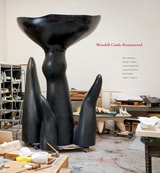
Wendell Castle Remastered
Wendell Castle
The Artist Book Foundation, 2015
Wendell Castle (1932–2018), master furniture maker, designer, sculptor, and educator, was in the sixth decade of his extraordinary creativity when an emblematic exhibition of his signature works was mounted by the Museum of Art and Design in 2016. It blended the artist's seminal works with his latest collection, produced with digital technology. In part a self-reflection, this eponymous, full-color companion book examines some of Castle's historically representative works as well as significant contemporary furniture pieces, continuing his highly respected and acclaimed sculptural/functional dialogue. Castle, ever the innovator, was remarkable for his openness to new technologies; he not only embraced an initially complex practice but has "remastered" it. His vast oeuvre represents a prodigious lifework that began in 1958 and aligns with the development of the American art furniture movement.
The solo exhibition was a somewhat self-reflective examination of his early ground-breaking works that tested the boundaries of traditional furniture making by presenting his later innovations using new digital technologies such as 3D scanning and modeling, and computer-controlled milling—a digital "remastering" of his immense oeuvre. Unique perspectives on the master's work are presented by informative essays by authors well-versed on Castle's celebrated career.
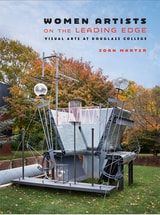
Women Artists on the Leading Edge
Visual Arts at Douglass CollegeJoan M. Marter
Rutgers University Press, 2020
How do students develop a personal style from their instruction in a visual arts program? Women Artists on the Leading Edge explores this question as it describes the emergence of an important group of young women artists from an innovative post-war visual arts program at Douglass College.
The women who studied with avant-garde artists at Douglas were among the first students in the nation to be introduced to performance art, conceptual art, Fluxus, and Pop Art. These young artists were among the first to experience new approaches to artmaking that rejected the predominant style of the 1950s: Abstract Expressionism. The New Art espoused by faculty including Robert Watts, Allan Kaprow, Roy Lichtenstein, Geoffrey Hendricks, and others advocated that art should be based on everyday life. The phrase “anything can be art” was frequently repeated in the creation of Happenings, multi-media installations, and video art. Experimental approaches to methods of creation using a remarkable range of materials were investigated by these young women. Interdisciplinary aspects of the Douglass curriculum became the basis for performances, videos, photography, and constructions. Sculpture was created using new technologies and industrial materials. The Douglass women artists included in this book were among the first to implement the message and direction of their instructors.
Ultimately, the artistic careers of these young women have reflected the successful interaction of students with a cutting-edge faculty. From this BA and MFA program in the Visual Arts emerged women such as Alice Aycock. Rita Myers, Joan Snyder, Mimi Smith, and Jackie Winsor, who went on to become lifelong innovators. Camaraderie was important among the Douglass art students, and many continue to be instructors within a close circle of associates from their college years. Even before the inception of the women’s art movement of the 1970s, these women students were encouraged to pursue professional careers, and to remain independent in their approach to making art. The message of the New Art was to relate one’s art production to life itself and to personal experiences. From these directions emerged a “proto-feminist” art of great originality identified with women’s issues. The legacy of these artists can be found in radical changes in art instruction since the 1950s, the promotion of non-hierarchical approaches to media, and acceptance of conceptual art as a viable art form.
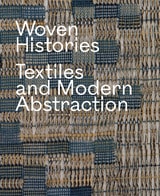
Woven Histories
Textiles and Modern AbstractionEdited by Lynne Cooke
University of Chicago Press, 2023
Published on the occasion of an exhibition curated by Lynne Cooke, Woven Histories offers a fresh and authoritative look at textiles—particularly weaving—as a major force in the evolution of abstraction. This richly illustrated volume features more than fifty creators whose work crosses divisions and hierarchies formerly segregating the fine arts from the applied arts and handicrafts.
Woven Histories begins in the early twentieth century, rooting the abstract art of Sophie Taeuber-Arp in the applied arts and handicrafts, then features the interdisciplinary practices of Anni Albers, Sonia Delaunay, Liubov Popova, Varvara Stepanova, and others who sought to effect social change through fabrics for furnishings and apparel. Over the century, the intersection of textiles and abstraction engaged artists from Ed Rossbach, Kay Sekimachi, Ruth Asawa, Lenore Tawney, and Sheila Hicks to Rosemarie Trockel, Ellen Lesperance, Jeffrey Gibson, Igshaan Adams, and Liz Collins, whose textile-based works continue to shape this discourse. Including essays by distinguished art historians as well as reflections from contemporary artists, this ambitious project traces the intertwined histories of textiles and abstraction as vehicles through which artists probe urgent issues of our time.
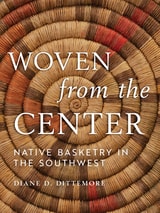
Woven from the Center
Native Basketry in the SouthwestDiane D. Dittemore
University of Arizona Press, 2024
Woven from the Center presents breathtaking basketry from some of the greatest weavers in the Southwest. Each sandal and mat fragment, each bowl and jar, every water bottle and whimsy is infused with layers of aesthetic, cultural, and historical meanings. This book offers stunning photos and descriptions of woven works from Tohono O’odham, Akimel O’odham, Hopi, Western Apache, Yavapai, Navajo, Pai, Paiute, New Mexico Pueblo, Eastern Apache, Seri, Yaqui, Mayo, and Tarahumara communities.
This richly illustrated volume stands on its own as a definitive look at basketry of the Greater Southwest, including northern Mexico. It also serves as a companion to the peerless collection of U.S. Southwest and Northwest Mexican Native American basketry curated at the Arizona State Museum in Tucson, Arizona. Comprehensive in its coverage, this work is based on decades of research on weavers, collectors, and donors. It includes ample illustrations of basket weavers, past and present, bringing to life the people behind these wonderful woven treasures.