Results by title
148 books match the query 'Colonization' and 2 start with w
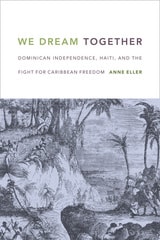
We Dream Together
Dominican Independence, Haiti, and the Fight for Caribbean FreedomAnne Eller
Duke University Press, 2016
In We Dream Together Anne Eller breaks with dominant narratives of conflict between the Dominican Republic and Haiti by tracing the complicated history of Dominican emancipation and independence between 1822 and 1865. Eller moves beyond the small body of writing by Dominican elites that often narrates Dominican nationhood to craft inclusive, popular histories of identity, community, and freedom, summoning sources that range from trial records and consul reports to poetry and song. Rethinking Dominican relationships with their communities, the national project, and the greater Caribbean, Eller shows how popular anticolonial resistance was anchored in a rich and complex political culture. Haitians and Dominicans fostered a common commitment to Caribbean freedom, the abolition of slavery, and popular democracy, often well beyond the reach of the state. By showing how the island's political roots are deeply entwined, and by contextualizing this history within the wider Atlantic world, Eller demonstrates the centrality of Dominican anticolonial struggles for understanding independence and emancipation throughout the Caribbean and the Americas.
[more]
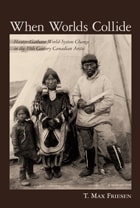
When Worlds Collide
Hunter-Gatherer World-System Change in the 19th Century Canadian ArcticT. Max Friesen
University of Arizona Press, 2013
Interactions between societies are among the most powerful forces in human history. However, because they are difficult to reconstruct from archaeological data, they have often been overlooked and understudied by archaeologists. This is particularly true for hunter-gatherer societies, which are frequently seen as adapting to local conditions rather than developing in the context of large-scale networks. When Worlds Collide presents a new model for discerning interaction networks based on the archaeological record, and then applies the model to long-term change in an Arctic society.
Max Friesen has adapted and expanded world-system theory in order to develop a model that explains how hunter-gatherer interaction networks, or world-systems, are structured—and why they change. He has utilized this model to better understand the development of Inuvialuit society in the western Canadian Arctic over a 500-year span, from the pre-contact period to the early twentieth century.
As Friesen combines local archaeological data with more extensive ethnographic and archaeological evidence from the surrounding region, a picture emerges of a dynamic Inuvialuit world-system characterized by bounded territories, trade, warfare, and other forms of interaction. This world-system gradually intensified as the impacts of Euroamerican colonial activities increased. This intensification, Friesen suggests, was based on pre-existing Inuvialuit social and economic structures rather than on patterns imposed from outside. Ultimately, this intense interacting network collapsed near the end of the nineteenth century. When Worlds Collide offers a new way to comprehend small-scale world-systems from the point of view of indigenous people. Its approach will prove valuable for understanding hunter-gatherer societies around the globe.
[more]