173 books match the query 'Commerce' and 3 start with w
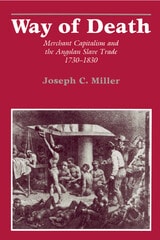
cover of Way of Death: Merchant Capitalism and the Angolan Slave Trade, 1730–1830

Way of Death

Merchant Capitalism and the Angolan Slave Trade, 1730–1830

Joseph Calder Miller

University of Wisconsin Press, 1996

This acclaimed history of Portuguese and Brazilian slaving in the southern Atlantic is now available in paperback.

With extraordinary skill, Joseph C. Miller explores the complex relationships among the separate economies of Africa, Europe, and the South Atlantic that collectively supported the slave trade. He places the grim history of the trade itself within the context of the rise of merchant capitalism in the eighteenth century. Throughout, Miller illuminates the experiences of the slaves themselves, reconstructing what can be known of their sufferings at the hands of their buyers and sellers.

[more]
cover of Wealth, Commerce, and Philosophy: Foundational Thinkers and Business Ethics

Wealth, Commerce, and Philosophy

Foundational Thinkers and Business Ethics

Edited by Eugene Heath and Byron Kaldis

University of Chicago Press, 2017

The moral dimensions of how we conduct business affect all of our lives in ways big and small, from the prevention of environmental devastation to the policing of unfair trading practices, from arguments over minimum wage rates to those over how government contracts are handed out. Yet for as deep and complex a field as business ethics is, it has remained relatively isolated from the larger, global history of moral philosophy. This book aims to bridge that gap, reaching deep into the past and traveling the globe to reinvigorate and deepen the basis of business ethics. 
           
Spanning the history of western philosophy as well as looking toward classical Chinese thought and medieval Islamic philosophy, this volume provides business ethicists a unified source of clear, accurate, and compelling accounts of how the ideas of foundational thinkers—from Aristotle to Friedrich Hayek to Amartya Sen—relate to wealth, commerce, and markets. The essays illuminate perspectives that have often been ignored or forgotten, informing discussion in fresh and often unexpected ways.  In doing so, the authors not only throw into relief common misunderstandings and misappropriations often endemic to business ethics but also set forth rich moments of contention as well as novel ways of approaching complex ethical problems. Ultimately, this volume provides a bedrock of moral thought that will move business ethics beyond the ever-changing opinions of headline-driven debate. 
 
[more]
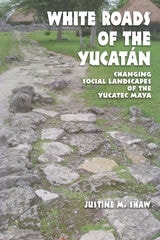
cover of White Roads of the Yucatán: Changing Social Landscapes of the Yucatec Maya

White Roads of the Yucatán

Changing Social Landscapes of the Yucatec Maya

Justine M. Shaw

University of Arizona Press, 2008

Maya sacbeob, or raised “white roads,” are often considered a single class of features, with a sole purpose. In this first systematic examination of their functions, meanings, arrangements, and construction styles, Justine Shaw reveals that these causeways served a variety of cultural and natural functions. In White Roads of the Yucatán, author Justine Shaw presents original field data collected with the Cochuah Regional Archaeological Survey at two ancient Maya sites, Ichmul and Yo’okop. Both centers chose to invest enormous resources in the construction of monumental roadways during a time of social and political turmoil in the Terminal Classic period. Shaw carefully examines why it was at this point—and no other—that the settlements made such a decision. She argues that both settlements used the sacbeob as a method of socially integrating the largest, most diverse and dispersed population in the Cochuah region. She further demonstrates that their use of the sacbeob, in concert with other innovative strategies, allowed Ichmul and Yo’okop to outlast many of the sites that they may have sought to emulate and to flourish during a time of tremendous sociopolitical and economic change. In addition to her detailed discussion of these two sites, Shaw provides an exhaustive review of the literature of Maya sacbeob archaeology, describing various interpretations of construction, features, and variability. This synthetic and interpretive treatment will aid researchers working on a variety of complex civilizations with road systems, as well as those interested in core-periphery relationships, cultural collapse, and social integration.
[more]