Results by title
162 books match the query 'Comparative Politics' and 6 start with w
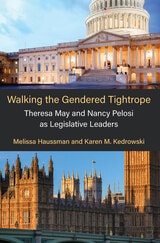
Walking the Gendered Tightrope
Theresa May and Nancy Pelosi as Legislative LeadersMelissa Haussman and Karen M. Kedrowski
University of Michigan Press, 2023

What Holds Europe Together?
Krzysztof Michalski
Central European University Press, 2006
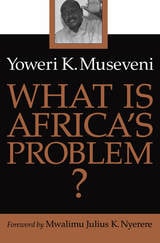
What Is Africa’s Problem
Yoweri K. Museveni
University of Minnesota Press, 2000
The president of Uganda addresses key questions about Africa’s future.
Recent seismic shifts in Congo and Rwanda have exposed the continued volatility of the state of affairs in central Africa. As African states have shaken off their postcolonial despots, new leaders with sweeping ideas about a pan-African alliance have emerged-and yet the internecine struggles go on. What is Africa’s problem? As one of the leaders expressing a broad and forceful vision for Africa’s future, Uganda’s Yoweri K. Museveni is perhaps better placed than anyone in the world to address the very question his book poses.
In 1986, after more than a decade of armed struggle, a rebellion led by Museveni toppled the dictatorship of Idi Amin, and Museveni, at 42, became president of Uganda, a country at that time in near total disarray. Since then, Uganda has made remarkable strides in political, civic, and economic arenas, and Museveni has assumed the role of "the éminence grise of the new leadership in central Africa" (Philip Gourevitch, New Yorker). As such, he has proven a powerful force for change, not just in Uganda but across the turbulent span of African states.This collection of Museveni’s writings and speeches lays out the possibilities for social change in Africa. Working with a broad historical understanding and an intimate knowledge of the problems at hand, Museveni describes how movements can be formed to foster democracy, how class consciousness can transcend tribal differences in the development of democratic institutions, and how the politics of identity operate in postcolonial Africa. Museveni’s own contributions to the overthrow of Zaire’s Mobutu Sese Seko and to the political transformation of Uganda suggest the kind of change that may sweep Africa in decades to come. What Is Africa’s Problem? gives a firsthand look at what those changes might be, how they might come about, and what they might mean.
What Makes or Breaks a Democracy
Lessons from HungaryAndras Schweitzer
Central European University Press, 2026
Hungary is unique in that it democratized quickly and thoroughly in 1989–1990, then, after two decades, it turned into an electoral autocracy. A new democratic era could be in the making after the April 2026 election. This book evaluates potential factors involved in these turnarounds by analyzing the post-1989 Hungarian trajectory and comparing it to other countries of the region.
If the dramatic backsliding is connected to social cultural aspects, how could democracy take root after 1989? If constitutional arrangements helped the subsequent autocratization, how was the Hungarian setup different from that in neighboring countries? Did Budapest mismanage the economy? Is Viktor Orbán unique? The findings in this book lead to universal lessons on how to build and protect democracy.
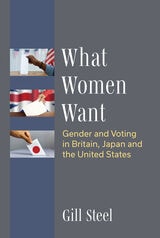
What Women Want
Gender and Voting in Britain, Japan and the United StatesGill Steel
University of Michigan Press, 2022
What Women Want analyzes decades of voting preferences, values, and policy preferences to debunk some of the media and academic myths about gender gaps in voting and policy preferences. Findings show that no single theory explains when differences in women’s and men’s voting preferences emerge, when they do not, or when changes—or the lack thereof—occur over time. Steel extends existing theories to create a broader framework for thinking about gender and voting behavior to provide more analytical purchase in understanding gender and its varying effects on individual voters’ preferences. She incorporates the long-term effects of party identification and class politics on political decision-making, particularly in how they influence preferences on social provision and on expectations of the state. She also points to the importance of symbolic politics

World Crisis Effects on Social Security in Latin America and the Caribbean
Lessons and PoliciesCarmelo Mesa-Lago
University of London Press, 2010