Results by title
1882 books match the query 'Criticism and interpretation' and 91 start with w

W. E. B. Du Bois
Revolutionary Across the Color LineBill V. Mullen
Pluto Press, 2016
Du Bois was born in Massachusetts in 1868, just three years after formal emancipation of America’s slaves. In his extraordinarily long and active political life, he would emerge as the first black man to earn a PhD from Harvard; surpass Booker T. Washington as the leading advocate for African American rights; co-found the NAACP, and involve himself in anti-imperialist and anti-colonial struggles across Asia and Africa. Beyond his Civil Rights work, Mullen also examines Du Bois's attitudes towards socialism, the USSR, China’s Communist Revolution, and the intersectional relationship between capitalism, poverty and racism.
An accessible introduction to a towering figure of American Civil Rights, perfect for anyone wanting to engage with Du Bois’s life and work.
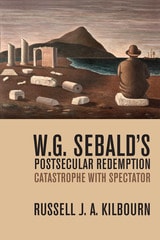
W. G. Sebald’s Postsecular Redemption
Catastrophe with SpectatorRussell J. A. Kilbourn
Northwestern University Press, 2018
Alongside Sebald studies' traditional subjects, which include memory, historiography, Sebald's critique of an image-based culture, and his highly intermedial poetics, W. G. Sebald's Postsecular Redemption demonstrates Sebald's relevance for affect theory, new materialism, and the posthuman turn. It critiques the possibility of metaphysical or eroto-salvific models of redemption, arguing against the temptation of psychoanalytic interpretations, as Sebald's work of memory rejects the discourse of redemption in favor of restitution.
In its consideration of Sebald's place in twentieth-century literature and after, Kilbourn's book engages with such predecessors as Nabokov, Kafka, Conrad, and Beckett, concluding with comparisons with contemporaries Claudio Magris and Alice Munro.
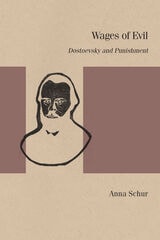
Wages of Evil
Dostoevsky and PunishmentAnna Schur
Northwestern University Press, 2012
As Dostoevsky attempts to balance the various ethical and cultural imperatives, he displays ambivalence both about punishment and about mercy. This ambivalence, Schur argues, is further complicated by what Dostoevsky sees as the unfathomable quality of the self, which hinders every attempt to match crimes with punishments. The one certainty he holds is that a proper response to wrongdoing must include a concern for the wrongdoer’s moral improvement.
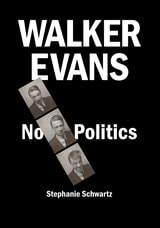
Walker Evans
No PoliticsBy Stephanie Schwartz
University of Texas Press, 2020
“NO POLITICS whatever.” Walker Evans made this emphatic declaration in 1935, the year he began work for FDR’s Resettlement Administration. Evans insisted that his photographs of tenant farmers and their homes, breadlines, and the unemployed should be treated as “pure record.” The American photographer’s statements have often been dismissed. In Walker Evans: No Politics, Stephanie Schwartz challenges us to engage with what it might mean, in the 1930s and at the height of the Great Depression, to refuse to work politically.
Offering close readings of Evans’s numerous commissions, including his contribution to Carleton Beals’s anti-imperialist tract, The Crime of Cuba (1933), this book is a major departure from the standard accounts of Evans’s work and American documentary. Documentary, Schwartz reveals, is not a means of being present—or being “political.” It is a practice of record making designed to distance its maker from the “scene of the crime.” That crime, Schwartz argues, is not just the Depression; it is the processes of Americanization reshaping both photography and politics in the 1930s. Historicizing documentary, this book reimagines Evans and his legacy—the complexities of claiming “no politics.”
Walker Percy, Fyodor Dostoevsky, and the Search for Influence
Jessica Hooten Wilson
The Ohio State University Press, 2017
From Dostoevsky, Percy learned how to captivate his non-Christian readership with fiction saturated by a Christian vision of reality. Not only was his method of imitation in line with this Christian faith but also the aesthetic mode and very content of his narratives centered on his knowledge of Christ. The influence of Dostoevsky on Percy, then, becomes significant as a modern case study for showing the illusion of artistic autonomy and long-held, Romantic assumptions about artistic originality. Ultimately, Wilson suggests, only by studying the good that came before can one translate it in a new voice for the here and now.
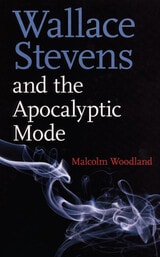
Wallace Stevens And The Apocalyptic Mode
Woodland, Malcolm
University of Iowa Press, 2005
This study begins with an examination of the textual and generic issues surrounding apocalypse, culminating in the idea of apocalyptic language as a form of “discursive mastery” over the mayhem of events. Woodland provides an informative religious/historical discussion of apocalypse and, engaging with such critics as Parker, Derrida, and Fowler, sets forth the paradoxes and complexities that eventually challenge any clear dualities between apocalyptic and antiapocalyptic thinking.
Woodland then examines some of Stevens’s wartime essays and poems and describes Stevens’s efforts to salvage a sense of self and poetic vitality in a time of war, as well as his resistance to the possibility of cultural collapse. Woodland discusses the major postwar poems “Credences of Summer” and “The Auroras of Autumn” in separate chapters, examining the interaction of (anti)apocalyptic modes with, respectively, pastoral and elegy.
The final chapter offers a perspective on Stevens’s place in literary history by examining the work of a contemporary poet, Jorie Graham, whose poetry quotes from Stevens’s oeuvre and shows other marks of his influence. Woodland focuses on Graham's 1997 collection The Errancy and shows that her antiapocalyptic poetry involves a very different attitude toward the possibility of a radical break with a particular cultural or aesthetic stance.
Wallace Stevens and the Apocalyptic Mode, offering a new understanding of Stevens’s position in literary history, will greatly interest literary scholars and students.
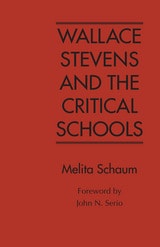
Wallace Stevens and the Critical Schools
Melita C. Schaum
University of Alabama Press, 1988
Wallace Stevens and the Critical Schools reveals a field marked by conflict and contradiction, both within and among critical works in their attempts to explicate and appropriate this major American poet. Stevens’ changing reception among the critical schools reveals much about the shifting nature of American literature and criticism in this century and illuminates the often polemical process of literary canon formation. Each chapter of this book examines a particular aspect of the 20th-century critical involvement with Wallace Stevens’ poetry, introduced by a discussion of the poet’s work as an arena for the convergence of modern critical tendencies and concerns.
First, the author examines the avant-garde milieu of early 20th-century modernism, which implicated Stevens in its melee of affiliations and enmities and which influenced critics’ ambivalent responses to his early work. She traces the critical controversies of the poet’s emergence before and during the 1920s, specifically the clash between New Humanism and aestheticism, and demonstrates how the quality of irony in Stevens’ work became a part of the critics’ general repertoire in their assessment of this poet.
The 1930s, 1940s, and 1950s were decades during which Stevens criticism became dominated by the New Critical ideology. The turn toward deconstruction in Stevens criticism stands in part as a response to the New Critical dilemma, seen in the manner in which such critics as J. Hillis Miller and Joseph Riddel appropriated the concept of “decreation” to explain the sense of rupture in Stevens’ late poetry yet brought that concept to its logical end in a deconstructive paradigm.
Finally, Schaum identifies four major theoretical approaches to Stevens in the past two decades that continue to inform and direct the field of critical dissent and exploration in the 1980s. Such theories as Bloomian misprision, versions of hermeneutic criticism, redefinitions of the deconstructive enterprise, and the contemporary call for a new historicism continue the battle to appropriate Stevens as the “hard prize” of critical aims and investigations.
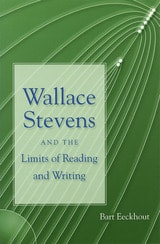
Wallace Stevens and the Limits of Reading and Writing
Bart Eeckhout
University of Missouri Press, 2002
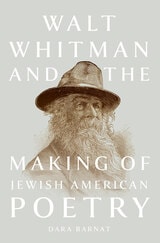
Walt Whitman and the Making of Jewish American Poetry
Dara Barnat
University of Iowa Press, 2023
Dara Barnat presents a genealogy of Jewish American poets in dialogue with Whitman, and with each other, and reveals how the lineage of Jewish American poets responding to Whitman extends far beyond the likes of Allen Ginsberg. From Emma Lazarus and Adah Isaacs Menken, through twentieth-century poets such as Charles Reznikoff, Karl Shapiro, Kenneth Koch, Muriel Rukeyser, Adrienne Rich, Marge Piercy, Alicia Suskin Ostriker, and Gerald Stern, this book demonstrates that Whitman has been adopted by Jewish American poets as a liberal symbol against exclusionary and anti-Semitic elements in high modernist literary culture. The turn to Whitman serves as a mode of exploring Jewish and American identity.
Walt Whitman and the World
Gay Wilson Allen
University of Iowa Press, 1995
Walt Whitman, Where the Future Becomes Present
David Haven Blake
University of Iowa Press, 2008
Walt Whitman, Where the Future Becomes Present invigorates Whitman studies by garnering insights from a diverse group of writers and intellectuals. Writing from the perspectives of art history, political theory, creative writing, and literary criticism, the contributors place Whitman in the center of both world literature and American public life. The volume is especially notable for being the best example yet published of what the editors call the New Textuality in Whitman studies, an emergent mode of criticism that focuses on the different editions of Whitman’s poems as independent works of art.
Written one hundred fifty years after the book’s publication, these timely, innovative responses to Leaves of Grass confirm that the future of Whitman’s poems is vital to our present.
Walt Whitman
The Centennial EssaysEd Folsom
University of Iowa Press, 1994
In 1992, the year of the hundredth anniversary of Walt Whitman's death, a major gathering of international scholars took place at the University of Iowa. Over 150 participants heard papers by 20 of the world's most eminent critics of Whitman. Three generations of scholars offered new essays that brilliantly tracked the course of past and present Whitman scholarship. So significant was this historic celebration of the great American poet that the opening session was covered by CBS “Sunday Morning,” National Public Radio's “Morning Edition,” the New York Times, and other newspapers across the country. Musical and theatrical performances, art exhibitions, slide shows, readings, songs, and even a recently discovered recording of Whitman's voice were presented during the three days of the conference.
But the heart of the conference was this series of original essays by some of the most innovative scholars working in the field of American literature. There has ever been a more important collection of Whitman criticism. In these essays, readers will find the most suggestive recent approaches to Whitman alongside the most reliable traditional approaches. Walt Whitman: The Centennial Essays captures Whitman's energy and vitality, which have only increased in the century after his death.
Walter Benjamin for Children
An Essay on His Radio YearsJeffrey Mehlman
University of Chicago Press, 1993
Now in paperback, an insightful analysis of the great theorist's most unusual work: a diverse collection of radio broadcasts for children.
In light of the legendary difficulty of Walter Benjamin's works, it is a strange and intriguing fact that from 1929 to 1933, the great critic and cultural theorist wrote—and broadcast—numerous scripts, on the order of fireside chats, for children. Invited to speak on whatever subject he considered appropriate, Benjamin talked to the children of Frankfurt and Berlin about the destruction of Pompeii, an earthquake in Lisbon, and a railroad disaster at the Firth of Tay. He spoke about bootlegging and swindling, cataclysm and suicide, Faust and Cagliostro. In this first sustained analysis of the thirty surviving scripts, Jeffrey Mehlman demonstrates how Benjamin used the unlikely forum of children's radio to pursue some of his central philosophical and theological concerns.
In Walter Benjamin for Children, readers will encounter a host of intertextual surprises: an evocation of the flooding of the Mississippi informed by the argument of "The Task of the Translator;" a discussion of scams in stamp-collecting that turns into "The Work of Art in the Age of Mechanical Reproduction;" a tale of bootlegging in the American South that converges with the best of Benjamin's essays on fiction. Mehlman superimposes a dual series of texts dealing with catastrophe, on the one hand, and fraud, on the other, that resonate with the false-messianic theology of Sabbatianism as it came to focus the attention and enthusiasm of Benjamin's friend Gershom Scholem during the same years. The radio scripts for children, that is, offer an unexpected byway, on the eve of the apocalypse, into Benjamin's messianic preoccupations.
A child's garden of deconstruction, these twenty-minute talks—from the perspective of childhood, before an invisible audience, on whatever happened to cross the critic's mind—are also by their very nature the closest we may ever come to a transcript of a psychoanalysis of Walter Benjamin. Particularly alive to that circumstance, Mehlman explores the themes of the radio broadcasts and brilliantly illuminates their hidden connections to Benjamin's life and work.
This lucid analysis brings to light some of the least researched and understood aspects of Walter Benjamin's thought. It will interest and provoke literary theorists and philosophers of culture, as well as anyone who hopes to understand one of this century's most suggestive and perplexing critics.
Walter Benjamin
An Introduction to His Work and ThoughtUwe Steiner
University of Chicago Press, 2010
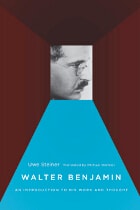
Acknowledged only by a small circle of intellectuals during his lifetime, Benjamin is now a major figure whose work is essential to an understanding of modernity. Steiner traces the development of Benjamin’s thought chronologically through his writings on philosophy, literature, history, politics, the media, art, photography, cinema, technology, and theology. Walter Benjamin reveals the essential coherence of its subject’s thinking while also analyzing the controversial or puzzling facets of Benjamin’s work. That coherence, Steiner contends, can best be appreciated by placing Benjamin in his proper context as a member of the German philosophical tradition and a participant in contemporary intellectual debates.
As Benjamin’s writing attracts more and more readers in the English-speaking world, Walter Benjamin will be a valuable guide to this fascinating body of work.
Ways of Releasement
Writings on God, Eckhart, and ZenReiner Schürmann
Diaphanes, 2023
In 1962, Reiner Schürmann began studying at the Dominican school of theology Le Saulchoir, outside Paris. That experience radically shaped his life and work, enabling him to begin to develop many of the ideas for which he would later be known: letting be, life without why, ontological anarchy, and the tragic double bind.
Ways of Releasement contains never-before-published material from Schürmann’s early period as well as a report Schürmann wrote about his encounter with Heidegger; a précis of his autobiographical novel, Origins; and translations and new editions of later groundbreaking essays. Ways of Releasement concludes with an extensive afterword setting Schürmann’s writings in the context of his thinking and life.

We Are Called Human
The Poetry of Richard HugoMichael S. Allen
University of Arkansas Press, 1982

We Are Three Sisters
Self and Family in the Writing of the BrontësDrew Lamonica
University of Missouri Press, 2003
We Rode the Rhythms as One
On the Poetry of Etheridge KnightEdited by Norman Minnick
University of Michigan Press, 2026
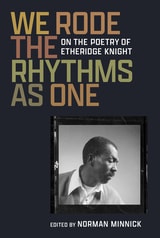
Knight’s story is one of transformation—an odyssey from hardship and incarceration to artistic prominence—anchored by his unwavering belief in the power of poetry to unite and heal. This comprehensive volume is also a historical and cultural exploration, situating Knight’s work amid the Black Arts Movement, the Civil Rights Movement, and the ongoing fight for social justice. Readers will find themselves drawn to Knight’s unfiltered voice, his reflections on Black identity, and his insistence on making poetry accessible to all—whether through intimate letters or reflections on the sociopolitical climate that shaped his art. Suitable for poetry enthusiasts, scholars, and general readers alike, We Rode the Rhythms as One invites us to reconsider Knight’s enduring impact and the vital role of poetry in reflecting and reshaping human experience.
We See with the Skin
On Zora Neale Hurston's MethodologyRoshanak Kheshti
Duke University Press, 2026
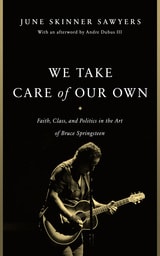
We Take Care of Our Own
Faith, Class, and Politics in the Art of Bruce SpringsteenJune Skinner Sawyers
Rutgers University Press, 2024
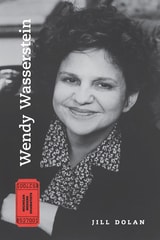
Wendy Wasserstein
Jill Dolan
University of Michigan Press, 2017
Wendy Wasserstein provides a critical introduction and a feminist reappraisal of the significant plays of one of the most famous contemporary American women playwrights. Following a biographical introduction, chapters address each of her important plays, situating Wasserstein’s work in the history of the US feminist movement and in a historical moment in which women artists continue to struggle for recognition.
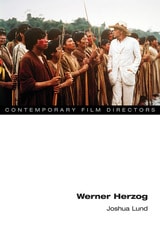
Werner Herzog
Joshua Lund
University of Illinois Press, 2020
Joshua Lund offers the first systematic interpretation of Werner Herzog's Americas-themed works, illuminating the director's career as a political filmmaker—a label Herzog himself rejects. Lund draws on materialist and post-colonial approaches to argue that Herzog's American work confronts us with the circulation, distribution, accumulation, application, and negotiation of power that resides, quietly, at the center of his films. By operating beyond conventional ideological categories, Herzog renders political ideas in radically unfamiliar ways while fearlessly confronting his viewers with questions of world-historical significance. His maddeningly opaque viewpoint challenges us to rethink discovery and conquest, migration and exploitation, resource extraction, slavery, and other foundational traumas of the contemporary human condition.
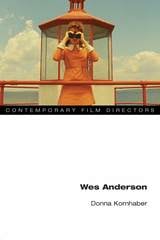
Wes Anderson
Donna Kornhaber
University of Illinois Press, 2017
Donna Kornhaber approaches Anderson's style as the necessary product of the narrative and thematic concerns that define his body of work. Using Anderson's focus on collecting, Kornhaber situates the director as the curator of his filmic worlds, a prime mover who artfully and conscientiously arranges diverse components into cohesive collections and taxonomies. Anderson peoples each mise-en-scéne in his ongoing ""Wesworld"" with characters orphaned, lost, and out of place amidst a riot of handmade clutter and relics. Within, they seek a wholeness and collective identity they manifestly lack, with their pain expressed via an ordered emotional palette that, despite being muted, cries out for attention. As Kornhaber shows, Anderson's films offer nothing less than a fascinating study in the sensation of belonging--told by characters who possess it the least.
What Became of Wystan?
Change and Continuity in Auden's PoetryAlan Jacobs
University of Arkansas Press, 1998
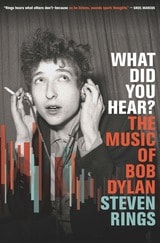
What Did You Hear?
The Music of Bob DylanSteven Rings
University of Chicago Press, 2025
Named one of PopMatters’ Best Books of 2025! Discover a new side of the songs of Bob Dylan by exploring the virtues of rough sounds, peculiar intonation, and a raspy voice.
Folk troubadour, rock star, country crooner—for a musician who adopted so many personas, Bob Dylan always sounds like himself. While he’s written many of the most iconic and impactful lyrics of the past sixty years, Dylan’s music has also reshaped our sonic imagination with his ragged voice, wailing harmonica, and rough-hewn guitar.
Music theorist Steven Rings argues that such sonic imperfections are central to understanding Dylan’s songs and their appeal. These blemishes can invoke authenticity or persona, signal his social commitments, and betray his political shortcomings. Rings begins—where else?—with Dylan’s voice, exploring its changeability, its unmistakable features, and its ability to inhabit characters, including the female narrator of “House of the Rising Sun.” Rings then turns to Dylan as an instrumentalist, examining his infamous adoption of the electric guitar in 1965, as well as his stylistically varied acoustic playing, which borrows sounds and techniques from Black blues musicians, among other influences. Rings charts the histories audible in Dylan’s harmonica as well as piano, which has been central to his music making since his earliest days of imitating Little Richard in his hometown of Hibbing, Minnesota. Finally, Rings guides readers through one of Dylan’s most famous songs, “A Hard Rain’s a-Gonna Fall,” analyzing its musical sources as well as variations in live performances. A companion website of audio and video examples helps readers notice the nuances and idiosyncrasies inherent in Dylan’s work and, even more importantly, their effects.
A close look at an underdiscussed but essential aspect of Dylan’s oeuvre, What Did You Hear? offers a fresh understanding of a singular performer, his musical choices, and the meanings that we can hear in his imperfect sounds.
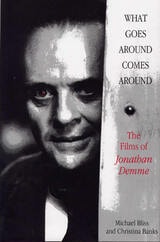
What Goes Around Comes Around
The Films of Jonathan DemmeMichael Bliss and Christina Banks
Southern Illinois University Press, 1996
This first book on the director of The Silence of the Lambs and Philadelphia is comprehensive, analyzing each of Jonathan Demme’s thirteen films.
Demme received the 1980 New York Film Critics Award as Best Director for Melvin and Howard. Subsequent Demme films such as Something Wild and the Talking Heads concert film Stop Making Sense, which won the National Society of Film Critics Award for Best Documentary, made Demme a cult favorite in the league of Roger Corman.
With 199l’s The Silence of the Lambs, Demme moved into a different league. The top-grossing film of the year, Silence won five Academy Awards, becoming the first film to sweep the Best Director, Actor, Actress, and Picture categories since 1975’s One Flew Over the Cuckoo’s Nest. Philadelphia also has been a top-grossing film, with Tom Hanks winning 1994’s Best Actor Oscar.
Michael Bliss and Christina Banks include a wealth of biographical and critical data; an exclusive interview with Demme; the only on-set report on the filming of The Silence of the Lambs; an interview with Craig McKay, Demme’s Emmy-winning film editor; a bibliography; and a Demme filmography. Many of the book’s movie still illustrations have never been published.
What a Library Means to a Woman
Edith Wharton and the Will to Collect BooksSheila Liming
University of Minnesota Press, 2020
Examining the personal library and the making of self
When writer Edith Wharton died in 1937, without any children, her library of more than five thousand volumes was divided and subsequently sold. Decades later, it was reassembled and returned to The Mount, her historic Massachusetts estate. What a Library Means to a Woman examines personal libraries as technologies of self-creation in modern America, focusing on Wharton and her remarkable collection of books.
Sheila Liming explores the connection between libraries and self-making in late nineteenth- and early twentieth-century American culture, from the 1860s to the 1930s. She tells the story of Wharton’s library in concert with Wharton scholarship and treatises from this era concerning the wider fields of book history, material and print culture, and the histories (and pathologies) of collecting. Liming’s study blends literary and historical analysis while engaging with modern discussions about gender, inheritance, and hoarding. It offers a review of the many meanings of a library collection, while reading one specific collection in light of its owner’s literary celebrity.
What a Library Means to a Woman was born from Liming’s ongoing work digitizing the Wharton library collection. It ultimately argues for a multifaceted understanding of authorship by linking Wharton’s literary persona to her library, which was, as she saw it, the site of her self-making.
When I Came to Die
Process and Prophecy in Thoreau's Vision of DyingAudrey Raden
University of Massachusetts Press, 2017
When I Came to Die suggests that throughout his writings, Thoreau communicated that knowing how to die properly is an art and a lifelong study, a perspective that informed his ideas about politics, nature, and individualism. With this insight, Raden opens a dialogue that will engage both Thoreauvians and those interested in American literature and thought.
When the Lamp is Shattered
Desire and Narrative in CatullusMichaela Janan
Southern Illinois University Press, 1993
The poetry of the Late Roman Republican poet Gaius Valerius Catullus, a rich document of the human heart, is the earliest-known reasonably complete body of erotic verse in the West.
Though approximately 116 poems survive, uncertainties about the condition of the fragmented manuscript and the narrative order of the poems make the Catullan text unusually problematic for the modern critic. Indeed, the poems can be arranged in a number of ways, making a multitude of different plots possible and frustrating the reader’s desire for narrative closure.
Micaela Janan contends that since unsatisfied desire structures both the experience of reading Catullus and its subject matter, critical interpretation of the text demands a "poetics of desire." Furthermore, postmodern critical theory, narratology, and psychoanalysis suggest a flexible concept of the "subject" as a site through which a multitude of social, cultural, and unconscious forces move. Human consciousness, Janan contends, is inherently incomplete and in a continuous process of transformation. She therefore proposes an original and provocative feminist reading of Catullus, a reading informed by theories of consciousness and desire as ancient as Plato and as contemporary as Freud and Lacan.
The Late Roman Republic in which Catullus lived, Janan reminds us, was a time of profound social upheaval when political and cultural institutions that had persisted for centuries were rapidly breaking down—a time not unlike our own. Catullus’ poetry provides an unusually honest look at his culture and its contradictory representations of class, gender, and power. By bringing to the study of this major work of classical literature the themes of consciousness and desire dealt with in postmodern scholarship, Janan’s book invites a new conversation among literary disciplines.
Where Does It Happen
John Cassavetes And Cinema At The Breaking PointGeorge Kouvaros
University of Minnesota Press, 2004

Where Is Ana Mendieta?
Identity, Performativity, and ExileJane Blocker
Duke University Press, 1999
Taken from banners carried in a 1992 protest outside the Guggenheim Museum in New York, the title phrase “Where is Ana Mendieta?” evokes not only the suspicious and tragic circumstances surrounding her death but also the conspicuous absence of women artists from high-profile exhibitions. Drawing on the work of such theorists as Judith Butler, Joseph Roach, Edward Said, and Homi Bhabha, Blocker discusses the power of Mendieta’s earth-and-body art to alter, unsettle, and broaden the terms of identity itself. She shows how Mendieta used exile as a discursive position from which to disrupt dominant categories, analyzing as well Mendieta’s use of mythology and anthropology, the ephemeral nature of her media, and the debates over her ethnic, gender, and national identities.
As the first major critical examination of this enigmatic artist’s work, Where Is Ana Mendieta? will interest a broad audience, particularly those involved with the production, criticism, theory, and history of contemporary art.
While Waiting for Rain
Community, Economy, and Law in a Time of ChangeJohn Henry Schlegel
University of Michigan Press, 2022
What might a sensible community choose to do if its economy has fallen apart and becoming a ghost town is not an acceptable option? Unfortunately, answers to this question have long been measured against an implicit standard: the postwar economy of the 1950s. After showing why that economy provides an implausible standard—made possible by the lack of economic competition from the European and Asian countries, winners or losers, touched by the war—John Henry Schlegel attempts to answer the question of what to do.
While Waiting for Rain first examines the economic history of the United States as well as that of Buffalo, New York: an appropriate stand-in for any city that may have seen its economy start to fall apart in the 1960s, 70s, and 80s. It makes clear that neither Buffalo nor the United States as a whole has had an economy in the sense of “a persistent market structure that is the fusion of an understanding of economic life with the patterns of behavior within the economic, political, and social institutions that enact that understanding” since both economies collapsed. Next, this book builds a plausible theory of how economic growth might take place by examining the work of the famous urbanist, Jane Jacobs, especially her book Cities and the Wealth of Nations. Her work, like that of many others, emphasizes the importance of innovation for economic growth, but is singular in its insistence that such innovation has to come from local resources. It can neither be bought nor given, even by well-intentioned political actors. As a result Americans generally, as well as locally, are like farmers in the midst of a drought, left to review their resources and wait. Finally, it returns to both the local Buffalo and the national economies to consider what these political units might plausibly do while waiting for an economy to emerge.
White Light
The Poetry of Alberto BlancoRonald J. Friis
Bucknell University Press, 2022
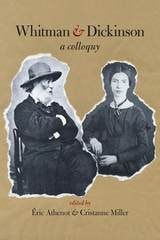
Whitman & Dickinson
A ColloquyEric Athenot and Cristanne Miller
University of Iowa Press, 2018
Essays included in this book cover the topics of mentoring influence on each poet, religion, the Civil War, phenomenology, the environment, humor, poetic structures of language, and Whitman’s and Dickinson’s twentieth- and twenty-first–century reception—including prolonged engagement with Adrienne Rich’s response to this “strange uncoupled couple” of poets who stand at the beginning of an American national poetic.
Contributors Include:
Marina Camboni
Andrew Dorkin
Vincent Dussol
Betsy Erkkilä
Ed Folsom
Christine Gerhardt
Jay Grossman
Jennifer Leader
Marianne Noble
Cécile Roudeau
Shira Wolosky
Whitman East and West
New Contexts for Reading Walt WhitmanEd Folsom
University of Iowa Press, 2002
Confirming the growing international spirit of American studies, the essays in Whitman East and West developed out of a landmark conference in Beijing, the first major conference in China to focus on an American poet. Scholars from Asia, Europe, and North America set out to track the ways in which Whitman's poetry has become part of China's cultural landscape as well as the literary landscapes of other countries. By describing his assimilation into other cultures and his resulting transformation into a hybrid poet, these essayists celebrate Whitman's multiple manifestations in other languages and contexts.
Whitman Noir
Black America and the Good Gray PoetIvy Wilson
University of Iowa Press, 2014
Whitman Noir: Black America and the Good Gray Poet explores the meaning of blacks and blackness in Whitman’s imagination and, equally significant, also illuminates the aura of Whitman in African American letters from Langston Hughes to June Jordan, Margaret Walker to Yusef Komunyakaa. The essays, which feature academic scholars and poets alike, address questions of literary history, the textual interplay between author and narrator, and race and poetic influence. The volume as a whole reveals the mutual engagement with a matrix of shared ideas, contradictions, and languages to expose how Whitman influenced African American literary production as well as how African American Studies brings to bear new questions and concerns for evaluating Whitman.
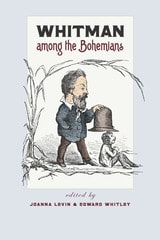
Whitman among the Bohemians
Joanna Levin and Edward Whitley
University of Iowa Press, 2014
In this milieu, Whitman found sympathetic supporters of his poetic vision, professional connections, rivals, romantic partners, and close friends, and left a lasting impression on poet and critic Edmund Clarence Stedman, an erstwhile bohemian who later in the century emerged as a tastemaker of American poetry. Yet for many years, the bohemians associated with Pfaff’s have served merely as minor background characters in Whitman scholarship. Whitman among the Bohemians corrects that by exploring in depth the connections Whitman made at Pfaff’s and the impact they had on him, his poetry, and his career. In telling the story of these intersecting social and professional links that converged at Pfaff’s in the late 1850s and early 1860s, the essays in this volume powerfully demonstrate just how much we can learn about Whitman and his work by viewing him within the context of American bohemia.
CONTRIBUTORS: Stephanie Blalock, Ruth Bohan, Leif Eckstrom, Logan Esdale, Amanda Gailey, Karen Karbiener, Joanna Levin, Mary Loeffelholz, Eliza Richards, Ingrid Satelmajer, Robert J. Scholnick, Edward Whitley

Whitman in Poland
The Reception and Role of the American Poet in Polish National CultureMarta A. Skwara
University of Iowa Press, 2020
Poland; how and why the mid-1950s saw the greatest flourish of interest in Whitman as he was read in terms of “socialist realism” in accordance with the political indoctrination of the era; how Whitman’s image in Poland evolved from his first Polish translators and enthusiasts on through modernist poets’ responses; and how reading multiple Polish translations of the same Whitman poem by different translators allows us to see changing cultural and comparative contexts. Readers will get a full picture of how Whitman has functioned as a presence in Polish prose and poetry, and even in cinema and television.

Whole Faith
The Catholic Ideal of Emilia Pardo BazanDenise DuPont
Catholic University of America Press, 2018
Whom God Wishes to Destroy . . .
Francis Coppola and the New HollywoodJon Lewis
Duke University Press, 1995
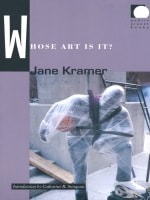
Whose Art Is It?
Jane Kramer
Duke University Press, 1994
This compelling narrative raises questions about community and public art policies, about stereotypes and multiculturalism. With wit, drama, sympathy, and circumspection, Kramer draws the reader into the multicultural debate, challenging our assumptions about art, image, and their relation to community. Her portrait of the South Bronx takes the argument to its grass roots—provocative, surprising in its contradictions and complexities and not at all easy to resolve.
Accompanied by an introduction by Catharine R. Stimpson exploring the issues of artistic freedom, "political correctness," and multiculturalism, Whose Art Is It? is a lively and accessible introduction to the ongoing debate on representation and private expression in the public sphere.
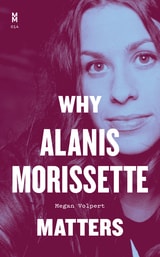
Why Alanis Morissette Matters
Megan Volpert
University of Texas Press, 2025
The first critical biography of iconic musician Alanis Morissette, creator of Jagged Little Pill.
The 1990s hardly saw a bigger hit than Jagged Little Pill. Alanis Morissette’s defining album won Grammys, dominated the Billboard charts, and sold more than 30 million copies worldwide. It left a deep mark on the psyches of countless listeners. Three decades later, Megan Volpert checks in with Morissette, probing her rich and varied post-JLP career and bearing feminist witness to the existential anger that ties her recent work to enduring classics like “You Oughta Know,” “One Hand in My Pocket,” and “Ironic.”
Why Alanis Morissette Matters builds a bridge from Jagged Little Pill to the fascinating life and subtle intellect of its creator, exploring how the artist’s philosophical interests and personal journey are reflected in each track. Morissette’s struggles with censorship, mental health challenges, and Catholicism; her queer allyship, spiritual skepticism, zealous fandom, and philanthropic passions—all are carefully observed by a critic whose own life was touched by Jagged Little Pill. In the album’s wake, Morissette has evolved as an artist and global citizen. With sensitivity and a profound love for the music, Volpert guides readers through the case for Morissette’s enduring cultural relevance and creative impact.
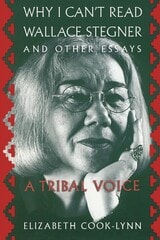
Why I Can't Read Wallace Stegner and Other Essays
A Tribal VoiceElizabeth Cook-Lynn
University of Wisconsin Press, 1996
This provocative collection of essays reveals the passionate voice of a Native American feminist intellectual. Elizabeth Cook-Lynn, a poet and literary scholar, grapples with issues she encountered as a Native American in academia. She asks questions of critical importance to tribal people: who is telling their stories, where does cultural authority lie, and most important, how is it possible to develop an authentic tribal literary voice within the academic community?
In the title essay, “Why I Can’t Read Wallace Stegner,” Cook-Lynn objects to Stegner’s portrayal of the American West in his fiction, contending that no other author has been more successful in serving the interests of the nation’s fantasy about itself. When Stegner writes that “Western history sort of stopped at 1890,” and when he claims the American West as his native land, Cook-Lynn argues, he negates the whole past, present, and future of the native peoples of the continent. Her other essays include discussion of such Native American writers as Michael Dorris, Ray Young Bear, and N. Scott Momaday; the importance of a tribal voice in academia, the risks to American Indian women in current law practices, the future of Indian Nationalism, and the defense of the land.
Cook-Lynn emphasizes that her essays move beyond the narrowly autobiographical, not just about gender and power, not just focused on multiculturalism and diversity, but are about intellectual and political issues that engage readers and writers in Native American studies. Studying the “Indian,” Cook-Lynn reminds us, is not just an academic exercise but a matter of survival for the lifeways of tribal peoples. Her goal in these essays is to open conversations that can make tribal life and academic life more responsive to one another.
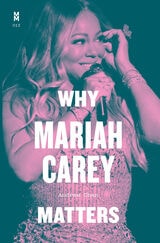
Why Mariah Carey Matters
Andrew Chan
University of Texas Press, 2023
The first book to critically examine the legacy of pop superstar Mariah Carey.
When it comes to Mariah Carey, star power is never in doubt. She has sold hundreds of millions of albums and cut more chart-topping hits than any other solo artist—ever. And she has that extraordinary five-octave vocal range. But there is more to her legacy than eye-popping numbers.
Why Mariah Carey Matters examines the creative evolution and complicated biography of a true diva, making the case that, despite her celebrity, Carey’s musicianship and influence are insufficiently appreciated. A pioneering songwriter and producer, Carey pairs her vocal gifts with intimate lyrics and richly layered sonic details. In the mid-1990s, she perfected a blend of pop, hip-hop, and R&B with songs such as “Fantasy” and “Honey” and drew from her turbulent life to create the introspective masterpiece Butterfly. Andrew Chan looks beyond Carey’s glamorous persona to explore her experience as a mixed-race woman in show business, her adventurous forays into house music and gospel, and her appeal to multiple generations of queer audiences. He also reckons with the transcendent ideal of the voice that Carey represents, showing how this international icon taught artists around the world to sing with soul-shaking intensity and a spirit of innovation.
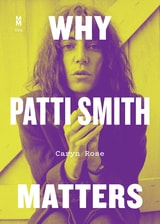
Why Patti Smith Matters
Caryn Rose
University of Texas Press, 2022
Patti Smith arrived in New York City at the end of the Age of Aquarius in search of work and purpose. What she found—what she fostered—was a cultural revolution. Through her poetry, her songs, her unapologetic vocal power, and her very presence as a woman fronting a rock band, she kicked open a door that countless others walked through. No other musician has better embodied the “nothing-to-hide” rawness of punk, nor has any other done more to nurture a place in society for misfits of every stripe.
Why Patti Smith Matters is the first book about the iconic artist written by a woman. The veteran music journalist Caryn Rose contextualizes Smith’s creative work, her influence, and her wide-ranging and still-evolving impact on rock and roll, visual art, and the written word. Rose goes deep into Smith’s oeuvre, from her first album, Horses, to acclaimed memoirs operating at a surprising remove from her music. The portrait of a ceaseless inventor, Why Patti Smith Matters rescues punk’s poet laureate from “strong woman” clichés. Of course Smith is strong. She is also a nuanced thinker. A maker of beautiful and challenging things. A transformative artist who has not simply entertained but also empowered millions.
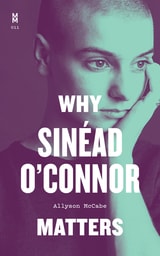
Why Sinéad O'Connor Matters
Allyson McCabe
University of Texas Press, 2023
A stirring defense of Sinéad O’Connor’s music and activism, and an indictment of the culture that cancelled her.
In 1990, Sinéad O’Connor’s video for “Nothing Compares 2 U” turned her into a superstar. Two years later, an appearance on Saturday Night Live turned her into a scandal. For many people—including, for years, the author—what they knew of O’Connor stopped there. Allyson McCabe believes it’s time to reassess our old judgments about Sinéad O’Connor and to expose the machinery that built her up and knocked her down.
Addressing triumph and struggle, sound and story, Why Sinéad O’Connor Matters argues that its subject has been repeatedly manipulated and misunderstood by a culture that is often hostile to women who speak their minds (in O’Connor’s case, by shaving her head, championing rappers, and tearing up a picture of the pope on live television). McCabe details O’Connor’s childhood abuse, her initial success, and the backlash against her radical politics without shying away from the difficult issues her career raises. She compares O’Connor to Madonna, another superstar who challenged the Catholic Church, and Prince, who wrote her biggest hit and allegedly assaulted her. A journalist herself, McCabe exposes how the media distorts not only how we see O’Connor but how we see ourselves, and she weighs the risks of telling a story that hits close to home.
In an era when popular understanding of mental health has improved and the public eagerly celebrates feminist struggles of the past, it can be easy to forget how O’Connor suffered for being herself. This is the book her admirers and defenders have been waiting for.
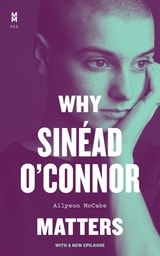
Why Sinéad O'Connor Matters
Allyson McCabe
University of Texas Press, 2023
A stirring defense of Sinéad O’Connor’s music and activism, and an indictment of the culture that cancelled her.
In 1990, Sinéad O’Connor’s video for “Nothing Compares 2 U” turned her into a superstar. Two years later, an appearance on Saturday Night Live turned her into a scandal. For many people—including, for years, the author—what they knew of O’Connor stopped there. Allyson McCabe believes it’s time to reassess our old judgments about Sinéad O’Connor and to expose the machinery that built her up and knocked her down.
Addressing triumph and struggle, sound and story, Why Sinéad O’Connor Matters argues that its subject has been repeatedly manipulated and misunderstood by a culture that is often hostile to women who speak their minds (in O’Connor’s case, by shaving her head, championing rappers, and tearing up a picture of the pope on live television). McCabe details O’Connor’s childhood abuse, her initial success, and the backlash against her radical politics without shying away from the difficult issues her career raises. She compares O’Connor to Madonna, another superstar who challenged the Catholic Church, and Prince, who wrote her biggest hit and allegedly assaulted her. A journalist herself, McCabe exposes how the media distorts not only how we see O’Connor but how we see ourselves, and she weighs the risks of telling a story that hits close to home.
In an era when popular understanding of mental health has improved and the public eagerly celebrates feminist struggles of the past, it can be easy to forget how O’Connor suffered for being herself. This is the book her admirers and defenders have been waiting for.
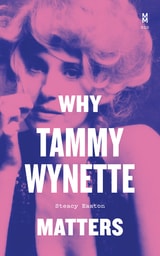
Why Tammy Wynette Matters
Steacy Easton
University of Texas Press, 2023
How Tammy Wynette channeled the conflicts of her life into her music and performance.
With hits such as “Stand By Your Man” and “Golden Ring,” Tammy Wynette was an icon of American domesticity and femininity. But there were other sides to the first lady of country. Steacy Easton places the complications of Wynette’s music and her biography in sharp-edged relief, exploring how she made her sometimes-tumultuous life into her work, a transformation that was itself art.
Wynette created a persona of high femininity to match the themes she sang about—fawning devotion, redemption in heterosexual romance, the heartbreak of loneliness. Behind the scenes, her life was marked by persistent class anxieties; despite wealth and fame, she kept her beautician’s license. Easton argues that the struggle to meet expectations of southernness, womanhood, and southern womanhood, finds subtle expression in Wynette’s performance of “Apartment #9”—and it’s because of these vocal subtleties that it came to be called the saddest song ever written. Wynette similarly took on elements of camp and political critique in her artistry, demonstrating an underappreciated genius. Why Tammy Wynette Matters reveals a musician who doubled back on herself, her façade of earnestness cracked by a melodrama that weaponized femininity and upended feminist expectations, while scoring twenty number-one hits.
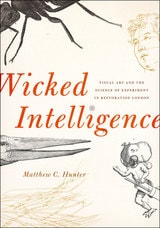
Wicked Intelligence
Visual Art and the Science of Experiment in Restoration LondonMatthew C. Hunter
University of Chicago Press, 2013
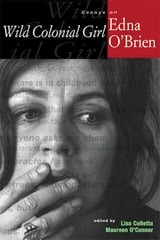
Wild Colonial Girl
Essays on Edna O'BrienEdited by Lisa Colletta and Maureen O'Connor
University of Wisconsin Press, 2006
Wild Colonial Girl situates O'Brien in Irish contexts that allow for an appraisal of her significant contribution to a specifically Irish women's literary tradition while attesting to the potency of writing against patriarchal conventions. Each chapter's clear and detailed readings of O'Brien's fiction build a convincing case for her literary, political, and cultural importance, providing an invaluable critical guide for an enriched appreciation of O'Brien and her work.